
Is Your Dog Constantly Scratching? How to Identify and Manage Dog Allergies
Dog allergies occur when the immune system overreacts to a harmless substance , flea saliva, pollen, certain foods, or household chemicals. Common signs include itching, skin redness, ear infections, paw licking, and gastrointestinal issues like vomiting or diarrhea. Treatment depends on identifying the specific allergen, which may require veterinary testing, elimination diets, or environmental controls. Most allergic dogs can live comfortably with the right management plan , but it takes patience. Never self-diagnose or medicate without your vet’s guidance.
Most common type. A single flea bite can trigger weeks of itching. Year-round flea prevention is non-negotiable.
Pollen, dust mites, mold. Usually seasonal but can become year-round. Often inherited.
Dairy, beef, and wheat cause 80% of cases. Symptoms often include chronic ear infections and paw chewing.
How to Tell If Your Dog Has Allergies
Allergies in dogs rarely look like human hay fever. Instead of sneezing and watery eyes, allergic dogs show their discomfort through their skin and behavior. Here’s what to watch for:
Most Common Signs
- Excessive scratching , especially at ears, belly, paws, and armpits
- Red, inflamed skin , particularly between toes and in skin folds
- Chronic ear infections , head shaking, smelly discharge, dark wax buildup
- Paw licking or chewing , paws may appear stained reddish-brown from saliva
- Hair loss , from constant scratching or secondary infections
- Hives or facial swelling , raised bumps, puffy eyes or muzzle
- Gastrointestinal issues , vomiting, diarrhea, or soft stools (more common with food allergies)
- Scooting or anal gland issues , linked to food sensitivities
These symptoms can also indicate other serious conditions , skin infections, parasites, hormonal disorders, or autoimmune diseases. A veterinarian should always make the diagnosis. Do not assume it’s “just allergies” and delay treatment, especially if your dog is in visible distress.
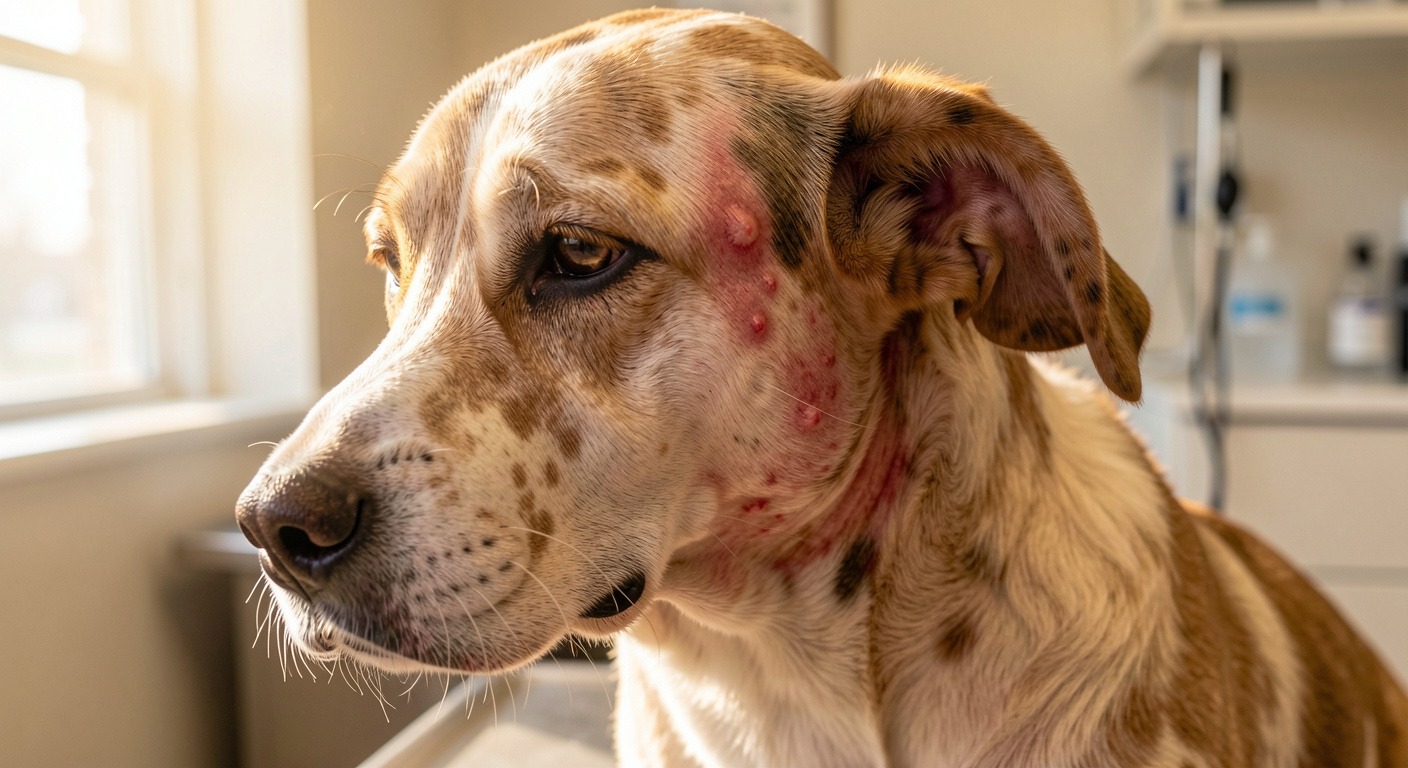
The 5 Types of Dog Allergies
1. Flea Allergy Dermatitis (FAD)
This is the most common canine allergy. It’s not the fleas themselves , it’s a reaction to proteins in flea saliva. Even ONE flea bite can trigger a systemic reaction lasting weeks. The classic sign: intense itching and hair loss at the base of the tail and down the back legs. Treatment is straightforward: strict year-round flea prevention for ALL pets in the household. There’s no “allergy season” for fleas if you live in a warm climate.
2. Environmental Allergies (Atopic Dermatitis)
Also called atopy, this is an inherited predisposition to react to airborne particles , tree pollen, grass pollen, dust mites, mold spores. Symptoms typically appear between 6 months and 3 years of age and may start seasonally before becoming year-round. Certain breeds are overrepresented: French Bulldogs, Golden Retrievers, Labrador Retrievers, West Highland White Terriers, and Boxers. Treatment can include medicated baths, antihistamines, immunotherapy (allergy shots), and newer options like Cytopoint or Apoquel , but these require a vet’s prescription and monitoring.
3. Food Allergies
Food allergies account for roughly 10% of all canine allergies. The most common triggers: dairy, beef, chicken, wheat, soy, and lamb. Contrary to popular belief, grain allergies are relatively rare , protein sources are the usual culprits. Symptoms often include chronic ear infections and paw chewing alongside skin issues. Diagnosis requires an 8, 12 week elimination diet trial using a novel protein (something your dog has never eaten) or a hydrolyzed prescription diet. There are no reliable blood or saliva tests for food allergies , the elimination diet is the gold standard.
4. Contact Allergies
These occur when your dog’s skin touches an irritant , certain cleaning products, carpet deodorizers, lawn chemicals, or even specific fabrics. The rash appears exactly where contact happened (belly, paw pads, chin). The fix is usually simple: identify and remove the trigger. A barrier like a t-shirt or dog boots can help during walks in treated areas.
5. Bacterial Hypersensitivity
When a dog’s immune system overreacts to the normal bacteria living on their skin. This typically develops as a secondary issue after another allergy has damaged the skin barrier. Antibiotics treat the infection, but the underlying allergy must also be addressed to prevent recurrence.
| Allergy Type | Key Trigger | Most Common Signs | Treatment Approach |
|---|---|---|---|
| Flea Allergy | Flea saliva proteins | Itching at tail base, back legs | Year-round flea prevention |
| Environmental (Atopy) | Pollen, dust mites, mold | Paw licking, belly rash, ear infections | Medication, immunotherapy, baths |
| Food Allergy | Beef, dairy, chicken, wheat | Ear infections, paw chewing, GI issues | 8, 12 week elimination diet trial |
| Contact Allergy | Chemicals, fabrics, plants | Rash at contact site only | Remove trigger, barrier protection |
| Bacterial Hypersensitivity | Normal skin bacteria | Secondary to other allergies | Antibiotics + treat underlying allergy |
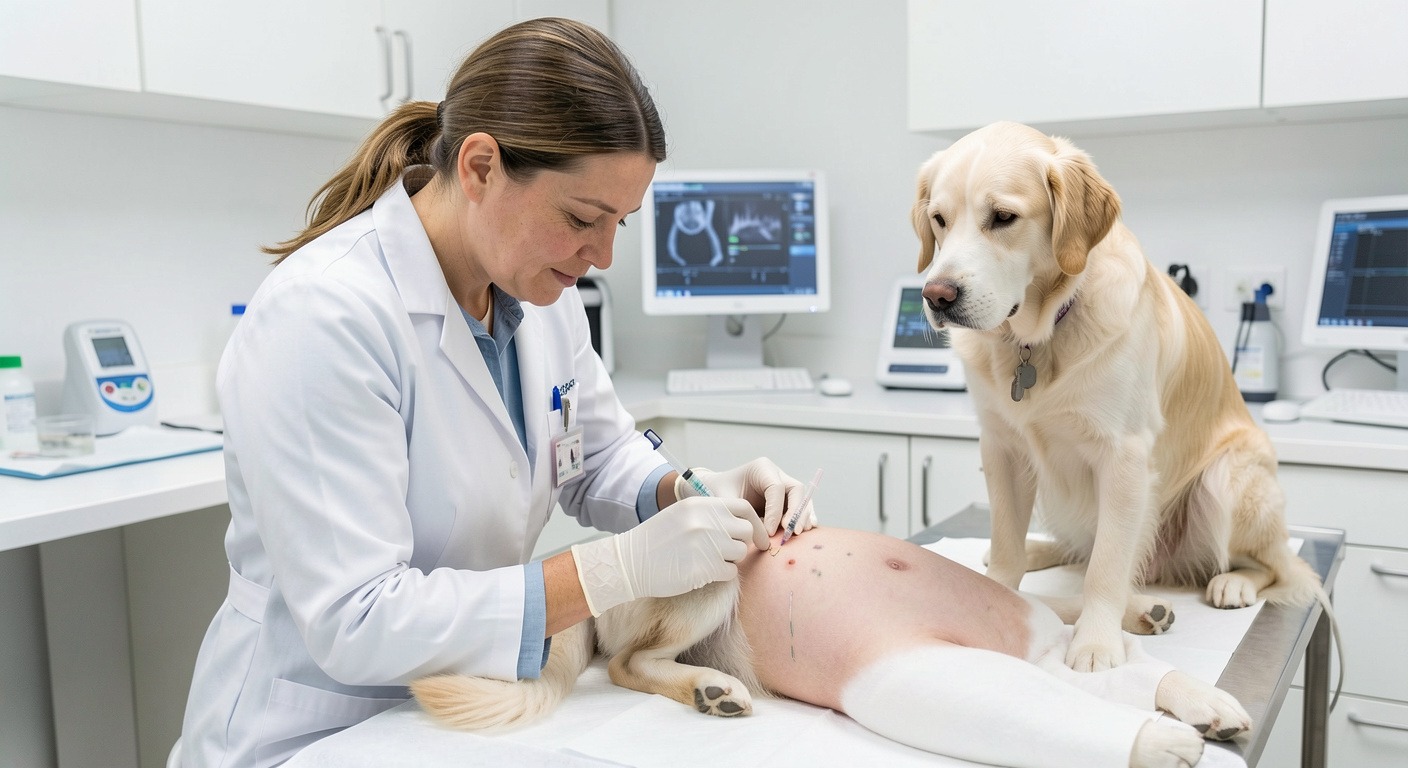
Getting a Proper Diagnosis
Your veterinarian will start with a thorough history and physical exam. Expect questions about: when symptoms started, whether they’re seasonal, what your dog eats, what flea prevention you use, and whether any littermates have similar issues. From there, the diagnostic path may include:
- Skin scraping or cytology , rules out mites, yeast, or bacterial infections
- Elimination diet trial , 8, 12 weeks on a strict novel-protein or hydrolyzed diet
- Intradermal skin testing , small amounts of allergens injected into the skin to measure reaction
- Blood allergy testing (serology) , measures IgE antibodies to specific allergens. Less accurate than skin testing but useful when skin testing isn’t available.
The most important thing: work with your vet, be patient, and keep a symptom diary. Allergies are managed, not cured. Finding the right combination of treatments may take months.

Puptify provides general education, not veterinary advice. Allergies can mimic many other conditions. Always consult your veterinarian before starting any treatment , including over-the-counter antihistamines, dietary changes, or supplements. Some human allergy medications are toxic to dogs. If your dog shows signs of anaphylaxis (facial swelling, difficulty breathing, collapse), seek emergency veterinary care immediately.
Frequently Asked Questions
Q: Can I give my dog Benadryl for allergies?
Only under veterinary guidance. The correct dose depends on your dog’s weight, and some formulations contain xylitol or other ingredients toxic to dogs. Never guess the dose , call your vet.
Q: Are certain breeds more prone to allergies?
Yes. French Bulldogs, Golden Retrievers, Labrador Retrievers, West Highland White Terriers, Boxers, Bulldogs, and German Shepherds are among the most allergy-prone breeds. Atopy (environmental allergy) has a strong genetic component.
Q: Does grain-free food help with allergies?
Not usually. True grain allergies are rare in dogs. Most food allergies are to animal proteins (beef, chicken, dairy). Grain-free diets gained popularity for the wrong reasons and the FDA is investigating a potential link between grain-free diets and dilated cardiomyopathy (DCM) in dogs. Only switch to grain-free if your vet recommends it for a diagnosed grain allergy.
Q: How much does allergy testing cost?
Intradermal skin testing typically costs $500, $1,500 depending on your location and the number of allergens tested. Blood tests run $200, $400. The ongoing cost of treatment (immunotherapy, medications, special diets) varies widely , budget $50, $200/month for a dog with moderate allergies.
Q: Can dog allergies go away on their own?
No. Allergies are a chronic condition. They can be managed effectively but not cured. Some dogs do grow out of food allergies, but environmental allergies typically persist for life. The good news: with the right treatment plan, most allergic dogs live normal, comfortable lives.
Keep Reading



Take Control of Your Dog’s Skin Health
Allergies don’t have to rule your dog’s life. Browse our complete dog health library for vet-reviewed guides on skin care, nutrition, and preventive health.
Explore All Health Guides →