A Simple Vaccine Timeline for Every Life Stage
Puppies usually need a series of core vaccines starting around 6 to 8 weeks, with boosters every 3 to 4 weeks until about 16 weeks. Adult dogs need boosters on a vet-approved schedule, and lifestyle vaccines depend on exposure risk.
Vaccines are one of the simplest, most effective ways to protect your dog from serious and sometimes fatal diseases. Here is exactly what vaccinations your dog needs at every life stage, why they matter, and how to work with your vet to make the right choices.
Why Dog Vaccinations Matter
Canine vaccines protect against diseases that were once common killers: distemper, parvovirus, rabies, and more. These diseases have not disappeared. They are just kept in check by widespread vaccination. When vaccination rates drop, outbreaks happen. Parvovirus can survive in soil for years and kills up to 90% of untreated puppies. Rabies is 100% fatal once symptoms appear and can spread to humans.
Core vs. Lifestyle Vaccines
Core Vaccines (required for all dogs): DA2PP (Distemper, Adenovirus, Parvovirus, Parainfluenza), Rabies (legally required), and Leptospirosis (upgraded to core in the AAHA’s 2024 update).
Lifestyle Vaccines (based on risk): Bordetella (kennel cough) for dogs who board or attend daycare, Lyme disease for tick-endemic areas, Canine influenza for social dogs, and Rattlesnake toxoid for high-risk environments.
Puppy Vaccination Schedule
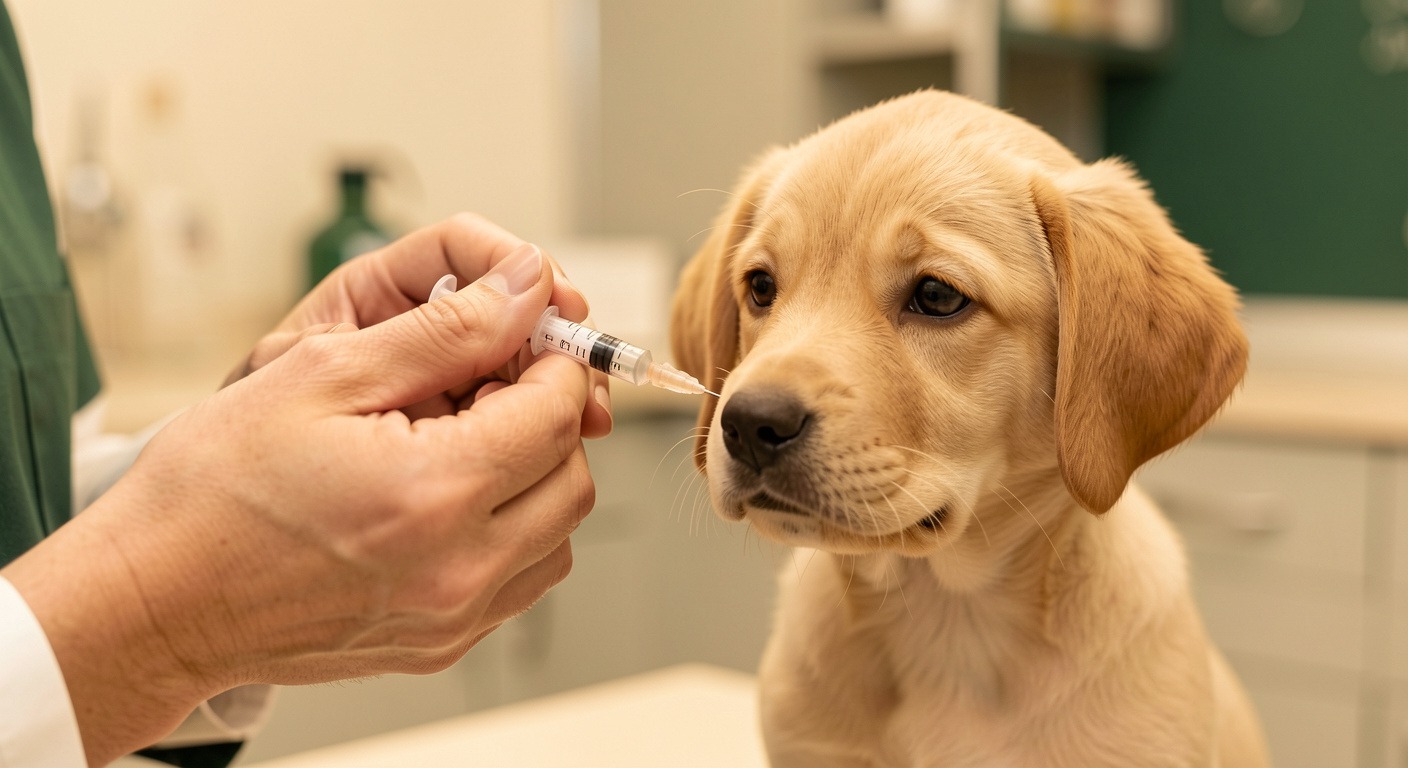
Puppies are born with temporary immunity from their mother’s milk, which fades over the first weeks. That is why they receive a series of vaccines at specific intervals.
| Age | Core Vaccines | Lifestyle Vaccines (if needed) |
|---|---|---|
| 6-8 weeks | DA2PP (first dose) | Bordetella |
| 10-12 weeks | DA2PP (second), Lepto (first) | Lyme (first), Canine influenza (first) |
| 14-16 weeks | DA2PP (third), Lepto (second), Rabies | Lyme (second), Canine influenza (second) |
Important: Until your puppy completes the full series around 16 weeks, they are still vulnerable. Avoid dog parks and high-traffic areas where unvaccinated dogs may have been.

Adult Dog Vaccination Schedule
Once your dog reaches adulthood, the schedule shifts to boosters: DA2PP every 1 to 3 years depending on the vaccine and vet recommendation. Rabies every 1 to 3 years based on state law. Leptospirosis annually. Lifestyle vaccines (Lyme, Canine influenza, Bordetella) annually, with Bordetella sometimes needed every 6 months for high-exposure dogs.
What Each Vaccine Protects Against
Distemper: Highly contagious, attacks respiratory and nervous systems, often fatal.
Parvovirus: Causes severe vomiting and bloody diarrhea; kills rapidly without intensive care.
Rabies: Fatal neurologic virus, legally required vaccination due to public health risk. Unvaccinated dogs who bite may face quarantine or euthanasia.
Leptospirosis: Bacterial disease from wildlife urine; causes kidney and liver failure and can spread to humans.
Bordetella: The most common cause of kennel cough, highly contagious in group settings.
What If My Dog’s Vaccination History Is Unknown?
Common with rescue dogs. The AAHA guidance: when in doubt, vaccinate. Your vet will likely start the full puppy-style series regardless of age.

Are Vaccines Safe?
Yes. Serious reactions are rare (fewer than 1 in 10,000 doses). Mild side effects like temporary lethargy or soreness resolve within 24 to 48 hours. Small breeds and dogs with a history of reactions may benefit from spacing vaccines across separate visits.
How Much Do Dog Vaccines Cost?
DA2PP: $20 to $40 per dose. Rabies: $15 to $35. Leptospirosis: $20 to $35. Bordetella: $20 to $45. Many low-cost clinics and shelters offer vaccines at discounted rates.
Your Vaccination Action Plan
- Find a veterinarian you trust
- Bring any vaccination records you have
- Discuss your dog’s lifestyle risks with your vet
- Follow the recommended schedule and set reminders for boosters
- Keep records accessible
Vaccines are one of the few things in dog care that are genuinely straightforward. A few shots, a few vet visits, and your dog is protected from diseases that were once devastating.
Puptify provides general education, not medical advice. Always consult your veterinarian for your dog’s specific health needs. If your dog shows signs of illness or distress, contact your vet immediately.
Keep Reading


Stay on Top of Your Dog’s Health
Explore our complete collection of health guides for every stage of your dog’s life.
Explore Health Guides →