A Positive, No-Yank Guide to Calm Walks
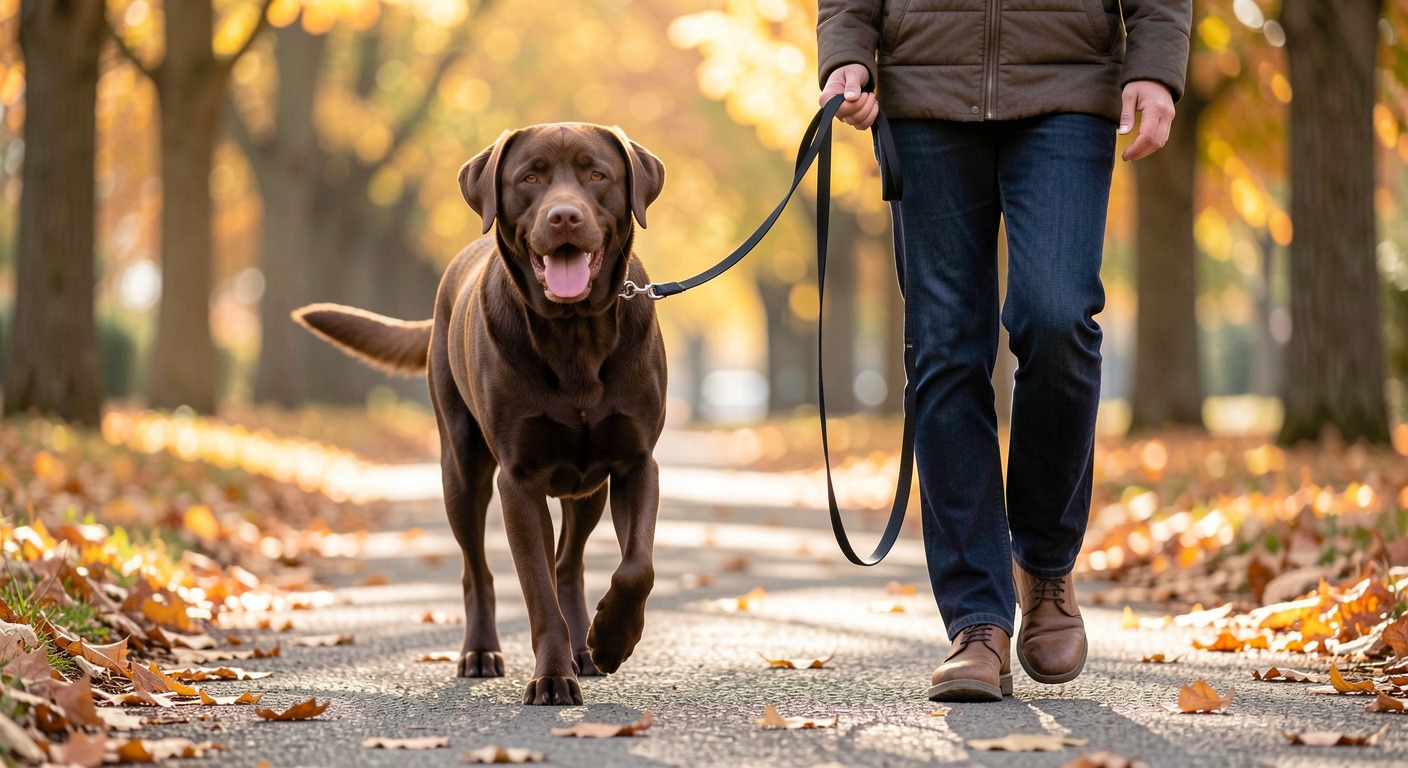
Dogs pull on the leash because moving forward is naturally rewarding , and pulling usually gets them where they want to go faster. The fix is simple in concept but takes consistency: when the leash is loose, you move forward. When it tightens, you stop. Pair this with rewards for walking near you, and most dogs learn within 2-4 weeks of daily practice. Never use choke chains, prong collars, or leash corrections , positive methods work better and don’t damage your relationship.
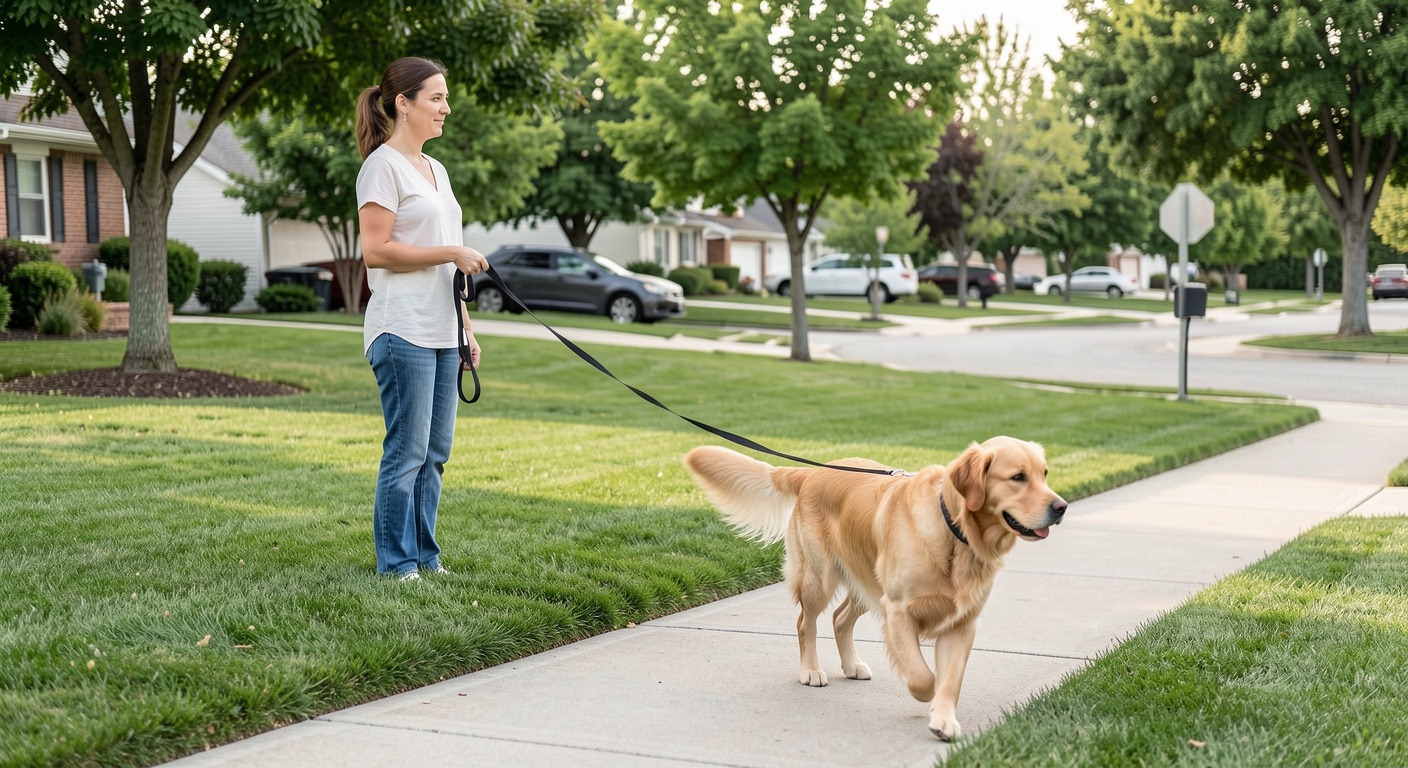
When the leash tightens, your feet stop moving. No yanking, no scolding , just stillness. This teaches your dog that pulling = no progress.
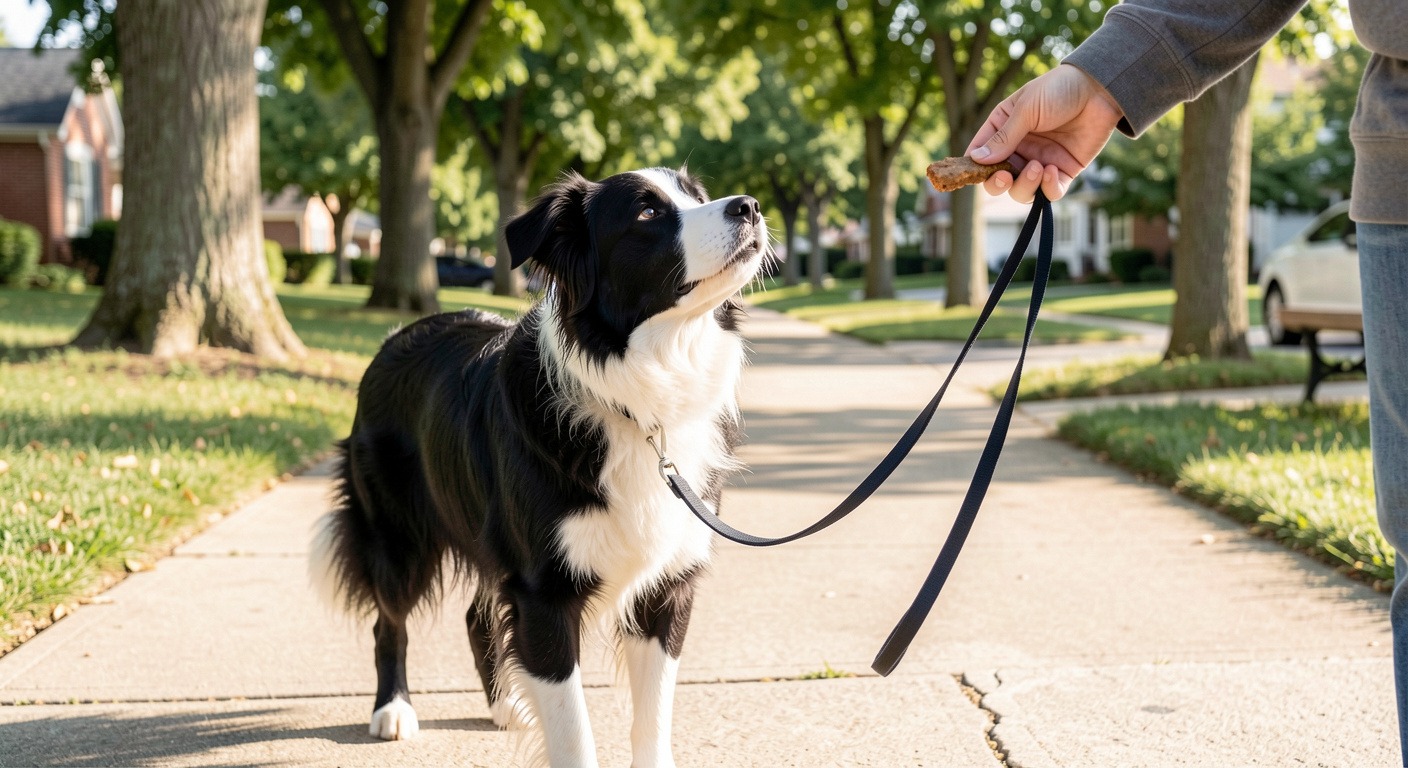
Treat at your hip, not your hand. This teaches your dog where you want them to be , at your side, not out in front at the end of the leash.
If your dog pulls consistently, do an about-turn and walk the other way. This keeps them engaged and teaches them to watch you, not the destination.
Why Dogs Pull , It’s Not Dominance
Dogs pull for a very simple reason: it works. They lean forward, the human moves forward, and they get closer to whatever smells interesting. The dog isn’t trying to “be the alpha” or dominate you , they’re just doing what’s been reinforced, probably since puppyhood.
Dogs also walk faster than humans naturally. Your casual walking pace is a slow crawl for them. Combine that with a world full of fascinating smells, and pulling is almost inevitable , unless you teach them a different way.
The good news: dogs are excellent at learning cause and effect. If pulling stops working and walking close to you starts working better, they’ll switch strategies. That’s the entire principle behind positive leash training.
The Core Method: Stop-and-Go
This is the foundation. Every successful leash training program builds on this principle:
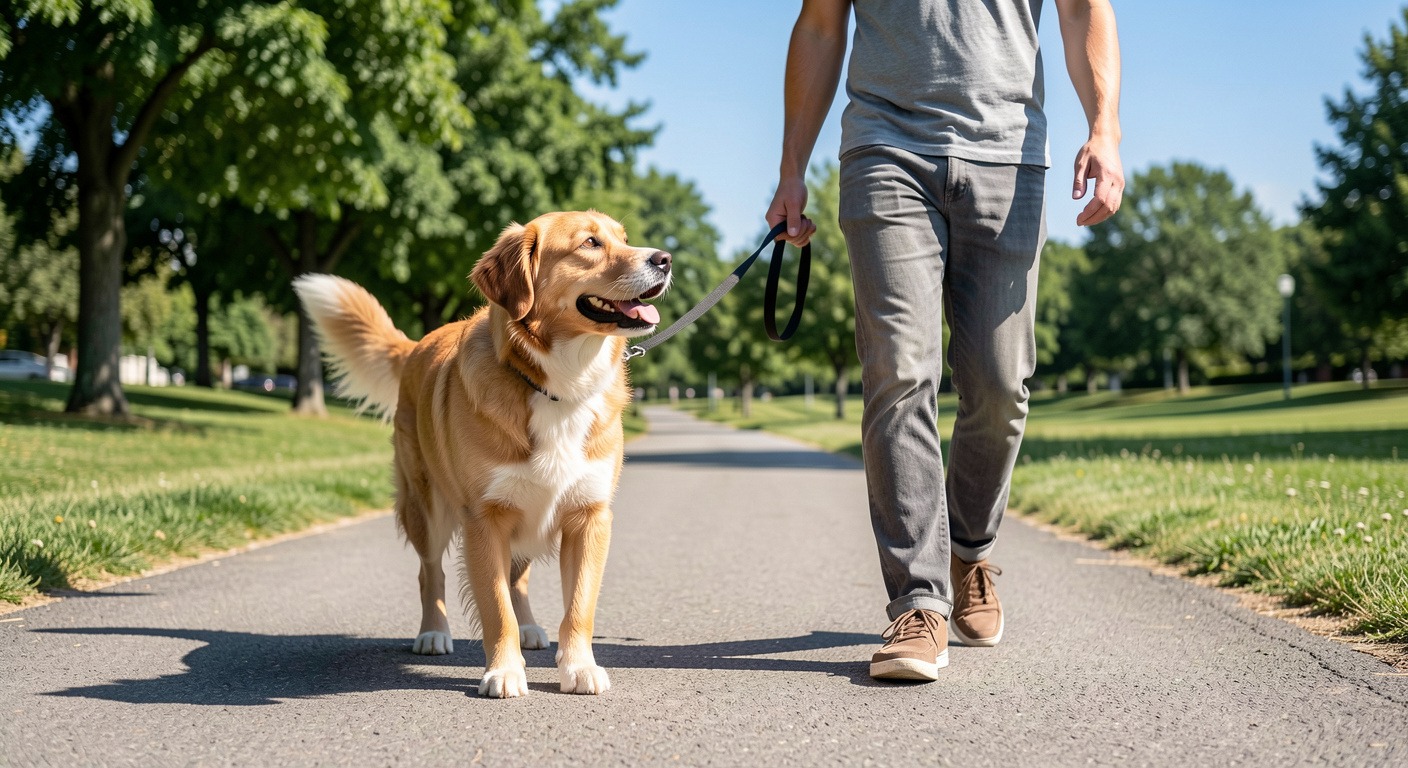
- Start walking. As long as the leash has slack (a U-shape, not a straight line), continue walking forward.
- The moment the leash tightens: stop immediately. Don’t yank. Don’t say “no.” Just stop. Become a tree.
- Wait for slack. Your dog will eventually look back, take a step toward you, or shift their weight enough to create slack in the leash. The instant that happens, mark it (“yes!”) and start walking again.
- Repeat. Hundreds of times. This is the hard part , consistency. Every. Single. Walk. For weeks. If you let pulling work even 20% of the time, your dog learns that pulling is a lottery worth playing.
Skip the choke chains, prong collars, and shock collars. These cause pain and fear, damage the trachea and neck, and increase aggression risk. A well-fitted front-clip harness is the safest choice for most dogs. If your dog pulls so hard you cannot physically hold them, consult a certified positive-reinforcement trainer , not a more painful tool.
Three Training Games That Actually Work
Pure stop-and-go is effective but boring , for you and the dog. Mix in these games to keep training fun and accelerate learning:
1. The 180 Game. When your dog surges ahead, say their name cheerfully and do an immediate about-turn, walking in the opposite direction. When they catch up and the leash slackens, praise and treat at your hip. This teaches: “pay attention to me, not just the path ahead.”
2. The Magnet Hand. Hold 4-5 high-value treats in your hand at your hip. Walk forward with your hand glued to your side. Your dog will follow your hand like a magnet. Deliver a treat every 3-5 steps. Gradually space out the rewards as your dog learns the position.
3. Red Light, Green Light. This works great with kids. One person walks ahead and calls “green light!” , everyone walks. “Red light!” , everyone stops. Your dog learns to stop when the group stops. Make it dramatic and fun. The sillier, the better.
The 4-Week Training Timeline
- Week 1: Practice in your living room or backyard , zero distractions. Focus on teaching the dog that treats happen at your hip. 5-10 minutes, 2-3 times a day.
- Week 2: Move to a quiet sidewalk. Keep sessions short (10 minutes) and always end on a success. Your dog should be successfully walking 10+ steps with a loose leash.
- Week 3: Introduce mild distractions , a quiet park with some smells. Practice direction changes and the magnet hand. Expect some regression , that’s normal.
- Week 4: Real-world walks. Your dog should now have a solid understanding that loose leash = forward movement. Pulling should be occasional, not constant.
What If It’s Not Working?
- Check your treat value: kibble won’t compete with squirrels. Use chicken, cheese, or freeze-dried liver on walks.
- You’re moving too fast: if your dog can’t succeed in the living room, they won’t succeed on the street. Go back to an easier environment.
- Inconsistent enforcement: if pulling works when you’re in a hurry, your dog remembers. Every walk counts.
- Equipment check: a back-clip harness actually encourages pulling (like a sled dog). Switch to a front-clip harness.
- Consider a trainer: if you’ve been consistent for 6+ weeks with zero progress, a certified positive-reinforcement trainer can watch your mechanics and pinpoint the issue.
FAQ
How long does leash training take?
Most dogs show significant improvement in 2-4 weeks of daily 10-15 minute practice sessions. Puppies may learn faster (they have fewer bad habits). Adult dogs with years of pulling history can take 4-8 weeks , they have to unlearn the old pattern first.
Should I use a retractable leash?
No. Retractable leashes teach your dog that pulling creates more freedom, which is the opposite of what you want. They also create safety hazards , rope burns, tangling, and letting your dog dart into traffic. A standard 4-6 foot fixed leash is the right tool.
What about the “be a tree” method when I’m in a hurry?
On days when you genuinely cannot do a training walk (you’re late, it’s pouring rain, you need to get the dog out fast), use a front-clip harness and accept that it’s a management walk, not a training session. Then get back to training on the next walk. Don’t let one rushed walk become the new normal.
Can an older dog learn not to pull?
Absolutely. The learning process is the same for dogs of any age. Older dogs may take slightly longer because they’ve had years of reinforcement for pulling, but the principles work identically. Patience and consistency are the key.
🎓 Ready for Stress-Free Walks?
Start today with 5 minutes of practice in your living room. Calm walks are absolutely achievable , and your dog wants to get it right.
Explore Dog Training Guides →