
Spot the Signs Early and Help Your Dog Find Relief
Dog allergies are an overreaction of the immune system to things like pollen, dust mites, certain foods, or flea bites. The most common sign is itchy, inflamed skin , especially on the paws, ears, belly, and face. Most dogs with allergies can live comfortably with a combination of trigger avoidance, veterinary treatment, and at-home care. But if your dog has open sores, severe scratching, or trouble breathing, contact your veterinarian immediately.
Itching, licking paws, ear infections, and red skin are the top 4 signs. Watch for patterns , seasonal itching suggests environmental triggers.
Your vet can tell you if it’s food, fleas, or environmental allergies. Blood tests and elimination diets are the two main diagnostic paths.
Most dogs improve with a combo of medication, diet changes, medicated baths, and allergy-proofing your home. Relief is absolutely possible.
What Are Dog Allergies, Really?
An allergy is your dog’s immune system attacking something that should be harmless , pollen, a protein in their food, or even flea saliva. Instead of ignoring it, the body launches an inflammatory response that shows up in the skin, ears, and digestive system.
Dogs rarely get the sneezy, watery-eye allergies that humans do. In dogs, allergies hit the skin first. That’s why you’ll see a dog obsessively licking their paws or rubbing their face on the carpet , not sneezing into a tissue.
There are three main types, according to the American Animal Hospital Association (AAHA):
- Environmental allergies (atopic dermatitis): Pollen, mold, dust mites, and grass. These are usually seasonal but can be year-round depending on where you live.
- Food allergies: Usually a reaction to a protein source , most commonly beef, chicken, dairy, or wheat. Less than 10% of all dog allergies are purely food-related.
- Flea allergy dermatitis: An extreme reaction to flea saliva. Even one flea bite can trigger days of intense itching in a sensitive dog.
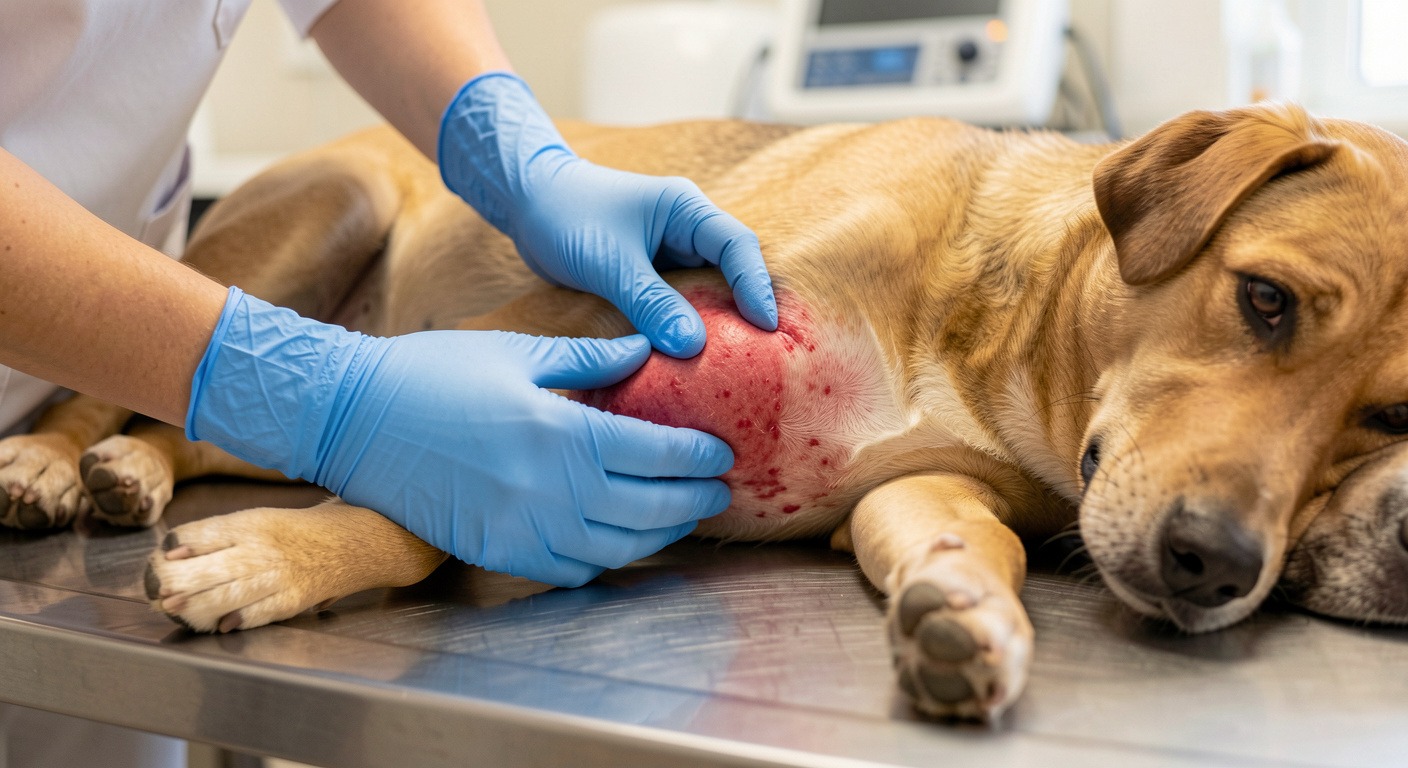
Symptoms: What to Watch For
Not every dog scratches themselves into a frenzy. Allergies can show up in subtle ways that are easy to miss , until the problem escalates. Here are the symptoms that veterinarians look for:
- Excessive licking: Especially paw licking. If your dog spends minutes at a time licking between their toes or around their groin, that’s not normal grooming , it’s itch relief.
- Recurring ear infections: One of the most reliable signs. If your dog gets ear infections twice in six months, allergies are likely the root cause.
- Red, inflamed skin: Look at the belly, armpits, inner thighs, and between toes. Pink or angry-red skin that doesn’t match the rest of the body is a red flag.
- Hair loss: From licking, chewing, or rubbing against furniture. You might see thinning patches on the belly, legs, or base of the tail.
- Scooting or licking the rear: This can be allergies, not just anal gland issues.
- Digestive issues: Vomiting and diarrhea sometimes accompany food allergies, but they’re less common than skin signs.
The key pattern: if symptoms come and go with the seasons, or flare up after eating certain foods, you’re probably looking at allergies rather than a one-time skin problem.
Contact your veterinarian promptly if your dog has: open sores or raw skin, a foul smell from the ears, sudden swelling of the face or muzzle, difficulty breathing, or if the itching is so severe your dog can’t sleep or eat. These are not “wait and see” situations , they need professional attention.

How Vets Diagnose Allergies
There is no single “allergy test” that works for every dog. Diagnosis is a puzzle , your vet puts together clues from history, symptoms, and targeted tests:
- Rule out other causes first: Your vet will check for mites (mange), fungal infections, and thyroid disease , all of which can mimic allergies.
- Flea control trial: Even if you don’t see fleas, your vet may prescribe strict flea prevention for 2-3 months. If symptoms clear up, fleas were the hidden trigger.
- Elimination diet trial: For suspected food allergies, your dog eats a special hydrolyzed protein or novel protein diet for 8-12 weeks , and nothing else. No treats, no table scraps, no flavored medications. If symptoms improve, food was the culprit.
- Intradermal skin testing or blood tests: For environmental allergies, skin testing (injecting tiny amounts of allergens into the skin) is the gold standard. Blood tests exist but are less reliable.
Treatment: Building a Multi-Layered Plan
There’s no cure for allergies , but there absolutely is effective management. Most veterinary dermatologists recommend a multi-modal approach: you attack the problem from several angles at once.
1. Reduce exposure to the trigger. For environmental allergies: wipe your dog’s paws and belly with a damp cloth after walks, use HEPA air filters at home, wash bedding weekly in hot water, and avoid walking during high-pollen times. For food allergies: strictly eliminate the problem ingredient.
2. Strengthen the skin barrier. Omega-3 fatty acid supplements (fish oil) reduce inflammation from the inside. Medicated shampoos and leave-on conditioners with oatmeal, ceramides, or phytosphingosine repair the damaged skin barrier that lets allergens penetrate.
3. Control the itch with medication. Modern options include Apoquel (a daily pill), Cytopoint (a 4-8 week injection), and in some cases, antihistamines. These are prescription-only and must be dosed by your veterinarian , never share medications between dogs or use human allergy meds without explicit veterinary guidance.
4. Immunotherapy for severe cases. Allergy shots or sublingual drops gradually desensitize your dog’s immune system to specific triggers. It’s a long-term commitment , 6-12 months before you see results , but it’s the closest thing to a “fix” for environmental allergies. About 60-80% of dogs show significant improvement.

Common Mistakes Pet Parents Make
- Skipping the vet and trying random remedies: Coconut oil, apple cider vinegar, and over-the-counter antihistamines can delay proper treatment , and some can worsen the problem. Get a diagnosis first.
- Giving up on the elimination diet too early: Food trials take 8-12 weeks minimum. Many people stop at week 3 because they don’t see results , and miss the real answer.
- Treating only the skin without addressing the trigger: Medication controls symptoms, but if you don’t find and reduce the trigger, your dog stays on medication indefinitely.
- Assuming all itching is allergies: Mange, fungal infections, thyroid disease, and even anxiety can cause itching. That’s why the vet visit matters.
FAQ
Can dogs suddenly develop allergies later in life?
Yes. Most environmental allergies appear between ages 1 and 3, but dogs can develop them at any age. A six-year-old dog who’s never itched before can absolutely develop pollen allergies.
Are certain breeds more prone to allergies?
Yes. Golden Retrievers, Labrador Retrievers, French Bulldogs, West Highland White Terriers, and German Shepherds are among the most commonly affected breeds. But any dog , purebred or mixed , can develop allergies.
Is grain-free food better for dogs with allergies?
Not usually. Most food allergies are to animal proteins (beef, chicken, dairy), not grains. Switching to grain-free doesn’t address the real trigger and may introduce other health concerns. Follow your vet’s dietary recommendations.
Can I use human antihistamines like Benadryl on my dog?
Only under direct veterinary guidance. The dosage for dogs is different than for humans, some formulations contain unsafe additives, and antihistamines only help about 30% of allergic dogs. Your vet can tell you if it’s appropriate.
Will my dog outgrow their allergies?
Rarely. Most allergies are lifelong. But with proper management, dogs can live comfortably and happily , the goal is control, not cure.


🐾 Worried About Your Dog’s Skin?
Start with a veterinary exam. The right diagnosis changes everything , and most allergic dogs improve dramatically once the real trigger is identified.
Explore Dog Health Guides →