How to Pick a Food Your Dog Will Thrive On
The best dog food for your dog depends on their age, size, health, and activity level , not marketing. Look for foods that meet AAFCO nutritional standards, are made by companies that employ veterinary nutritionists, and use named protein sources (like “chicken” or “salmon” rather than “meat meal”). Top brands recommended by veterinarians include Hill’s Science Diet, Royal Canin, Purina Pro Plan, and Eukanuba. But the “best” food is one your dog eats well, digests comfortably, and thrives on.
The AAFCO statement on the label tells you if the food is “complete and balanced.” If it’s missing, the food is a supplement or treat , not a full diet.
The WSAVA recommends choosing brands that employ full-time veterinary nutritionists , not brands that just consult one occasionally.
The highest-rated food means nothing if your dog won’t eat it or has digestive issues on it. Shiny coat, good energy, and firm stools are your real quality signals.
What Makes a Dog Food “Good”?
Dog food quality comes down to a few measurable things , not the price tag, not the packaging design, and not what influencers say. Here’s what actually matters:
1. AAFCO Nutritional Adequacy Statement. Every bag of dog food sold as a complete diet in the US must carry this. It confirms the food meets minimum nutrient requirements for either “growth” (puppies), “adult maintenance,” or “all life stages.” If this statement is missing, the food is a treat or supplement , not a complete meal.
2. Named protein sources. The first ingredient should be a specific animal protein: “chicken,” “salmon,” or “beef.” Avoid vague terms like “meat meal” or “animal by-product” where the source isn’t identified. The ingredient list is ordered by weight before cooking, so meat (which is ~70% water) often appears first even when the post-cooking protein content is modest.
3. Manufacturing standards. The World Small Animal Veterinary Association (WSAVA) recommends choosing brands that own their manufacturing facilities (rather than outsourcing to third-party co-packers) and employ full-time board-certified veterinary nutritionists. A brand that can answer “where is your food made?” and “who formulates your recipes?” is one you can trust more reliably.
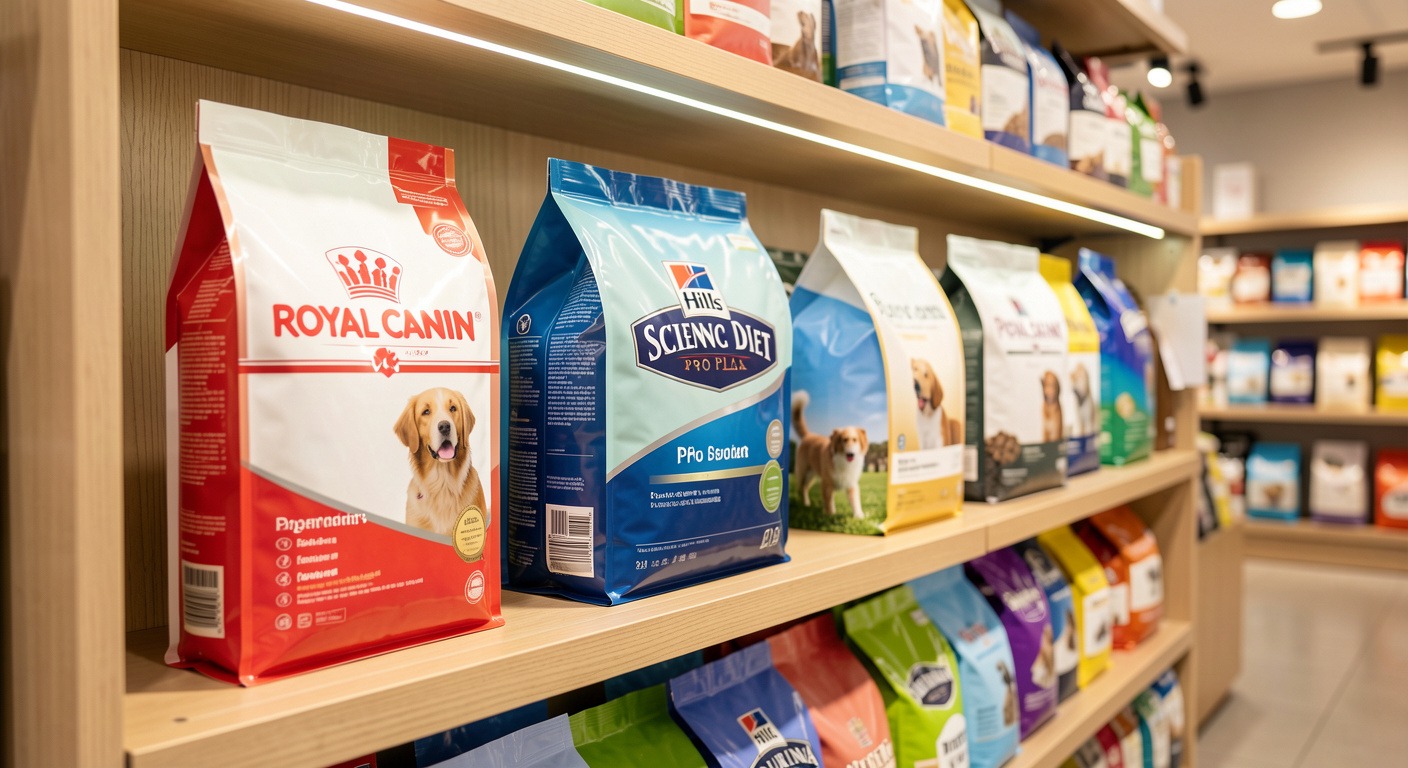
Top Dog Food Brands: 2026 Comparison
| Brand | Best For | Price Range | Key Strength |
|---|---|---|---|
| Hill’s Science Diet | General health, sensitive stomach | $$ | Decades of feeding trials, vet-recommended |
| Royal Canin | Breed-specific, medical diets | $$$ | Precision nutrition by breed size |
| Purina Pro Plan | Active dogs, sport performance | $$ | High protein, excellent quality control |
| Eukanuba | Working dogs, athletic breeds | $$ | Performance-focused, DHA for puppies |
| Iams | Budget-friendly quality | $ | Solid nutrition at accessible price |

Grain-Free: What the Science Actually Says
Grain-free diets exploded in popularity over the last decade, but the FDA has been investigating a potential link between grain-free foods and dilated cardiomyopathy (DCM) , a serious heart condition , in dogs since 2018. The investigation is ongoing, but here’s what’s clear:
Most food allergies in dogs are to animal proteins (beef, chicken, dairy), not grains. True grain allergies are rare. The DCM concern appears to be connected to foods that use peas, lentils, legumes, and potatoes as primary ingredients , often as replacements for grains. If your dog is healthy and has no diagnosed grain allergy, there is currently no established nutritional benefit to grain-free diets.
Bottom line: unless your veterinarian specifically recommends grain-free for a diagnosed medical reason, a food that contains grains (rice, barley, oats) is a safe, nutritionally sound choice.
Wet vs. Dry: Which Should You Feed?
Both are nutritionally complete when they carry the AAFCO statement. The choice comes down to your dog’s needs:
- Dry kibble is more economical, easier to store, and the crunchy texture helps reduce tartar buildup. It’s the go-to for most households.
- Wet food is more palatable for picky eaters, provides extra hydration (helpful for dogs who don’t drink enough), and is often recommended for dogs with dental issues or seniors who struggle with crunching.
- Mixed feeding: many owners do a combination , kibble as the base with a wet food topper for variety and moisture. This can work well as long as you adjust portions to avoid overfeeding.

3 Red Flags on a Dog Food Label
- Ingredient splitting: If you see “peas,” “pea protein,” “pea fiber,” and “pea starch” listed separately, the manufacturer is breaking up a single ingredient to push it lower on the list. Combined, peas may actually be the #1 ingredient.
- No AAFCO statement: If the label doesn’t say “complete and balanced,” this food is not a full diet. It’s a supplement.
- “Veterinarian recommended” without proof: This often means one vet somewhere endorsed it. Look for brands that employ full-time DACVIM (Nutrition) specialists , not marketing claims.
FAQ
How do I switch my dog to a new food?
Transition slowly over 7-10 days: days 1-3: 25% new food, 75% old; days 4-6: 50/50; days 7-9: 75% new, 25% old; day 10: 100% new. A sudden switch can cause vomiting or diarrhea.
Is raw food better than kibble?
Raw diets have enthusiastic advocates but also documented risks , bacterial contamination (Salmonella, E. coli), nutritional imbalances, and bone fragments causing blockages. The AVMA and AAHA do not recommend raw diets due to these safety concerns. If you’re considering raw, consult a veterinary nutritionist first.
Should I rotate proteins?
Rotating proteins (chicken one month, salmon the next) may help prevent food sensitivities from developing and provides nutritional variety. But it’s not necessary , many dogs eat the same food for years and thrive.
🍖 Want a Personalized Recommendation?
Every dog is different. Talk to your vet about your dog’s specific needs , age, breed, activity level, and any health conditions.
Explore Nutrition Guides →