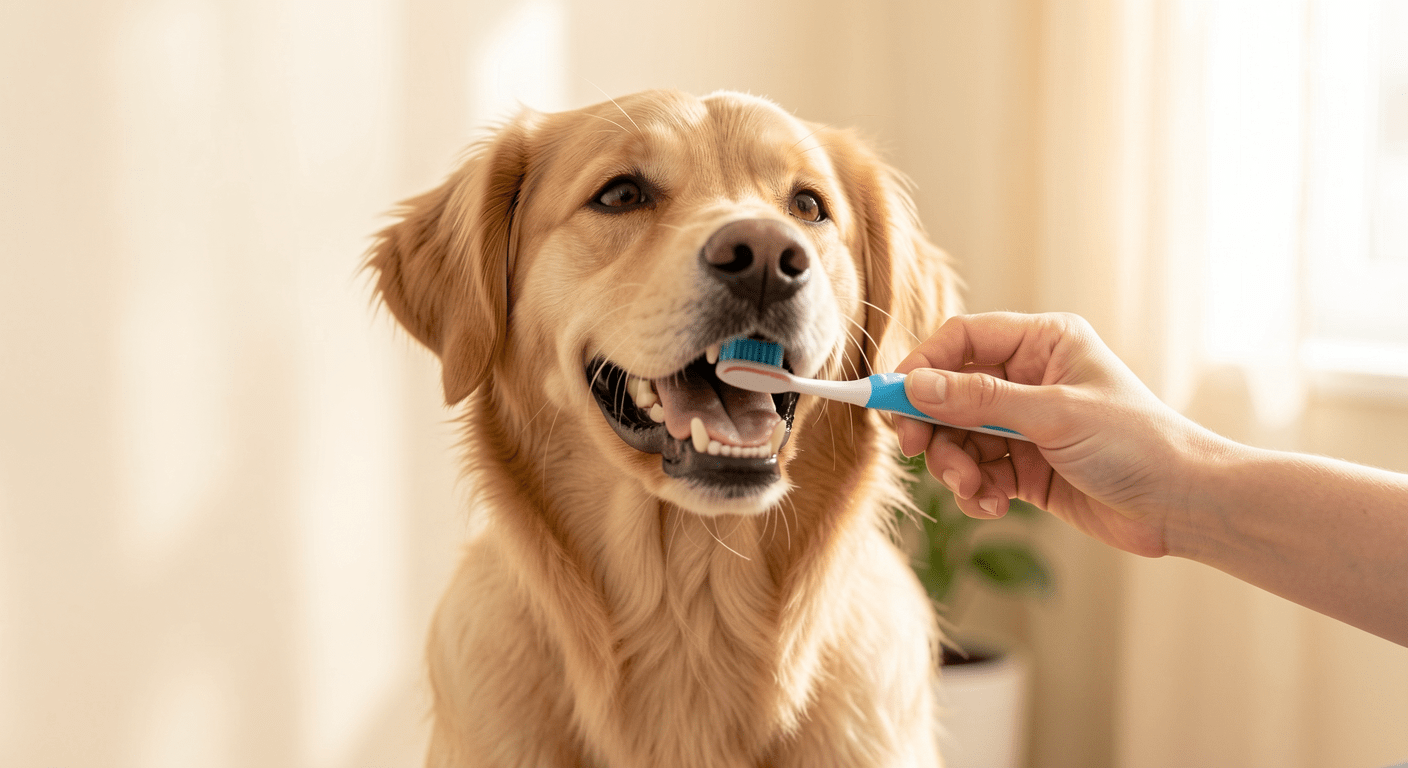
A Healthy Mouth, A Healthier Dog
Daily tooth brushing with dog-specific toothpaste is the single most effective way to prevent dental disease in dogs. Combine brushing with VOHC-accepted dental chews and regular veterinary checkups for the best results. Never use human toothpaste on dogs, it can contain xylitol, which is toxic even in tiny amounts.
Daily brushing with dog toothpaste cuts plaque before it hardens into tartar.
Look for the VOHC Seal of Acceptance, products proven to reduce plaque in clinical trials.
Bad breath, red gums, and yellow buildup are the first clues something’s wrong.
What Is Periodontal Disease?
Periodontal disease is the most common health problem in dogs, which makes canine periodontal disease prevention essential for every pet parent. Over 80% show signs by age three (WSAVA). It starts quietly and worsens fast.
Plaque hardens into tartar within 24 hours. Bacteria irritate gums (gingivitis), then spread below the gumline, destroying ligaments and bone. Teeth loosen, roots become exposed, and infection enters the bloodstream.
Small-breed and toy-breed dogs face higher risk because crowded teeth trap more plaque.
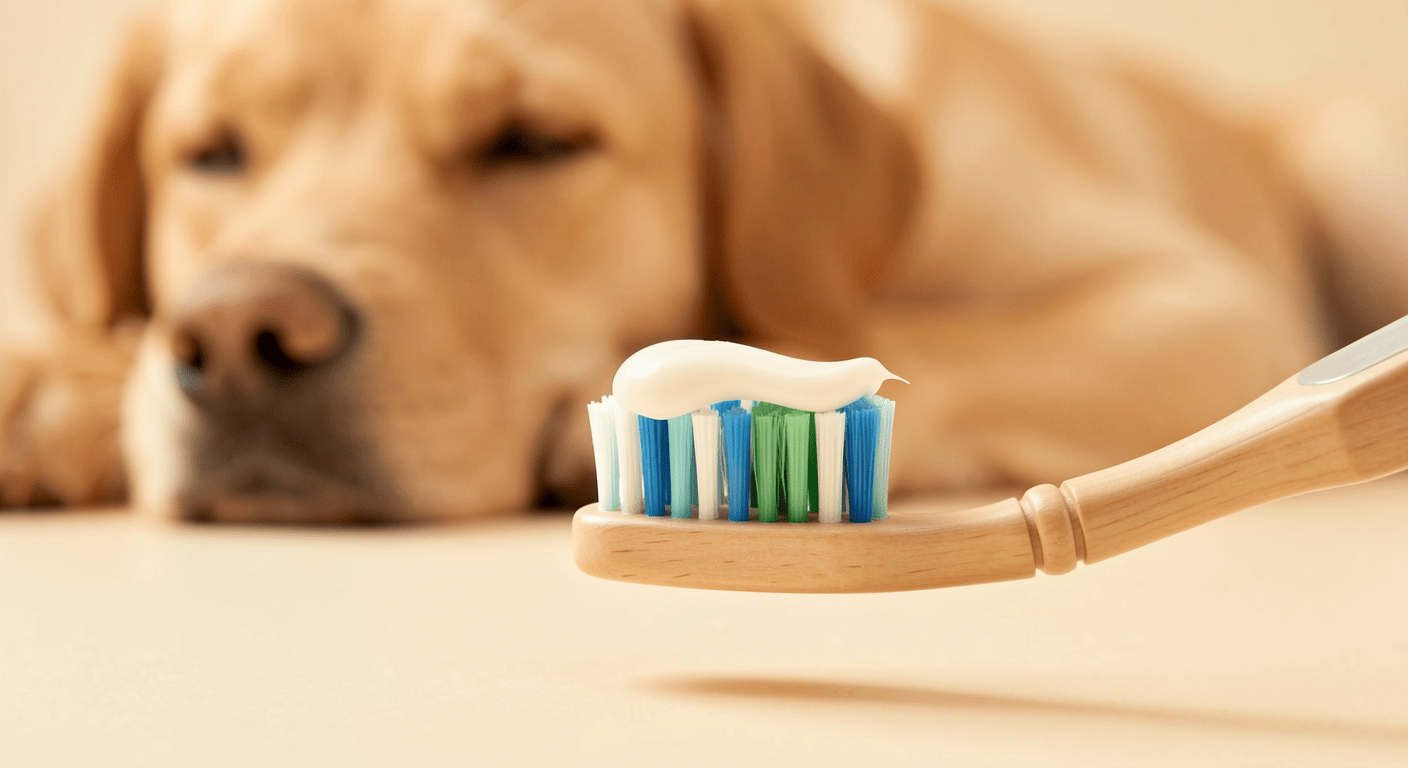
Dog Dental Care Teeth Cleaning Guide: Why It Matters
Dental disease doesn’t stay in the mouth. When gums bleed, oral bacteria enter the bloodstream (bacteremia) and travel to the kidneys, liver, and heart valves.
Dogs hide pain exceptionally well. A dog with infected teeth may eat and wag while suffering silently. Irritability, withdrawal, or reluctance to play are often the only clues. The good news is that dental disease is almost entirely preventable.
Signs Your Dog May Have Dental Problems
Early Warning Signs
- Persistent bad breath (halitosis), healthy mouths should not smell
- Yellow or brown tartar along the gumline, especially on back teeth
- Red, swollen, or bleeding gums (gingivitis)
Moderate to Advanced Signs (Call Your Vet)
- Difficulty eating, chewing on one side, or dropping food from the mouth
- Decreased appetite or refusing food entirely
- Loose or missing teeth
- Excessive drooling, sometimes blood-tinged
- Pawing at the mouth or rubbing the face on surfaces
- Swelling on the jaw, face, or under the eye
- Nasal discharge, which can be bloody if an oronasal fistula has formed
- Behavioral changes: irritability, withdrawal, or sudden aggression
Contact your veterinarian if you notice ANY of these signs. Dental pain is often hidden; behavioral changes may be the only clue.
Toy and small breeds need extra attention because tooth crowding traps more plaque.
Plaque starts hardening into tartar within a day. Brush daily for maximum protection.
With consistent home care, most dogs can avoid serious dental disease entirely.
How to Brush Your Dog’s Teeth: Step-by-Step Guide
Learning how to brush your dog’s teeth at home is the most effective way to prevent dental disease (AVMA). Yet a 2019 AAHA study found nearly two-thirds of pet owners skip vet-recommended dental care. Starting takes patience, but it’s simpler than you might think.
What You Need
- Dog-specific toothpaste (poultry, beef, and peanut butter flavors are popular)
- Dog toothbrush or finger brush with soft bristles
- Gauze or finger brush as an alternative for resistant dogs
The 6-Step Brushing Routine
- Build tolerance gradually (days to weeks). Start by gently stroking your dog’s cheek and muzzle. Once they’re comfortable, progress to lifting the lip, then rubbing your finger along the teeth and gums. Don’t rush, moving too fast can create anxiety.
- Introduce the toothpaste. Let your dog taste a small amount of dog toothpaste from your finger. Rub a small amount along their teeth and gums.
- Introduce the toothbrush. Let your dog lick toothpaste off the brush. If they resist a standard brush, switch to a finger brush or wrap clean gauze around your finger.
- Get into a comfortable position. Sit beside your dog, not in front. Gently wrap your arm around them and hold the muzzle loosely, guidance, not restraint. Pick a calm time when your dog is already relaxed.
- Start brushing. Hold the brush at a 45-degree angle to the gumline. Use gentle circular motions on the outer surfaces of the teeth. Aim for about 30 seconds per side.
- Keep sessions short and positive. End before your dog gets restless. Reward with praise, play, or a dental treat. Consistency matters more than perfection, a quick pass is better than skipping it entirely.
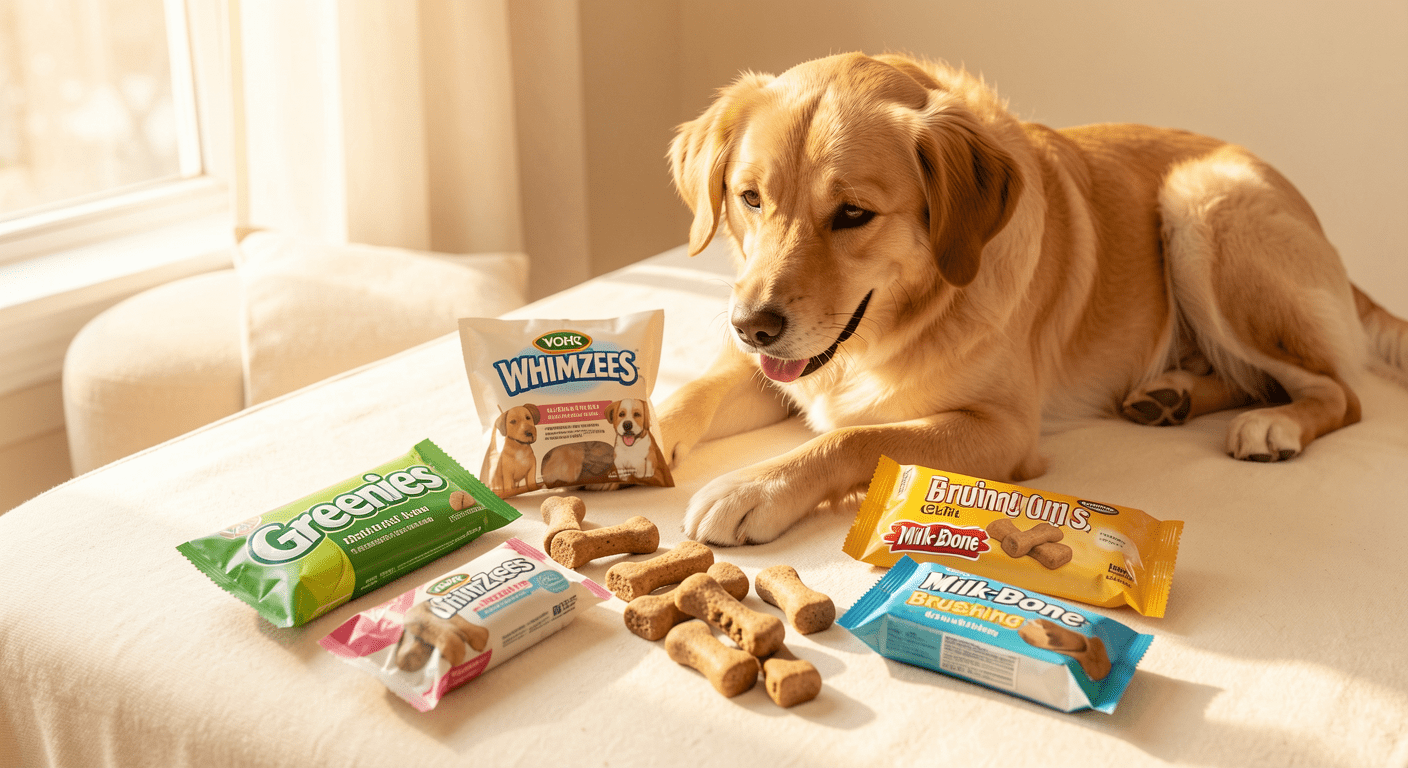
Beyond Brushing: Dental Chews, Diets, and Water Additives
Dental chews complement brushing but don’t replace it. The best dog dental chews VOHC approved are clinically tested to reduce plaque and tartar. Their abrasive texture dislodges plaque and stimulates saliva, cleaning the mouth naturally.
Look for the VOHC Seal
The Veterinary Oral Health Council (VOHC) awards a Seal of Acceptance to products proven in clinical trials to reduce plaque and/or tartar.
VOHC-Accepted Dental Chews
| Product | VOHC Accepted For | Year |
|---|---|---|
| Greenies Canine Dental Chews | Plaque & Tartar | 2007 |
| Purina DentaLife Daily Oral Care | Tartar | 2016 |
| WHIMZEES Brushzees | Plaque & Tartar | 2019 |
| C.E.T. VEGGIEDENT FR3SH | Plaque & Tartar | 2020 |
| Milk-Bone Brushing Chews | Tartar | 2014 |
| OraVet Dental Hygiene Chews | Tartar | 2016 |
Important Guidelines for Dental Chews
Choose the correct size for your dog to prevent choking and follow the daily limit (usually one chew per day). Dental chews contain calories, factor them into your dog’s intake. Always supervise chewing. Avoid hard items like bones, antlers, and hooves, they can fracture teeth.
What to Expect at a Professional Dental Cleaning
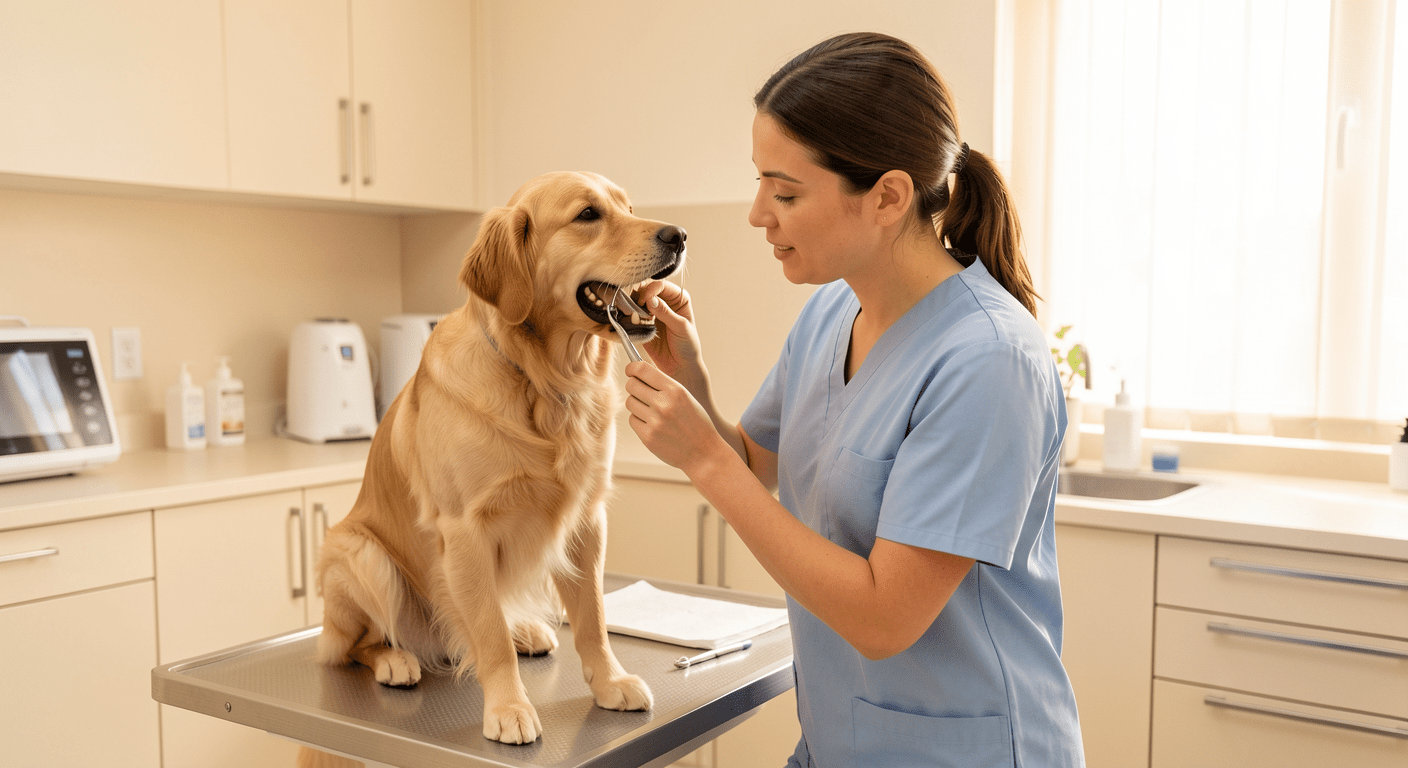
Professional dental cleaning under anesthesia is the only way to thoroughly clean below the gumline, where most dental disease hides. The AVDC and AVMA warn that anesthesia-free cleanings can’t reach below the gumline, may injure your pet, and create a false sense of dental health.
During a professional cleaning, your veterinarian will:
- Perform a full oral exam with dental X-rays to see below the gumline
- Scale away tartar above and below the gumline
- Polish teeth to smooth enamel and slow future plaque buildup
- Treat or extract diseased teeth as needed
NEVER use human toothpaste on dogs. Human toothpaste contains ingredients toxic to dogs. Xylitol can cause life-threatening hypoglycemia and liver failure even in tiny amounts.
Fluoride is also unsafe for dogs to swallow. Only use toothpaste specifically formulated for dogs, never human products.
Avoid hard chew items. Bones, antlers, hooves, hard nylon toys, and ice cubes can fracture teeth. Fractured teeth often require extraction or root canal therapy. Stick to VOHC-accepted dental chews or soft, size-appropriate chew toys.
Anesthesia-free dentistry is NOT safe. The AVDC and AVMA do not recommend it. These procedures can’t clean below the gumline, can injure a struggling pet, and may give a false sense of dental health.
Watch for oral pain when handling the mouth. A dog with dental pain may bite. Stop if your dog shows discomfort or aggression, and have a veterinarian examine the mouth first.
Baking soda is not a safe substitute. It’s high in sodium, tastes unpleasant, and can cause stomach upset. It is not recommended by veterinary dental organizations.
Puptify provides general education, not veterinary diagnosis. Always consult your veterinarian for your dog’s specific dental needs. If your dog shows signs of dental pain, difficulty eating, or facial swelling, contact your vet promptly.
Frequently Asked Questions
Q: How often should I brush my dog’s teeth?
Daily brushing is ideal for preventing plaque from hardening into tartar. Brushing several times per week still helps if daily isn’t possible. Even a quick pass beats skipping it.
Q: What if my dog won’t let me brush their teeth?
Take it slowly. Start by touching the muzzle, then lifting the lip, then rubbing a finger along the gums. Use tasty dog toothpaste as a reward. It can take weeks to build tolerance, and that’s normal.
If your dog shows pain or aggression during mouth handling, have a vet check for existing dental disease first.
Q: Are Greenies and dental chews safe for dogs?
Yes, when used correctly. VOHC-accepted chews like Greenies are tested for safety and effectiveness in clinical trials. Always choose the correct size, supervise chewing, and follow the daily limit on the package.
Q: Do I still need professional cleanings if I brush daily?
Yes. Even with perfect home care, tartar still builds up in hard-to-reach spots. Professional cleanings let your vet clean below the gumline, take X-rays, and catch problems early. Your vet will recommend the right schedule for your dog.
Q: Can I use baking soda or coconut oil instead of dog toothpaste?
No. Baking soda is high in sodium, tastes bad, and can upset your dog’s stomach. Coconut oil hasn’t been proven effective for canine dental care. Stick with toothpaste formulated for dogs, it’s flavored to be palatable and contains enzymes that safely break down plaque.
Keep Reading

A Healthy Mouth Starts Today
Even a quick brush a few times a week makes a real difference. Pick up a dog-safe toothpaste, start slow, and give your pup the gift of a pain-free smile.
Explore All Dog Health Guides →