Know the Warning Signs That Demand Immediate Action
Call your vet now for trouble breathing, collapse, seizures, bloat signs, toxin exposure, pale gums, uncontrolled bleeding, severe pain, or repeated vomiting. When symptoms look sudden or extreme, do not wait for them to pass.
When to Call the Vet: 12 Emergency Signs You Can’t Ignore
Some situations give you hours. Some give you minutes. Here’s how to tell the difference , and exactly what to do before you reach the clinic.
ASPCA Animal Poison Control: (888) 426-4435 | Both available 24/7. Consultation fee may apply.
⚠️ Important Disclaimer
Puptify provides general education, not medical advice. If your dog is showing any of the signs below, call your veterinarian or emergency clinic immediately. Trust your gut , you know your dog best. A “false alarm” vet visit is infinitely better than waiting too long.
🚨 Seconds Count , Go to the Vet NOW
1. Bloat / GDV (Gastric Dilatation-Volvulus)
What it looks like: Distended, hard abdomen (looks like a drum). Unproductive retching , trying to vomit but nothing comes up. Restlessness, pacing, drooling. Collapse in late stages. Deep-chested breeds at highest risk: Great Danes, GSDs, Standard Poodles, Dobermans, Boxers.
✅ DO: Go to the vet immediately. Every minute matters. Call ahead so they’re ready. ❌ DON’T: Wait to see if it passes. Try to make the dog vomit. Give food or water.
2. Poisoning / Toxin Ingestion
What it looks like: Varies by toxin , vomiting, diarrhea, tremors, seizures, collapse, drooling, pale gums. Common culprits: chocolate, xylitol (sugar-free gum, peanut butter), grapes/raisins, rat poison, human medications (ibuprofen = extremely toxic), antifreeze (sweet taste attracts dogs).
✅ DO: Call Pet Poison Helpline (855-764-7661) immediately. Note what they ate, how much, and when. Bring the packaging to the vet. ❌ DON’T: Induce vomiting without vet instruction , some substances cause more damage coming back up. Wait for symptoms to appear. Give home remedies.
3. Seizures
What it looks like: Collapse, stiffening, paddling legs, loss of consciousness, drooling, possible loss of bladder/bowel control. May last 1, 3 minutes. Post-seizure: disorientation, temporary blindness, pacing.
✅ DO: Clear the area of hazards. Time the seizure. Dim lights, quiet room. Go to the vet if: seizure lasts >5 minutes, multiple seizures without recovery between them, or this is the first seizure ever. ❌ DON’T: Put your hands near the dog’s mouth , they cannot swallow their tongue, but they can bite involuntarily. Restrain them.
4. Heat Stroke
What it looks like: Excessive panting (may stop in late stages , this is a dire sign), bright red or blue/gray gums, thick ropey drool, vomiting, staggering, collapse, body temperature >104°F. Brachycephalic breeds (Frenchies, Bulldogs, Pugs) are at extreme risk even in moderate heat.
✅ DO: Move to shade/AC immediately. Cool with room-temperature (not cold) water on paws, belly, and ears. Offer small sips of water. Transport to vet with windows open/AC on. ❌ DON’T: Use ice or ice-cold water (constricts blood vessels, traps heat). Force water into the mouth. Delay , organ damage can be irreversible within minutes.
5. Breathing Difficulty
What it looks like: Labored, open-mouth breathing at rest. Extended neck, elbows pointing outward. Blue, gray, or pale gums (emergency). Choking, gasping, or continuous coughing with distress. Fluid sounds in the chest.
✅ DO: Keep the dog calm and still. Transport to vet immediately , call ahead. ❌ DON’T: Attempt to fish an object out of the throat unless you can clearly see and easily grasp it. Stress the dog. Delay , respiratory distress can deteriorate rapidly.
6. Collapse / Sudden Weakness
What it looks like: Sudden inability to stand or walk. Pale or white gums. Rapid heart rate or very slow heart rate. Cold extremities. May be caused by internal bleeding (especially after trauma , even if the dog seemed fine initially), heart problems, or anaphylaxis.
✅ DO: Keep the dog warm and still. Transport to vet immediately , carry if possible. ❌ DON’T: Force the dog to walk. Give food or water. Wait to see if they “snap out of it.”
⚠️ Hours Matter , Urgent (Same-Day) Vet Visit
7. Severe Bleeding
Apply firm, direct pressure with a clean cloth or gauze for at least 5, 10 continuous minutes , do not lift to check. If blood soaks through, add more layers on top (don’t remove the original). For limb wounds, elevate if possible without causing pain. Tourniquets are a last resort , only for life-threatening arterial bleeding (bright red, spurting) and only with vet phone guidance.
8. Eye Injuries
Squinting, excessive tearing, pawing at the eye, visible scratch or cloudiness, the eye looks misshapen, or the dog is holding it completely shut. Do not attempt to remove anything from the eye. Prevent rubbing , use an e-collar if available. These are extremely painful and can progress to blindness quickly.
9. Inability to Urinate
Straining to urinate with little or nothing coming out, crying while trying, blood in urine, distended painful abdomen. This is most commonly a urinary blockage , life-threatening within 24, 48 hours. Male dogs are at highest risk. The bladder can rupture. This is a genuine emergency.
10. Snake Bites
Sudden yelp, swelling at the bite site (often face or leg , two small puncture wounds may be visible), rapid swelling, weakness, drooling, dilated pupils, difficulty breathing, collapse. Keep the dog calm and still , movement spreads venom. Carry to the car. Remove collar (neck swelling). Do not apply ice, tourniquet, or attempt to suck venom. Identify the snake if possible (photo from safe distance) , don’t risk getting bitten.
11. Allergic Reaction / Anaphylaxis
Facial swelling (especially muzzle and around eyes), hives (raised bumps on skin), intense itching, vomiting, diarrhea, difficulty breathing, collapse. Most commonly triggered by vaccines (rare , <1 in 10,000), insect stings, or new medications. This can progress within minutes to hours. Go to the vet immediately , do not give human antihistamines without vet approval.
12. Traumatic Injuries
Hit by car, fall from height, bite wounds, any injury causing limping/bleeding/visible deformity. Even if the dog seems fine: internal injuries can take hours to show symptoms. Adrenaline masks pain. Any dog hit by a car needs a veterinary exam , period. Approach injured dogs carefully , pain can cause even the gentlest dog to bite. Use a makeshift stretcher (board, blanket sling) for suspected spinal injuries.
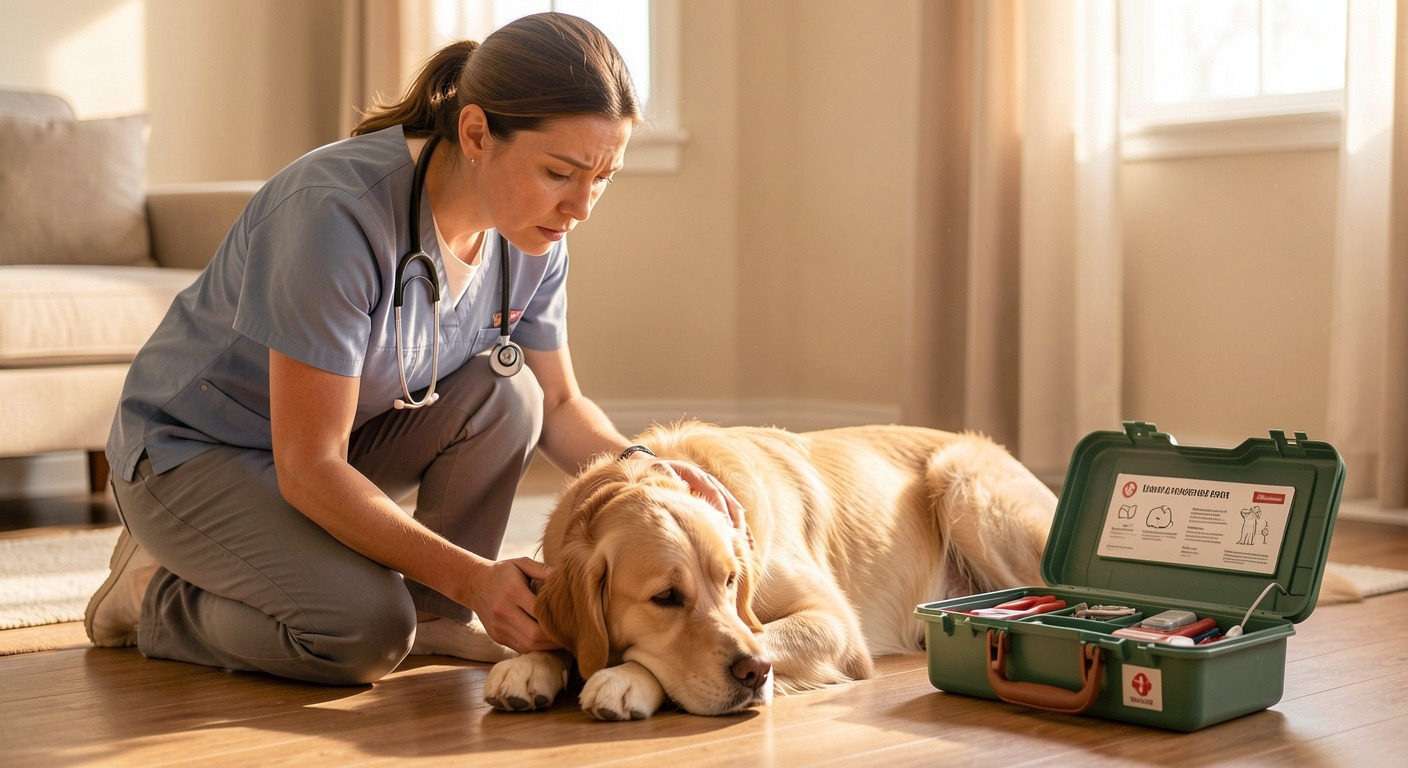
Pet First Aid Kit Essentials
Keep these items in an accessible, clearly labeled container , and know where the nearest 24-hour emergency vet is before you need it.
- Digital thermometer (normal dog temp: 101, 102.5°F) + lubricant
- Sterile gauze pads, rolled gauze, and self-adhering bandage wrap (vet wrap)
- Antiseptic wipes (chlorhexidine or povidone-iodine , NOT hydrogen peroxide for wounds)
- Blunt-tipped scissors and tweezers
- Disposable gloves
- Muzzle or makeshift muzzle (gauze roll) , injured dogs may bite
- Pet Poison Helpline number: (855) 764-7661
- Your vet’s number and nearest 24-hour emergency clinic address
- 3% hydrogen peroxide (ONLY for vet-directed induced vomiting , never give without instruction)
- Towels and a blanket
- LED flashlight
How to Transport an Injured Dog Safely
- Protect yourself first. Even the gentlest dog may bite when in pain. Use a muzzle if the dog is conscious and not having breathing difficulty or vomiting.
- For suspected spinal injuries: Use a rigid surface , a board, large cutting board, or a blanket used as a stretcher with two people. Keep the spine as straight as possible.
- Carry the dog , even if they can walk. Movement can worsen internal injuries.
- Keep warm , cover with a blanket. Shock causes body temperature to drop.
- Call ahead , let the clinic know you’re coming and what happened. They may give you specific instructions for the drive.
Trust Your Gut. Act With Love.
You will never regret an unnecessary vet visit. You may forever regret waiting too long. Your dog depends on you to make the call , and you know them better than anyone. If something feels wrong, it probably is.
Browse All Health Guides →

1 thought on “When to Call the Vet: 12 Emergency Signs Every Dog Owner Must Know”
Comments are closed.