Your Puppy’s Safe Space Starts Here
If the word “crate” makes you think of a cage or punishment, you’re not alone. But when done right, a crate becomes your puppy’s bedroom , a safe den where they can decompress, sleep soundly, and stay out of trouble when you can’t supervise. Dogs are den animals by instinct. The crate taps into that 15,000-year-old wiring. The goal isn’t confinement , it’s security.
Crate training works because it gives your puppy a predictable, safe place that prevents destructive behaviors and accelerates house training. The key is to never use the crate as punishment and never leave a young puppy crated longer than their bladder can hold (roughly: age in months + 1 = max hours, up to 8 hours for adults). Done well, most puppies love their crates within 2 weeks. The UC Davis School of Veterinary Medicine recommends crate training as a core part of puppy raising.
Step 1: Set Up the Crate Like a Den, Not a Cage
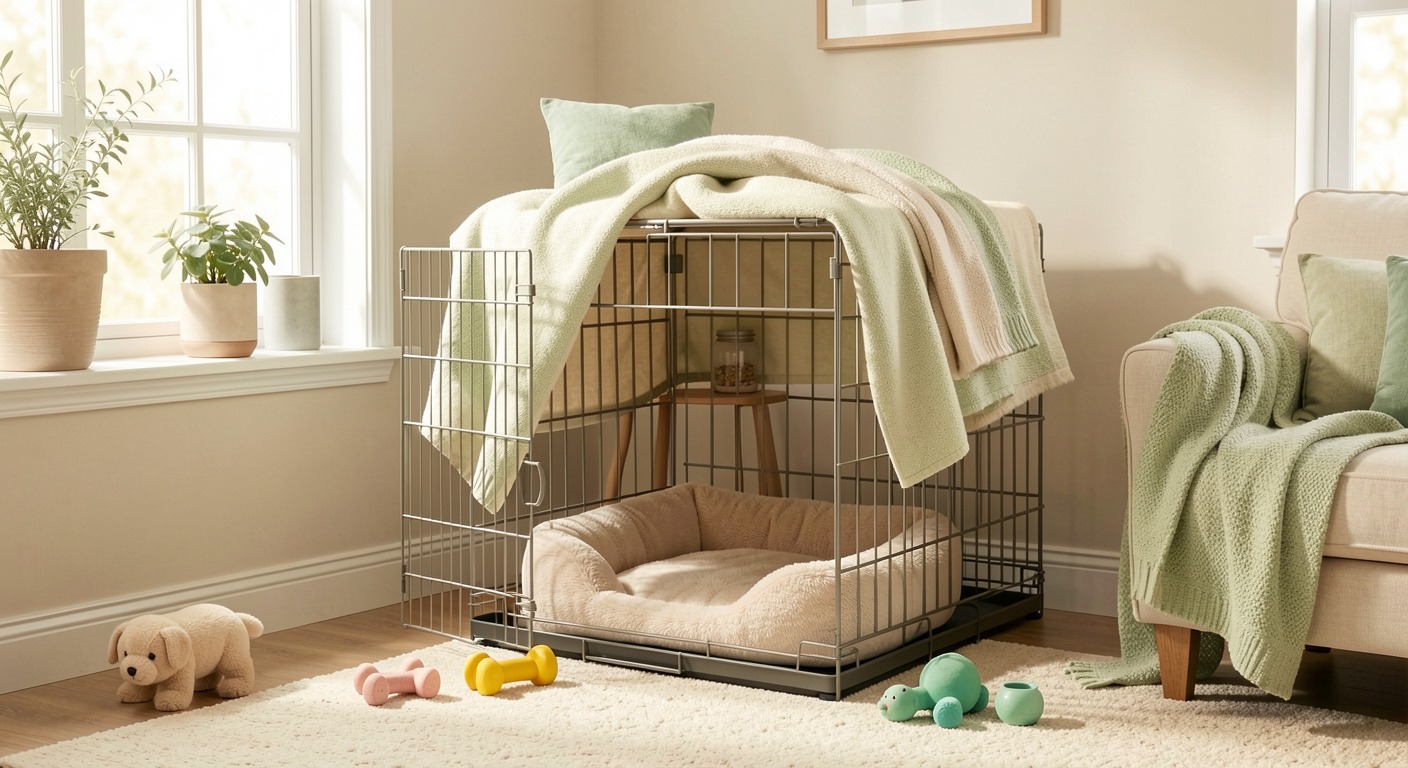
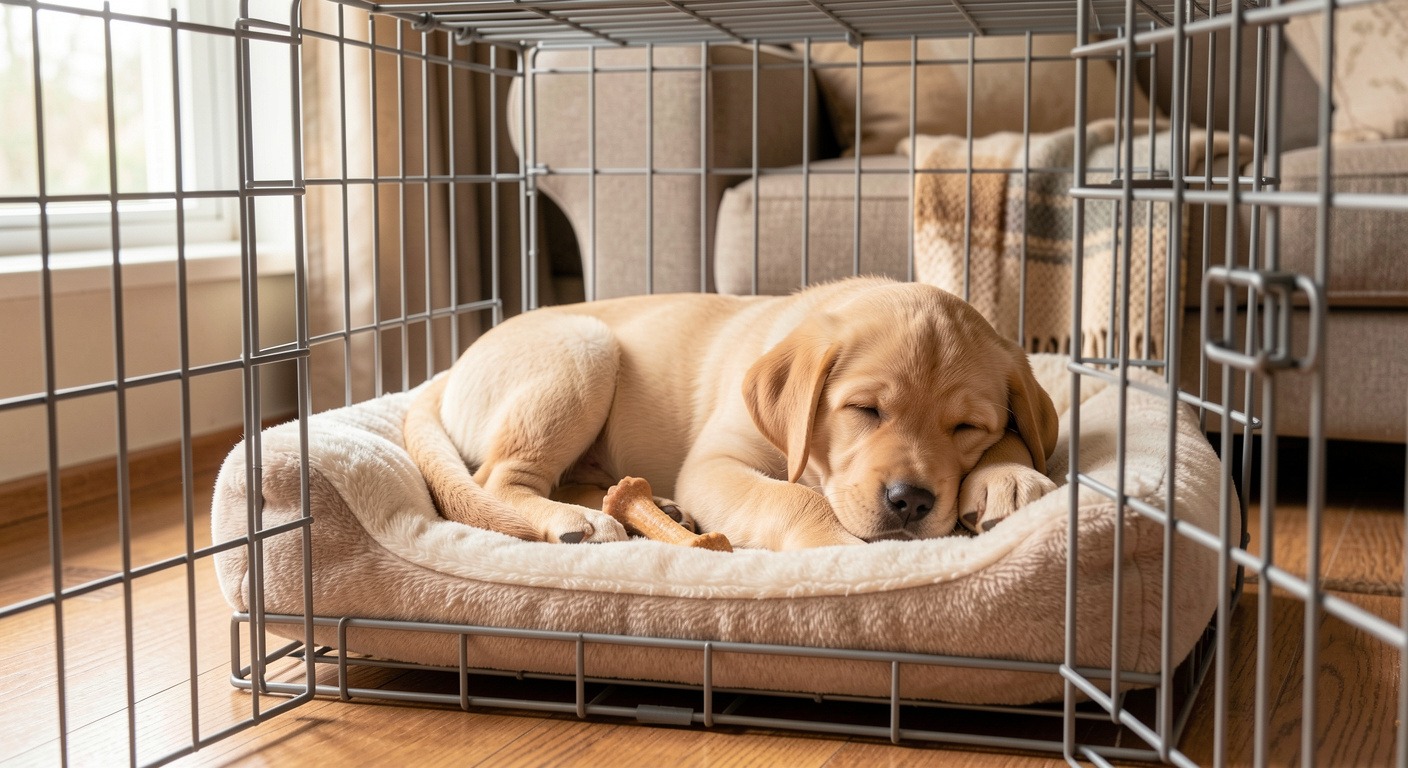
Choose a wire crate with a divider panel , it should be just big enough for your puppy to stand up, turn around, and lie down comfortably. Too big, and they’ll use one corner as a bathroom. Place the crate in a family area (living room during the day, bedroom at night) so your puppy doesn’t feel isolated. Add a soft, washable bed, a safe chew toy, and drape a light blanket over the top and back to create a cozy den feel , leaving the front open for ventilation.
Step 2: Build Positive Associations First
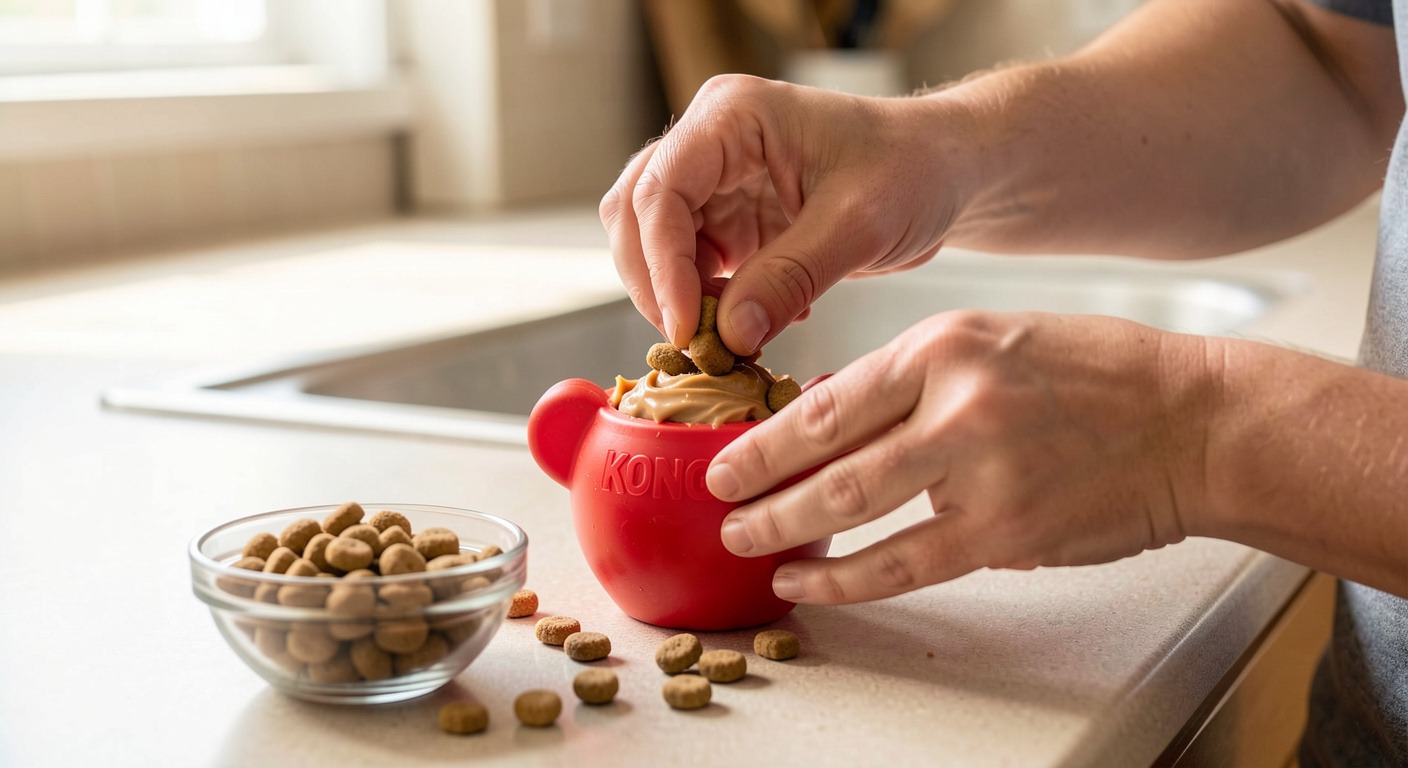
Before you ever close the door, spend 2-3 days making the crate the best place in the house. Toss treats inside and let your puppy wander in and out freely. Feed all meals near the crate, then just inside the open door, then all the way in. Stuff a Kong toy with peanut butter and kibble, freeze it overnight, and give it to your puppy only inside the crate. The message: amazing things happen in here.
Step 3: Close the Door Gradually
Once your puppy happily enters the crate for treats, it’s time to close the door , for just 5 seconds at first. Stay right next to the crate. Open the door before they whine. If they stay quiet, give a treat through the bars. Gradually extend to 30 seconds, 1 minute, 5 minutes, always returning before they get anxious. This teaches your puppy that the door closing isn’t permanent , you always come back.
The 3-Day Intro Plan
Day 1: Door open only. Feed meals inside, toss treats, let puppy explore freely. No closed door at all. Day 2: Close door for 5-30 seconds while you’re visible, treat for quiet. Day 3: Close door for 1-5 minutes, step briefly out of sight and return.
Max Crate Time by Age
8-10 weeks: 1 hour max. 11-14 weeks: 2-3 hours. 15-16 weeks: 3-4 hours. 4-6 months: 4-5 hours. Adult: 6-8 hours max. Never leave a puppy crated all day , arrange a midday potty break.
What NOT to Do
Never force your puppy into the crate. Never use it as punishment. Never leave a collar on in the crate (strangulation risk). Never crate a puppy with a full bladder , potty first, then crate.
Nighttime Crate Training: The First Week
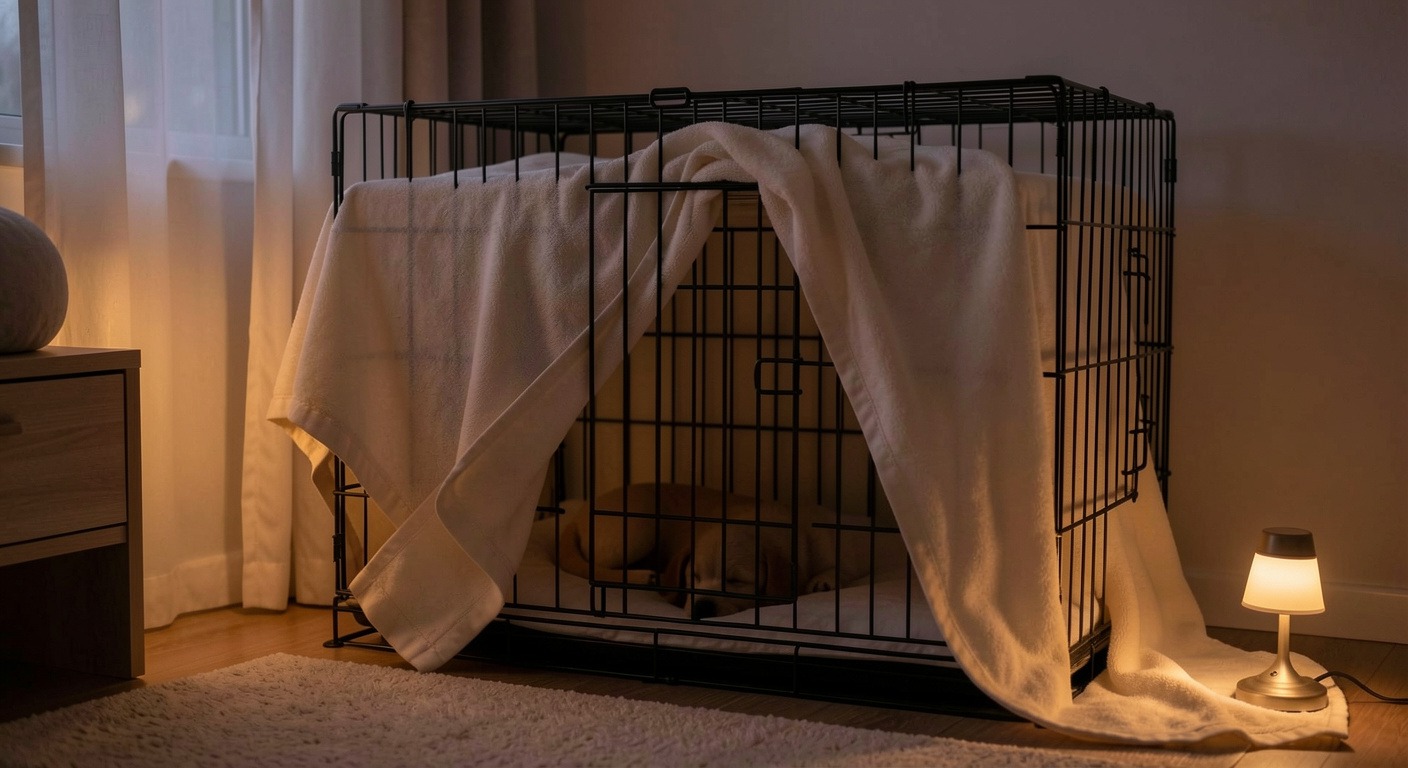
The first few nights are the hardest. Put the crate right next to your bed , your puppy just spent 8 weeks sleeping in a pile of littermates and suddenly they’re alone. Your presence and scent are comforting. If they whine, place your hand on the crate for a moment , don’t open the door and don’t make a big deal of it. Most puppies settle within 5-10 minutes. Set an alarm for a middle-of-the-night potty break (around 2-3 AM for an 8-week-old). Keep it boring: outside, potty, praise quietly, back to crate. No playtime at 3 AM.
FAQ: Crate Training Questions
Q: What if my puppy cries in the crate?
First, rule out needs: do they need to potty? Are they thirsty? Hot? If all needs are met, wait 5-10 minutes of quiet before letting them out , otherwise, you teach them that crying gets them released. If crying continues beyond 15 minutes, something is wrong (too long crated, separation anxiety, or they were crated before learning to love it). Go back to Step 1 and rebuild positive associations.
Q: Can I use a crate for an older dog?
Absolutely. The same principles apply, but go slower , older dogs may have negative associations with confinement from past experiences. It may take 2-4 weeks instead of a few days. Never rush an adult dog into a crate.
Q: Should I put water in the crate?
Not for short crate sessions (under 2-3 hours). For longer periods or overnight, use a clip-on water bowl attached to the crate wall to prevent spills. Puppies don’t need water overnight after about 12 weeks old.
Q: What if my puppy has an accident in the crate?
Don’t punish , they couldn’t hold it, and punishment in the crate poisons the safe-space association. Clean thoroughly with an enzymatic cleaner to remove all scent, and adjust your schedule: more frequent potty breaks, smaller crate (use the divider), or shorter crate sessions.
Q: When can my puppy sleep through the night?
Most puppies can sleep 6-8 hours without a potty break by 4-5 months of age. Small breeds may take longer (smaller bladder). The rule of thumb works in reverse too: if a 4-month-old puppy wakes you at 2 AM, they genuinely need to go , their bladder isn’t fully developed yet.
🐾 Keep Reading


Give Your Puppy the Best Start
Everything you need to navigate the first few months with confidence , from supplies to training to socialization.
New Dog Owner Guides →