Safer Toys, Happier Play
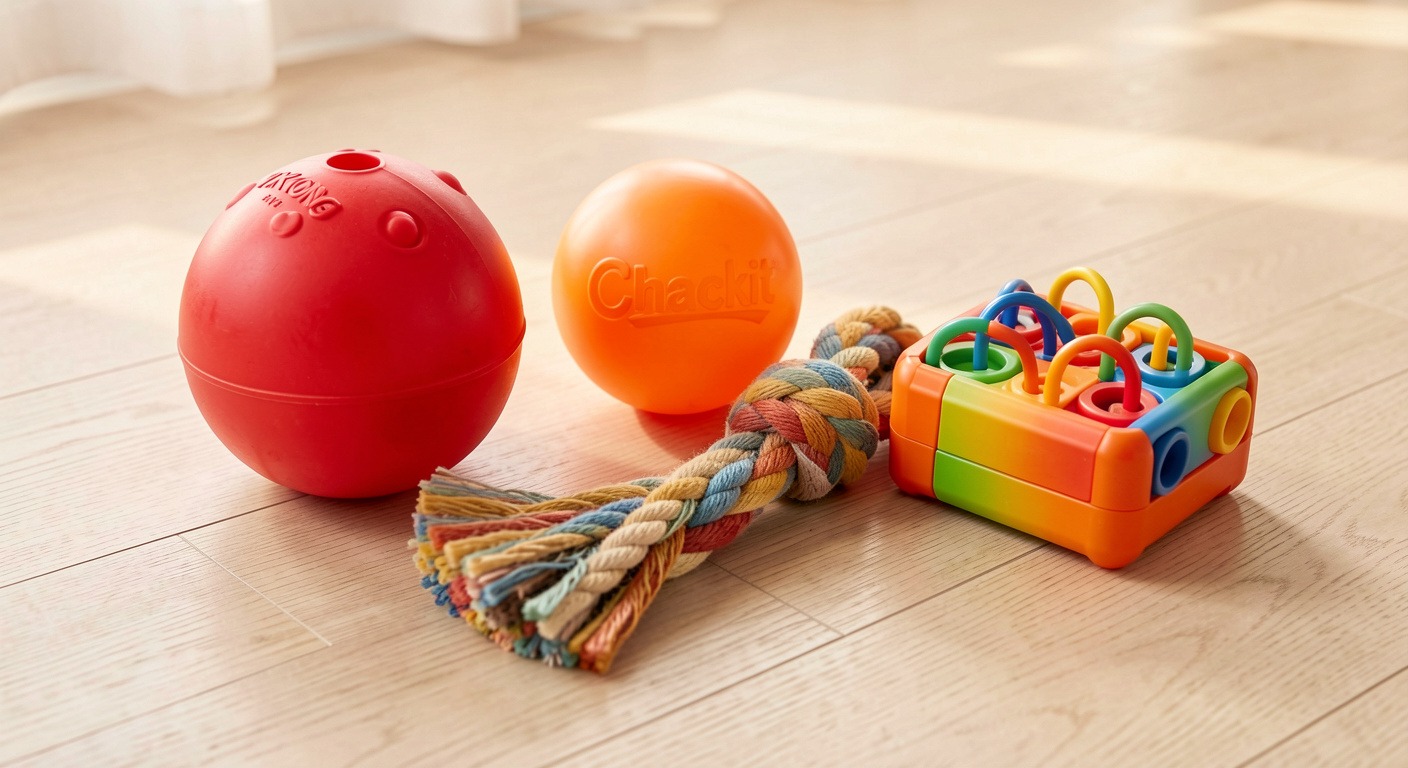
You buy your dog a new toy. Ten minutes later, it’s in pieces , stuffing everywhere, a squeaker on the floor, and a very proud dog who’s already looking for the next thing to destroy. Sound familiar?
The right dog toy isn’t just about durability. It’s about safety, engagement, and matching the toy to your specific dog’s play style. A toy that’s perfect for a gentle Golden Retriever could be a choking hazard for a determined Pit Bull. A puzzle that fascinates a Border Collie might bore a Bulldog to sleep.
Quick Answer: For most dogs, a rotation of 5, 7 toys covering different play types works best: one tough chew (Kong Extreme), one puzzle/treat toy (Nina Ottosson), one tug toy (rope or rubber), one fetch toy (Chuckit ball), and one comfort toy (if your dog likes soft things). Always supervise new toys until you know how your dog plays with them. When in doubt, choose the next size up , a toy that’s too small is a choking or swallowing risk.
How to Choose Safe Dog Toys: The 3-Second Test
Before you buy any toy, ask yourself three questions:
- Size check: Is this toy too small to swallow whole? If it fits entirely inside your dog’s mouth, it’s a risk. Go one size up.
- Material check: Can pieces break off that would cause a blockage? Hard nylon chews that splinter, rope toys that unravel into strings, and plush toys with plastic eyes/noses are common offenders.
- Hardness check: Can you dent it with your thumbnail? If not, it’s too hard for your dog’s teeth. A good rule: the toy should give a little. Toys harder than teeth can cause dental fractures.
⚠️ Immediate vet visit if your dog: Swallows a toy piece, squeaker, or large chunk; starts vomiting or retching; stops eating; seems lethargic or in pain. Intestinal blockages from toy pieces are a life-threatening emergency.
The 6 Types of Dog Toys (and Which Dogs Need Each)
1. Tough Chew Toys , For Power Chewers
Best for: Dogs who destroy everything in under 5 minutes. Pit Bulls, German Shepherds, Rottweilers, Labs.
Top picks: Kong Extreme (the black one , much tougher than red), Goughnuts Maxx ring (has a red inner layer that warns you when to replace), West Paw Zogoflex toys (recyclable, dishwasher-safe, nearly indestructible).
Avoid: Antlers and bones that are harder than teeth. Cooked bones (splinter). Rawhide (choking hazard, chemical processing concerns). Nylabones that are too hard (thumbnail test above).
Price range: $10, $30
2. Puzzle and Treat-Dispensing Toys , For Smart, Food-Motivated Dogs
Best for: Border Collies, Poodles, Australian Shepherds, any dog who gets bored and destructive when left alone.
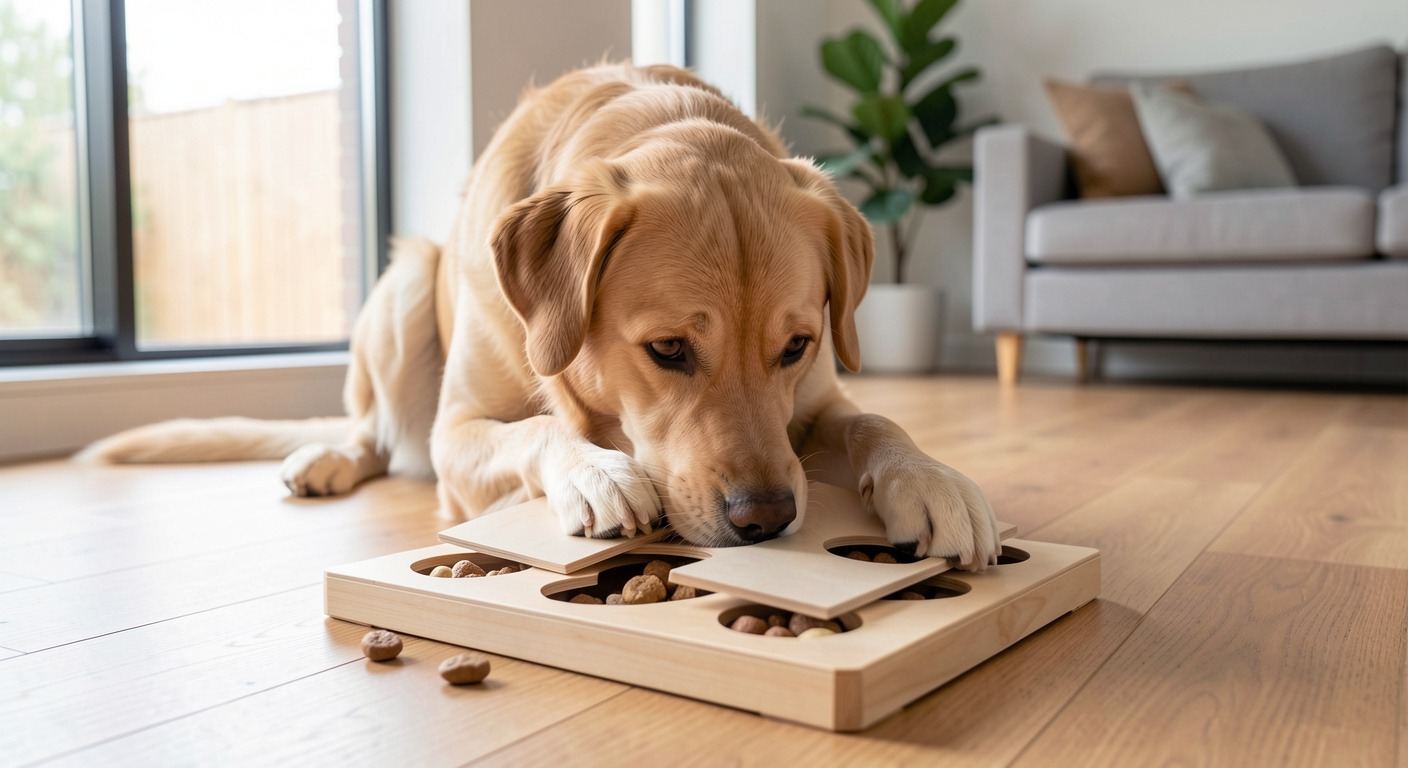
Top picks: Kong Classic (stuff with kibble and peanut butter, freeze for longer engagement), Nina Ottosson puzzle toys (multiple difficulty levels), Outward Hound Hide-A-Squirrel (plush puzzle , not for chewers), Snuffle mats (DIY-friendly, great for seniors and flat-faced breeds).
Pro tip: Start with the easiest puzzle level even if your dog is smart. Build confidence first, then increase difficulty. A frustrated dog will just brute-force destroy the puzzle.
Price range: $8, $40
3. Fetch Toys , For Runners and Retrievers
Best for: Retrievers, herding breeds, any dog who lives for the chase.
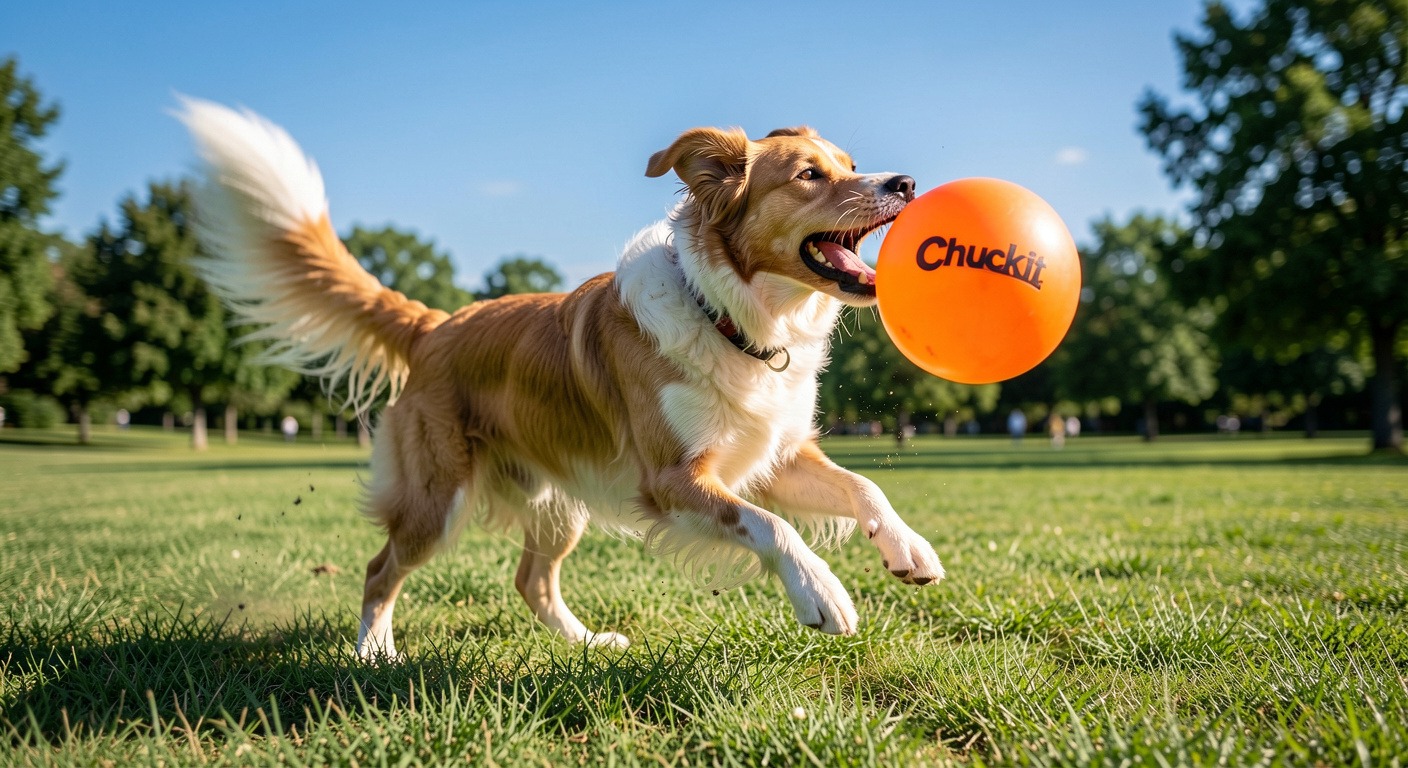
Top picks: Chuckit Ultra balls (high bounce, easy to clean, float in water), West Paw frisbees (soft on mouths), Kong Flyer (durable rubber frisbee).
Avoid: Tennis balls as everyday chew toys , the abrasive fuzz wears down tooth enamel over time. Fine for fetch, but put them away after the game. Sticks from the ground , they splinter and can puncture mouths and digestive tracts.
Price range: $5, $20
4. Tug Toys , For Interactive Play
Best for: Dogs who love wrestling and pulling games. Most breeds enjoy tug , it’s natural play behavior.
Top picks: Braided fleece tug ropes (soft on gums), rubber tug toys with handles (for human comfort), West Paw Bumi (stretchy, floats).
Safety rules for tug: Let your dog win sometimes , it builds confidence and keeps them interested. Teach “drop it” before playing tug. Stop if teeth touch skin. Don’t jerk the toy side to side , this can injure neck vertebrae. Rope toys should be thrown out when they start unraveling; swallowed strings cause dangerous intestinal linear foreign bodies.
Price range: $8, $25
5. Comfort and Soft Toys , For Gentle Dogs and Puppies
Best for: Puppies who need something to snuggle, gentle adult dogs, dogs with separation anxiety who benefit from a “cuddle buddy.”
Top picks: Fluff & Tuff toys (double-stitched seams, minimal stuffing), Kong Cozie (tough plush , not for destructive dogs), Snuggle Puppy (has a heartbeat simulator for anxious puppies).
Important: If your dog disembowels plush toys, these aren’t for unsupervised play. Some dogs will eat the stuffing and squeakers. Supervise or skip this category entirely.
Price range: $10, $30
6. Enrichment Toys , For Nose-Focused Dogs
Best for: Hounds, Beagles, any dog who loves sniffing. Great for rainy days and mental exercise.
Top picks: Snuffle mats (hide kibble in fabric strips), lick mats (spread peanut butter or wet food , calming activity), Toppl (alternative to Kong, easier to clean), DIY options: cardboard box with crumpled paper and scattered treats, rolled-up towel with kibble hidden in folds.
Price range: $5, $35
The Toy Rotation System (Why It Works)
Leave all your dog’s toys out at once and they become background noise , nothing special. A toy rotation keeps 3, 4 toys out at a time and swaps them weekly.
How to do it:
- Gather all toys into a bin your dog can’t access.
- Pick 3, 4 toys covering different play types (one chew, one puzzle, one fetch, one comfort/tug).
- After a week, swap for 3, 4 different toys from the bin.
- Wash the ones coming out of rotation (most rubber toys are dishwasher-safe top rack; fabric toys go in the washing machine).
Why this works: Each rotation feels like “new toy day” to your dog. You get 2, 3x more life out of each toy because they’re not constantly available. And you notice immediately when a toy is getting worn enough to replace.
Quick Toy Recommendations by Dog Type
Find Your Match
- Power chewer (destroys everything): Kong Extreme + Goughnuts ring + West Paw Jive ball
- Puppy (teething): Kong Puppy (softer rubber) + frozen washcloth + Nylabone Puppy Chew (gentle firmness)
- Senior dog: Snuffle mat + lick mat + soft plush for comfort
- Anxious dog: Lick mat + Kong with frozen filling + Snuggle Puppy
- High-energy dog: Chuckit + flirt pole + treat-dispensing ball they chase
- Small dog: Small Kong + mini puzzle toys + small squeaky plush (supervise for destruction)
- Multi-dog household: Enough duplicate toys that no one needs to guard , at least 2 of each high-value toy type
FAQ
Q: How many toys does a dog really need?
A: 5, 7 toys in rotation (3, 4 out at a time) covers most dogs well. One tough chew, one puzzle, one fetch toy, one tug toy, and one comfort toy is a solid baseline. More than 10, 12 toys and you’re probably accumulating things your dog ignores. Less than 3 and your dog may get bored and destructive.
Q: Are tennis balls safe for dogs?
A: For fetch only , not for chewing. The fuzzy coating is abrasive and wears down tooth enamel over time. Dogs who obsessively chew tennis balls develop flat, worn molars that can require dental work. If your dog loves tennis balls, use them for supervised fetch and put them away after. For chewers who love balls, switch to smooth rubber balls like Chuckit Ultra balls.
Q: How do I know when to throw away a toy?
A: Replace immediately if: pieces are breaking off, the toy is small enough to swallow whole, stuffing or squeakers are exposed, rope toys are unraveling into strings, rubber toys have cracks where bacteria can grow, or you can’t remember when you bought it and it looks questionable. When in doubt, throw it out. A $15 toy is cheaper than a $3,000 foreign-body surgery.
ⓘ Safety Reminder: No toy is truly indestructible, and no toy is 100% safe for unsupervised play. Always supervise your dog with a new toy until you’re confident they play safely with it. Inspect toys weekly for damage. Remove and replace anything questionable. And keep emergency vet contact information handy , just in case.
Final Takeaway
The best dog toy isn’t the most expensive one. It’s the one your dog actually plays with , safely. A $5 rubber ball they chase every day beats a $40 interactive puzzle that sits in the corner gathering dust.
Start with the basics: one good chew toy, one puzzle, and one toy for playing together. Watch how your dog plays. Buy based on their actual behavior , not the breed description on the package. And rotate, rotate, rotate. A toy that disappears for a week and comes back is a brand-new toy to your dog.
🐾 More Gear Guides: Dog Gear & Product Reviews →