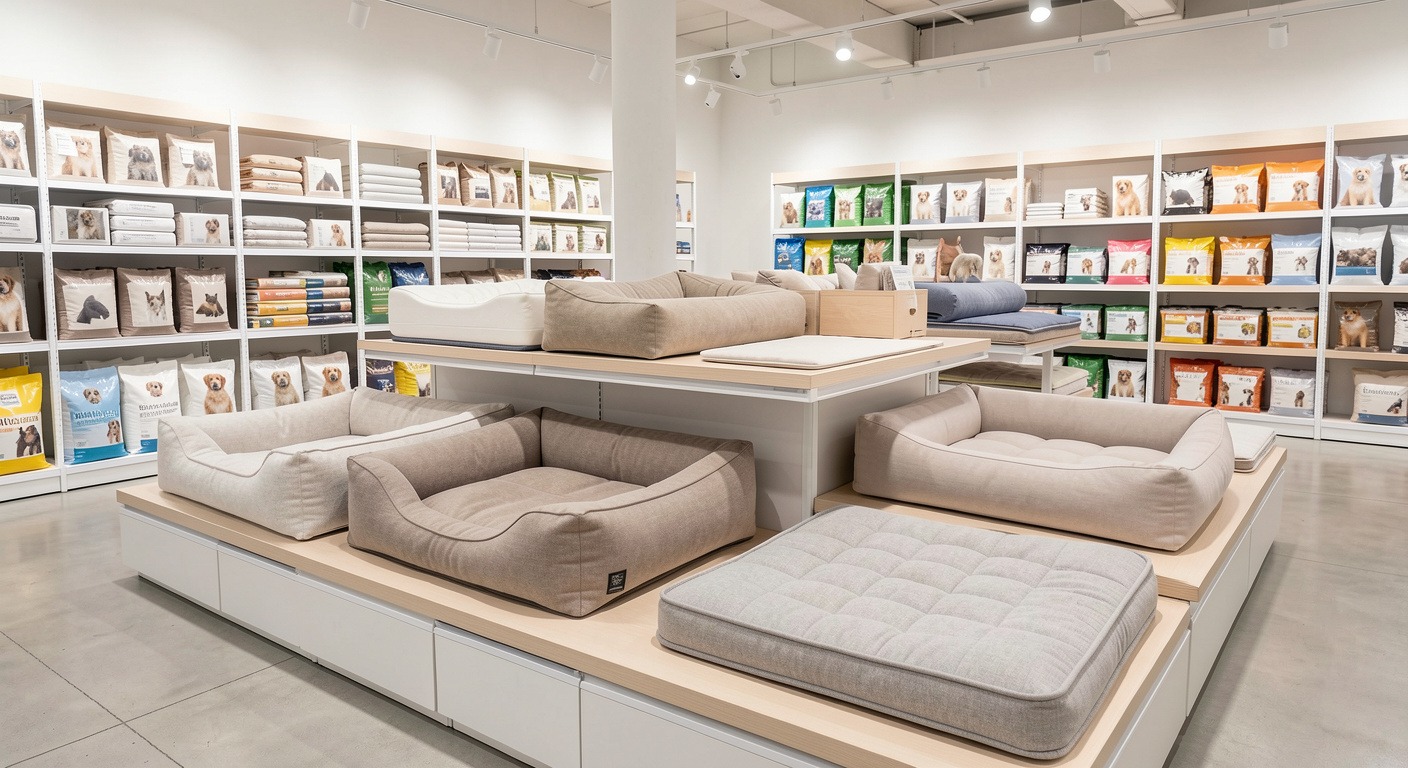
The Right Bed for the Right Dog , A No-Nonsense Buying Guide
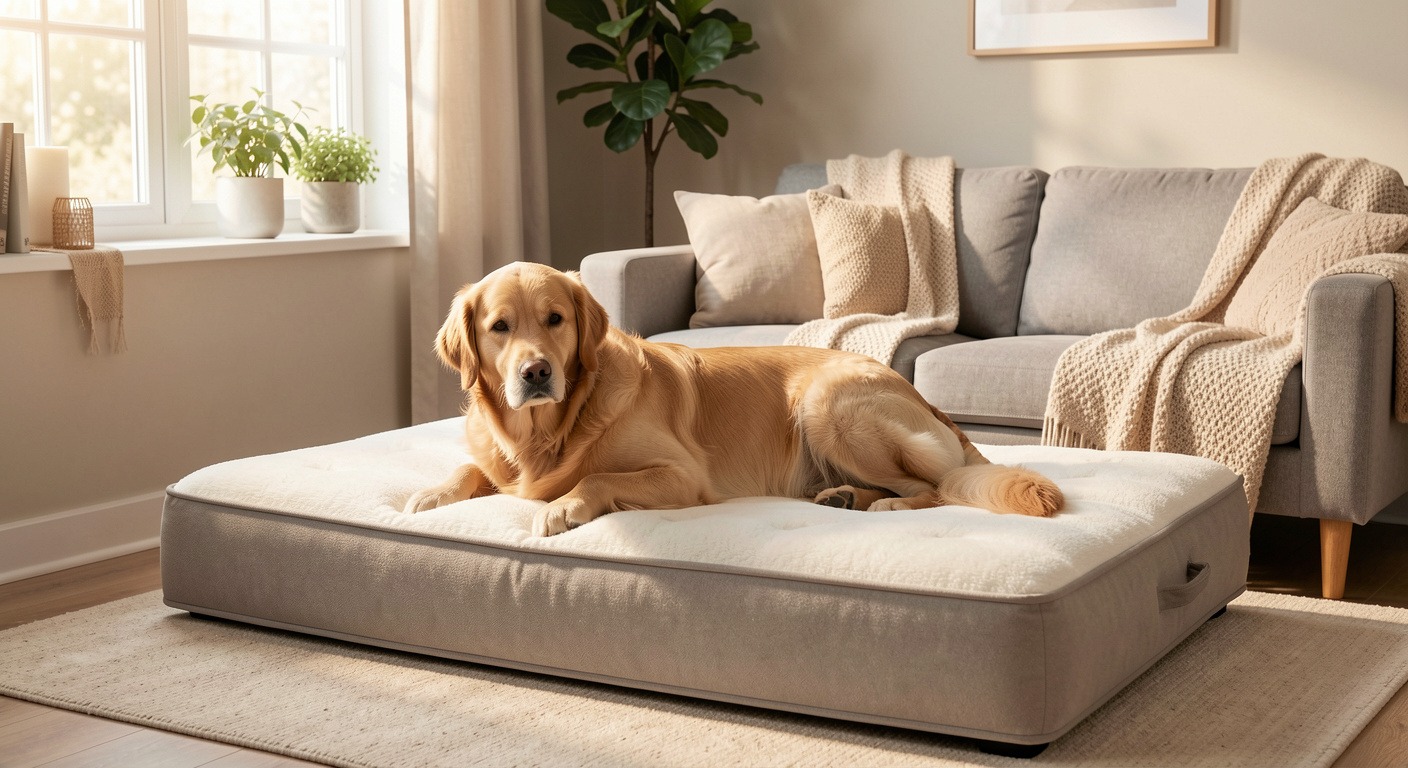
Match the bed to your dog’s sleep style , not just their size. Curlers need bolster beds with raised edges. Sprawlers need flat, generously-sized mats. Senior dogs and large breeds need orthopedic memory foam. For destructive chewers, look for elevated cots or heavy-duty ballistic nylon. Expect to spend $40-$150 for a quality bed that lasts 2-4 years.
Orthopedic memory foam (4+ inches). Look for CertiPUR-US certified foam, waterproof liner, and removable cover.
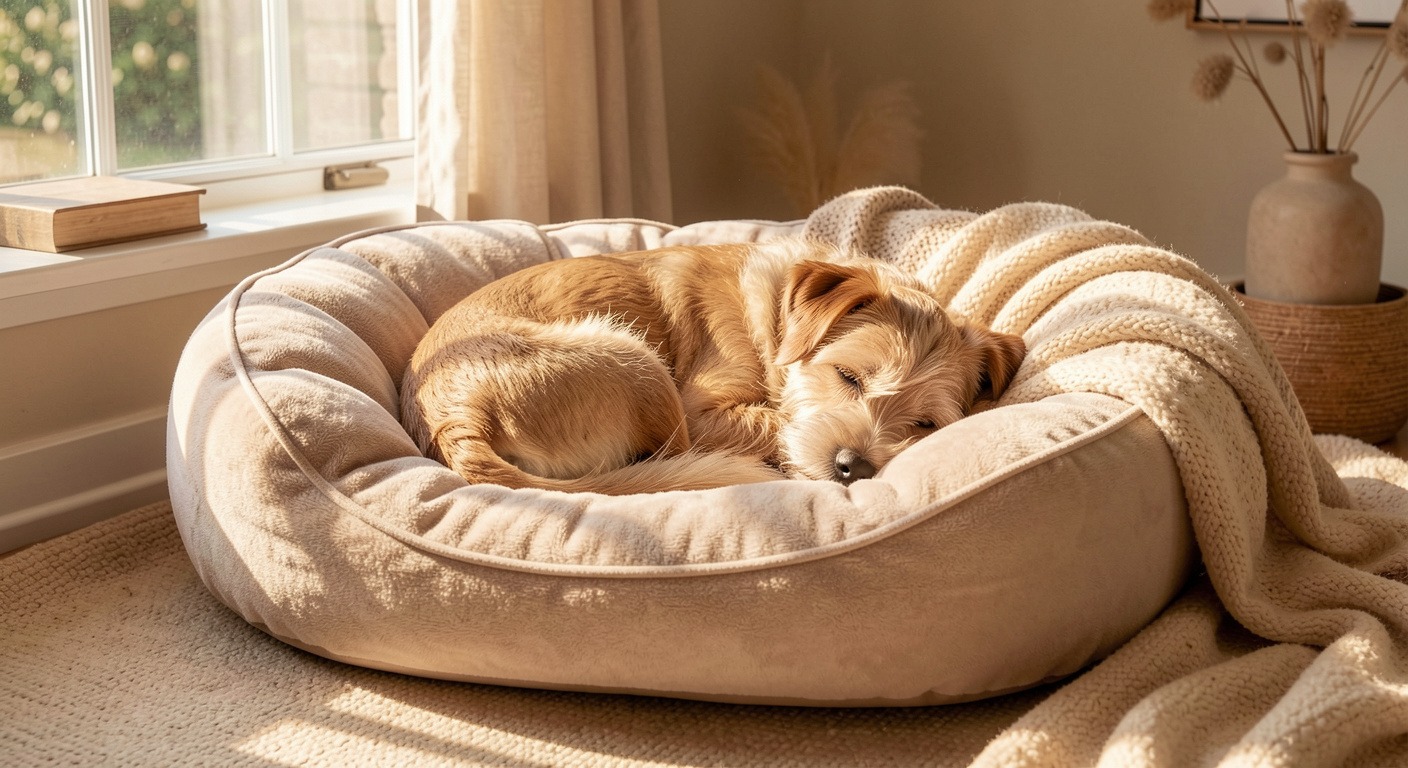
Bolster beds with raised rim provide security and a headrest. Perfect for dogs who curl into a tight ball.
Elevated cots or ballistic nylon beds. Skip plush beds until the chewing phase passes , usually after age 2.
Why the Right Dog Bed Matters
Dogs sleep an average of 12-14 hours per day , puppies and seniors even more. That’s over half their lives spent on whatever surface you provide. A quality bed isn’t a luxury , it supports joint health, provides insulation from cold floors, gives older dogs pressure-point relief, and creates a designated “place” that helps with training and anxiety management.
Dog Bed Types: Which One for Your Dog?
| Bed Type | Best For | Price Range |
|---|---|---|
| Orthopedic Memory Foam | Large breeds, senior dogs, dogs with arthritis or hip dysplasia | $60-$200 |
| Bolster / Donut Bed | Curler sleepers, anxious dogs, small breeds | $30-$120 |
| Flat Mat / Crate Pad | Crate use, sprawler sleepers, easy to wash | $20-$80 |
| Elevated Cot | Outdoor use, hot climates, chewers, easy to clean | $35-$100 |
| Heated Bed | Senior dogs with arthritis, cold climates, short-haired breeds | $40-$150 |
| Cooling Bed | Hot climates, thick-coated breeds, dogs who pant at night | $30-$100 |
How to Choose: 5 Questions to Ask
1. How does your dog sleep?
Watch your dog for a few nights. Do they curl into a tight ball? They’ll love a bolster bed with raised edges. Do they sprawl out taking maximum space? Get a flat, generously-sized mat. Do they burrow under blankets? A donut bed or cave-style bed is ideal.
2. How old and how big?
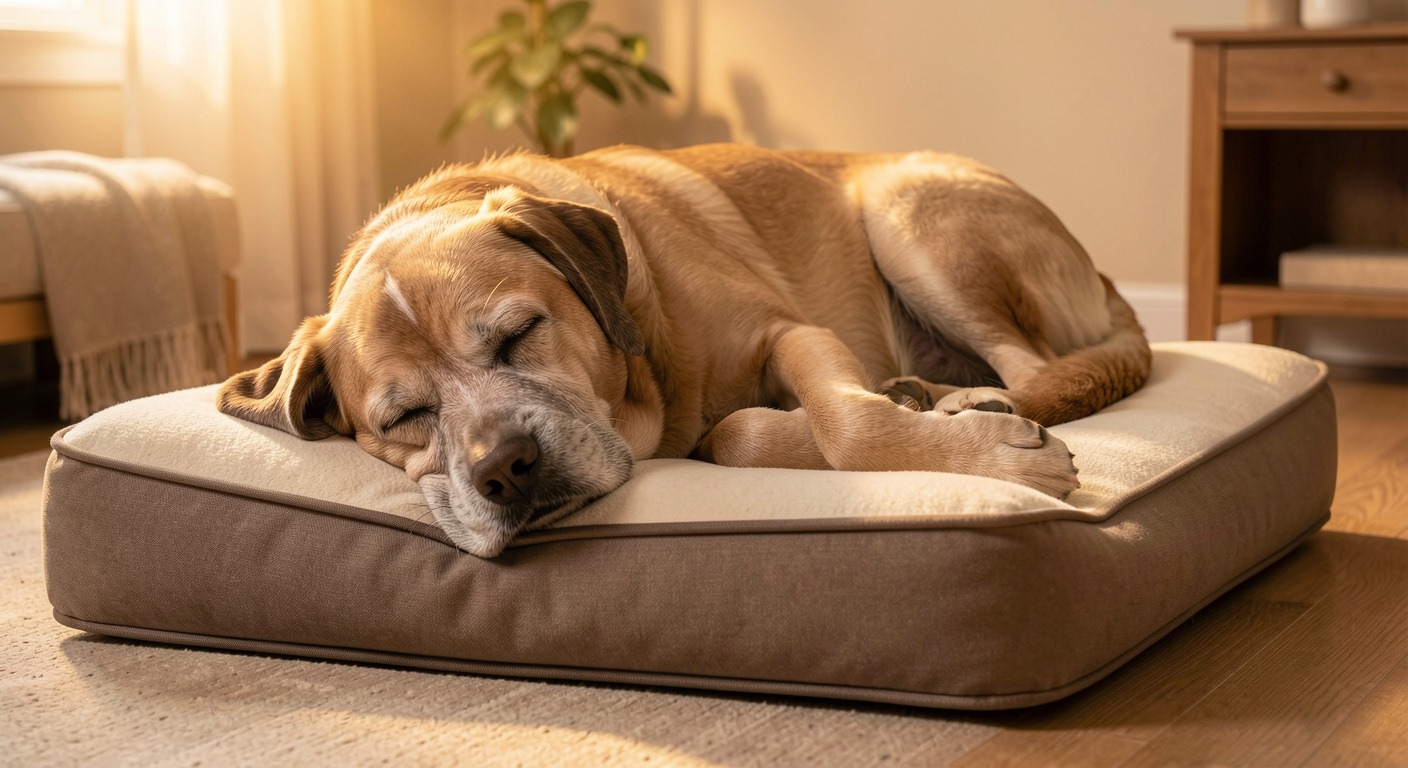
Senior dogs and giant breeds (over 80 lbs) need orthopedic memory foam , at least 4 inches thick with high density (4-5 lb foam). Lighter dogs can get away with 2-3 inches. Puppies don’t need orthopedic foam yet, but starting with a quality bed builds good habits.
3. Does your dog chew?
If your dog has destroyed beds before, skip the plush options. Elevated cots and ballistic nylon beds are nearly indestructible. Some brands offer chew-resistant warranties. Wait until the chewing phase passes (usually around age 2) before investing in a nice bed.
4. Is the cover removable and washable?
This is non-negotiable. A bed that can’t be washed is a bed you’ll replace within a year. Look for machine-washable covers with sturdy zippers. A waterproof inner liner is worth every penny , it protects the foam from accidents, drool, and the general grime of dog life.
5. Where will the bed live?
Indoor bed: prioritize comfort and washability. Outdoor bed: elevated cot resists moisture and dirt. Crate bed: thin, flat pad sized exactly to the crate floor , nothing plush they can shred. Travel bed: lightweight and roll-up portable.
Signs Your Dog’s Bed Needs Replacing
- It’s flattened and won’t bounce back. Memory foam loses support after 2-4 years of daily use.
- It smells even after washing. Odors trapped deep in the foam mean it’s time.
- Your dog avoids it. If your once-favorite bed is now ignored, it may no longer be comfortable.
- The cover has holes or torn seams. Exposed foam is a choking and blockage hazard.
- Your dog is stiff after resting. Especially in the morning , the bed isn’t providing enough support.
Frequently Asked Questions
How much should I spend on a dog bed?
A quality bed for a medium-sized dog costs $50-$120 and should last 2-4 years. Large breed orthopedic beds run $100-$200. The cheapest beds ($15-$25) typically flatten within months and provide minimal support.
What size bed does my dog need?
Measure your dog from nose to tail while they’re stretched out in their natural sleep position. Add 6-12 inches. If they curl tightly, add 4-6 inches to their curled diameter. Most manufacturers list weight guidelines , but sleep style matters more than weight.
Are heated dog beds safe?
Quality heated beds with low-voltage technology and chew-resistant cords are safe when used as directed. Look for beds that only heat when your dog is on them (pressure-activated). Never use a human heating pad , they get too hot and aren’t designed for animal use.
Can I just use old blankets and pillows?
For a young, healthy dog, a pile of blankets works in a pinch. But they provide no orthopedic support, can bunch up and become uncomfortable, and are harder to keep clean than a proper bed. Senior dogs and large breeds need the structured support of a quality bed.
My dog destroys every bed. What do I buy?
Start with an elevated cot , the lack of stuffing removes the destruction incentive. Ballistic nylon flat mats are another option. For extreme chewers, some companies (like K9 Ballistics) offer chew-proof guarantees. Avoid any bed with stuffing or loose fabric until the behavior is addressed through training.
Inspect beds weekly for loose threads, torn seams, or exposed zippers , all can cause intestinal blockages if swallowed. If your dog eats bed stuffing, contact your vet. Remove beds from crates if your puppy chews them. For dogs with mobility issues, make sure the bed isn’t so high that getting on and off is difficult.
Give Your Dog the Sleep They Deserve
A good bed is one of the best investments you can make in your dog’s long-term health and happiness. Start by watching how they sleep tonight.
Explore All Gear Guides →