Fuel Your Dog for a Lifetime of Health
Most dogs do best on complete and balanced food matched to their age, size, activity level, and health needs. Use this guide to compare kibble, wet, fresh, raw, and homemade options without guessing or risking nutritional gaps.
Dog Nutrition: What to Feed Your Dog at Every Life Stage
Kibble vs. raw vs. fresh , here’s what the science actually says about feeding your dog, plus the foods that could send you to the emergency vet.
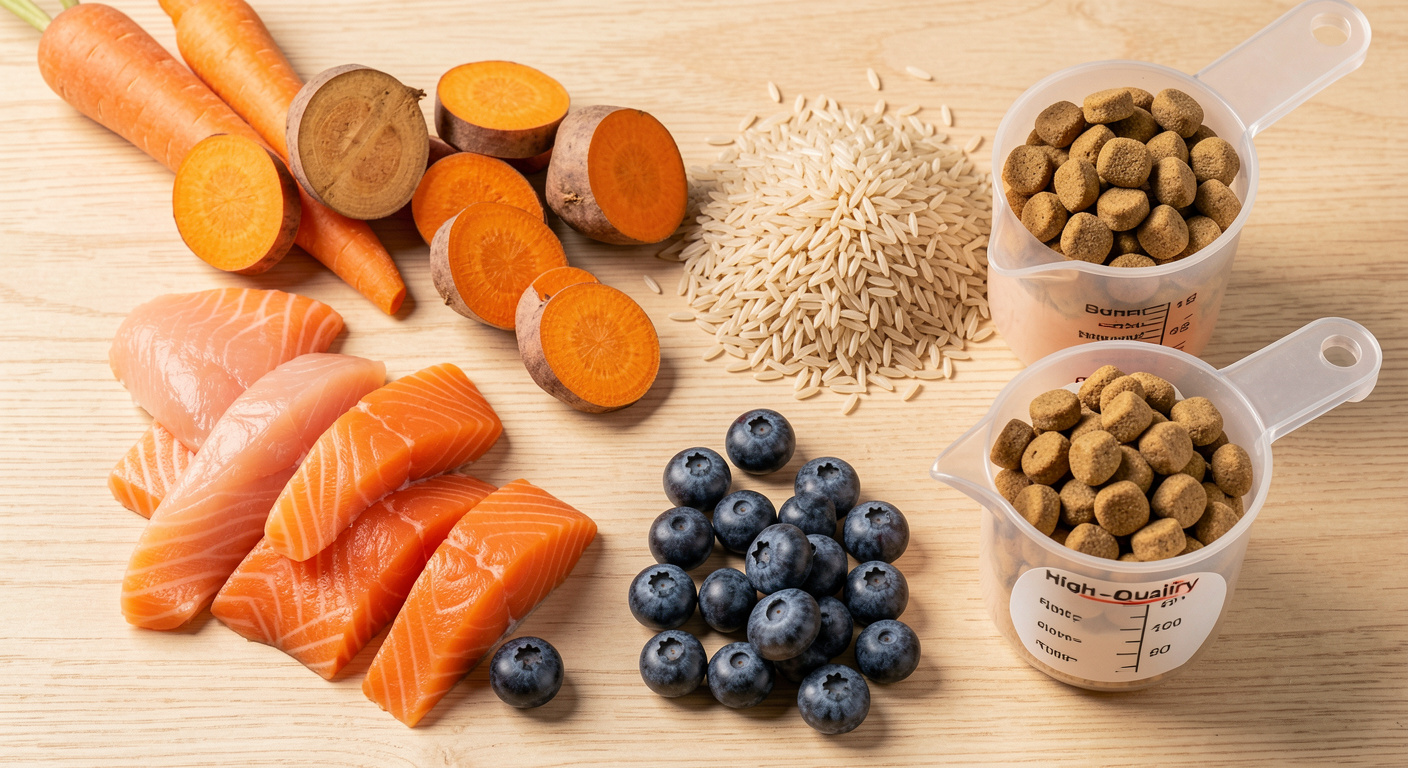
Understanding Dog Food Types
Walk down any pet store aisle and you’ll face an overwhelming wall of choices. Here’s what actually differentiates the main types , and what matters for your dog’s health.
Dry Kibble
The most common choice for good reason: convenient, affordable ($1, 4/lb), shelf-stable, and nutritionally complete when meeting AAFCO standards. The extrusion process cooks starches and binds ingredients into crunchy pieces that help reduce tartar. Quality varies enormously between brands , a $1/lb grocery store kibble and a $4/lb premium formula are not the same product. Look for named protein sources (“chicken” not “poultry meal”) as the first ingredient.
Wet / Canned Food
Contains 75, 78% moisture (vs. 10, 12% for kibble), making it excellent for hydration , especially important for dogs with urinary or kidney issues, or those who simply don’t drink enough water. More palatable for picky eaters and senior dogs with dental problems. Higher cost per calorie ($0.08, 0.25/oz). Once opened, refrigerate and use within 2, 3 days.
Raw (BARF , Biologically Appropriate Raw Food)
The most controversial category. Advocates point to shinier coats, cleaner teeth, and smaller stools. The FDA, CDC, and AVMA point to pathogen risks: Salmonella, E. coli, Listeria, and Campylobacter have all been found in commercial raw diets. These bacteria don’t just risk your dog , they risk your family, especially children, elderly, pregnant women, and immunocompromised individuals. The FDA found that raw pet food is over 4× more likely to test positive for pathogens than other pet food types. If you choose raw, work with a veterinary nutritionist to ensure nutritional balance and practice strict food safety.
Fresh / Gently Cooked
Human-grade ingredients, gently cooked at low temperatures to preserve nutrients. Companies like The Farmer’s Dog, Ollie, and Nom Nom have made this category mainstream. Convenient (subscription delivery, pre-portioned) but expensive ($2, 8/day depending on dog size). Formulated to AAFCO standards by veterinary nutritionists , a safer alternative to homemade.
Freeze-Dried & Dehydrated
Raw or gently cooked ingredients with moisture removed , just add water. Lightweight and shelf-stable. Retains more nutrients than kibble processing, less pathogen risk than frozen raw. Mid-range cost ($3, 6/lb rehydrated). Excellent for camping, travel, or mixing as a topper.
| Type | Cost/Day (50lb dog) | Convenience | Safety |
|---|---|---|---|
| Dry Kibble | $1.00, 3.00 | ★★★★★ | ★★★★★ |
| Wet/Canned | $3.00, 8.00 | ★★★★☆ | ★★★★★ |
| Fresh/Cooked | $4.00, 8.00 | ★★★★☆ | ★★★★★ |
| Freeze-Dried | $3.00, 6.00 | ★★★★☆ | ★★★★☆ |
| Raw (Commercial) | $3.00, 7.00 | ★★★☆☆ | ★★☆☆☆ |
| Homemade | $2.00, 6.00 | ★★☆☆☆ | ★★★☆☆ |
How to Read a Dog Food Label
The AAFCO (Association of American Feed Control Officials) sets the standards, but understanding what’s actually on the bag takes some decoding.
The Nutritional Adequacy Statement
This is the single most important line on any dog food package. Look for one of these phrases:
- “[Product] is formulated to meet the nutritional levels established by the AAFCO Dog Food Nutrient Profiles for [life stage].” , This means the recipe was designed on paper to meet nutritional requirements. Adequate for most dogs.
- “Animal feeding tests using AAFCO procedures substantiate that [product] provides complete and balanced nutrition for [life stage].” , This is the gold standard. The food was actually fed to real dogs in controlled trials. Far fewer products earn this statement.
Avoid foods labeled “for intermittent or supplemental use only” , these are not nutritionally complete.
Guaranteed Analysis vs. Dry Matter Basis
The guaranteed analysis on the label shows percentages by weight including moisture. To compare foods fairly, you need dry matter basis:
Example: A kibble with 24% protein and 10% moisture = 24 ÷ 90 × 100 = 26.7% protein on dry matter. A wet food with 8% protein and 78% moisture = 8 ÷ 22 × 100 = 36.4% on dry matter. The wet food actually has more protein per calorie!
Life-Stage Feeding
Puppy (0, 12 months)
Puppies need roughly twice the calories per pound as adult dogs. They also require higher protein (22, 32% dry matter) and precise calcium levels. Critical for large-breed puppies: excess calcium during growth is linked to developmental orthopedic diseases including hip dysplasia and osteochondrosis. Large-breed puppy formulas control calcium to 0.8, 1.2% on a dry matter basis , do not supplement with additional calcium. Feed 3, 4 meals daily until 6 months, then 2, 3 meals.
Adult (1, 7 years)
Maintenance phase. Protein needs: 18, 25% dry matter for most dogs. The biggest threat at this stage is overfeeding , 56% of U.S. dogs are overweight or obese. Feed measured portions, not free-choice. Most dogs do well on 2 meals per day. The grain-free diet boom has been linked by the FDA to a potential increase in dilated cardiomyopathy (DCM) , consult your vet before going grain-free, especially for breeds not typically prone to DCM (Golden Retrievers have been disproportionately affected).
Senior (7+ years)
Contrary to old beliefs, healthy senior dogs do not need reduced protein , they may need more to maintain muscle mass. What changes: lower calorie density (metabolism slows), increased omega-3 fatty acids for joint and cognitive health, higher fiber for digestive regularity, and more antioxidants. Senior-specific formulas address these needs. Monitor weight closely , both unintended weight loss (muscle wasting) and weight gain (reduced activity) are common.
Pregnant & Lactating
Nutritional demands skyrocket. Feed a high-quality puppy or performance formula (higher energy density, more protein and fat) starting at week 4 of pregnancy. By week 6, 7, food intake may increase 25, 50%. During peak lactation (weeks 3, 4 postpartum), a nursing mother may need 2, 4× her normal intake. Provide unlimited access to food and fresh water. Weaning begins around 3, 4 weeks as puppies are introduced to solid food.
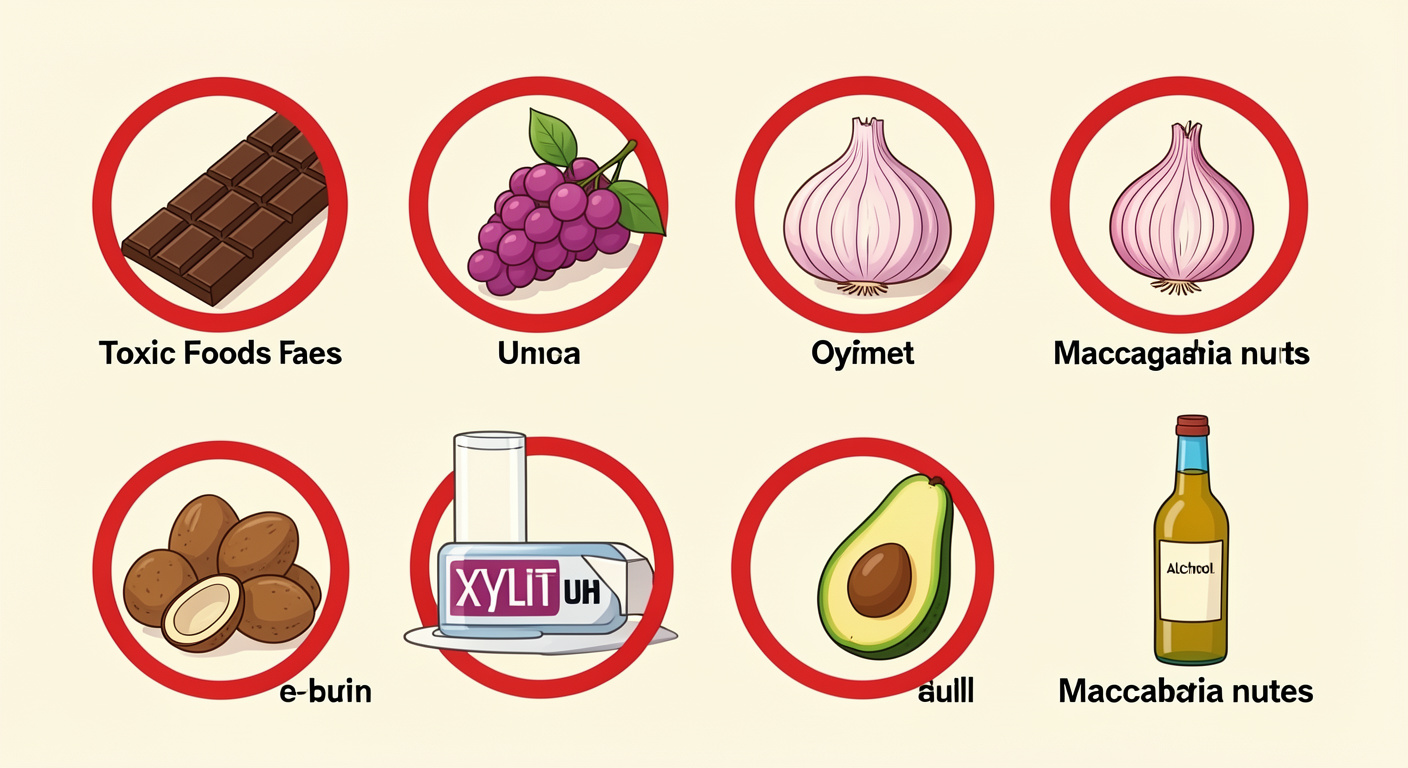
Toxic Foods , What Dogs Can Never Eat
| Food | Toxic Mechanism | Symptoms |
|---|---|---|
| Chocolate | Theobromine and caffeine , dogs metabolize these extremely slowly. Dark/baking chocolate = most dangerous. | Vomiting, diarrhea, hyperactivity, tremors, seizures, heart arrhythmia, death. Toxicity starts at ~20mg/kg theobromine. |
| Grapes & Raisins | Tartaric acid (recently identified as the likely toxin). Even 1, 2 grapes can be toxic to a small dog. | Vomiting within hours, then acute kidney failure within 24, 72 hours. No safe amount established. |
| Onions & Garlic | N-propyl disulfide and thiosulphates destroy red blood cells (Heinz body anemia). All forms toxic: raw, cooked, powdered. | Weakness, pale gums, rapid breathing, collapse. Toxicity is cumulative , small amounts over days add up. |
| Xylitol | Triggers massive insulin release → severe hypoglycemia within 10, 60 minutes. Also causes acute liver failure. | Vomiting, weakness, collapse, seizures. As little as 0.1g/kg can be fatal. Found in sugar-free gum, candy, peanut butter, toothpaste. |
| Macadamia Nuts | Unknown mechanism. Unique to dogs. | Weakness (especially hind legs), vomiting, tremors, hyperthermia. Usually resolves within 48 hours but frightening. |
| Alcohol | Ethanol poisoning , dogs are far more sensitive than humans. | Vomiting, disorientation, coma, respiratory failure. Even small amounts , including unbaked bread dough (yeast produces ethanol in the stomach). |
| Avocado | Persin , concentrated in the pit, skin, and leaves. Flesh contains lower levels. | Vomiting, diarrhea. More dangerous to birds and large animals. Pit is a choking/obstruction hazard. |
| Cooked Bones | Become brittle and splinter when cooked. | Mouth/tongue lacerations, choking, esophageal or intestinal perforation (life-threatening emergency). |
Supplements , What the Science Actually Says
The pet supplement industry is worth over $2 billion annually. A comprehensive 2022 systematic review of 72 randomized controlled trials in dogs found a significant gap between marketing claims and evidence. Here’s what holds up:
| Supplement | Evidence Level | What It’s Good For |
|---|---|---|
| Omega-3 Fatty Acids (Fish Oil) | 🟢 HIGH , Strong evidence | Anti-inflammatory for arthritis, skin allergies, kidney disease, and cognitive function. Look for EPA/DHA content. |
| Probiotics | 🟢 MODERATE-HIGH | GI health, diarrhea recovery, immune modulation. Choose products with guaranteed CFU counts and specific strains. |
| CBD | 🟡 PROMISING , Early data | Pain management, anxiety, seizure reduction. The 2022 review found beneficial effects for osteoarthritis pain. Use veterinarian-formulated products. |
| Collagen | 🟡 MIXED evidence | Joint health. Some studies show improvement; others show no effect beyond placebo. |
| Glucosamine-Chondroitin | 🔴 POOR , Limited evidence | Despite being the most popular joint supplement, the systematic review found that 88% of clinical trials showed no significant benefit over placebo for osteoarthritis pain in dogs. |
Portion Control: Is Your Dog Overweight?
56% of dogs in the U.S. are overweight or obese according to the Association for Pet Obesity Prevention. Obesity shortens lifespan by an average of 2 years and contributes to arthritis, diabetes, heart disease, respiratory problems, and increased surgical/anesthetic risk.
The Body Condition Score (BCS)
Veterinarians use a 9-point scale. At ideal weight (4, 5): ribs are easily felt with a thin fat covering, waist is visible from above, and the abdomen tucks up behind the rib cage when viewed from the side. If you can’t feel ribs without pressing, or there’s no visible waist , your dog is overweight.
Calculating Daily Calories
Resting Energy Requirement (RER) = 70 × (body weight in kg)0.75
For a 50 lb (22.7 kg) dog: RER = 70 × 22.70.75 ≈ 728 calories/day
Multiply by activity factor: sedentary/neutered = 1.2, 1.4, moderate activity = 1.6, very active/working = 2.0, 5.0
Example: neutered 50lb dog with moderate activity = 728 × 1.4 = ~1,019 calories/day
Weight Loss Protocol
- Calculate target weight and feed for that weight (not current weight)
- Safe loss rate: 1, 2% of body weight per week (max 5% per month)
- Weigh food with a kitchen scale , cups are inaccurate (±20%)
- Treats should be ≤10% of daily calories. Use low-calorie options: baby carrots, green beans, apple slices
- Re-check weight every 2 weeks and adjust
Feed Your Dog With Confidence
The best dog food isn’t the most expensive or the trendiest , it’s the one that meets AAFCO standards, fits your budget, and keeps your individual dog healthy and energetic. When in doubt, consult your veterinarian , especially before major diet changes.
Explore All Nutrition Guides →