A Gentle Day-by-Day Plan That Actually Works
Potty training works best with a predictable schedule, close supervision, fast outdoor rewards, and calm accident cleanup. Take puppies out after sleep, meals, play, and every short stretch of awake time until the habit sticks.
How to Potty Train Your Dog in 7 Days
A practical, positive day-by-day plan that works for puppies and adult rescues alike. No punishment, no yelling , just consistency and celebration.
Before You Start: What You Need
Success in potty training comes down to three things: supervision, schedule, and consistency. Here’s your prep list:
- Enzymatic cleaner (Nature’s Miracle, Rocco & Roxie) , regular cleaners don’t remove the enzymes that signal “this is a bathroom” to your dog’s nose
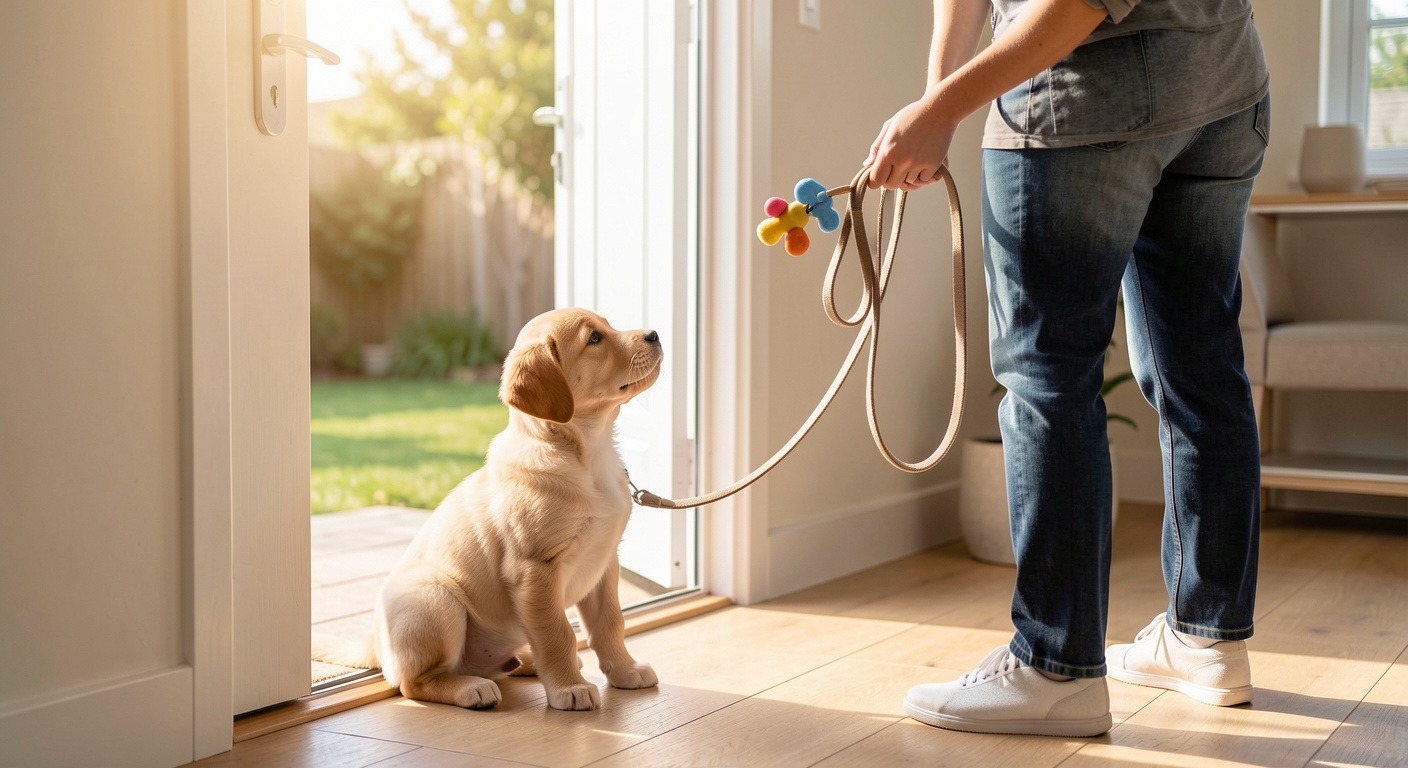
- High-value treats , these are ONLY for potty rewards. Small, soft, stinky. Keep them by the door.
- A 6-foot leash , even in a fenced yard. Potty breaks are business trips, not playtime.
- A crate , properly sized (stand, turn, lie down , no larger). Dogs naturally avoid soiling their sleeping area.
- A designated potty spot , same place every time. The scent accumulates and becomes a trigger: “This is where I go.”
- Patience , your puppy isn’t being “bad.” They literally don’t have the bladder control yet.
The Rule of Thumb for Bladder Capacity
A puppy can physically hold their bladder for roughly age in months + 1 hour. A 2-month-old puppy = ~3 hours max. An 8-week-old needs to go out every 30, 60 minutes while awake. This isn’t about training , it’s about biology. Puppies don’t develop full bladder control until 4, 6 months.
Potty Break Triggers , Take Them Out After EVERY:
😴 Every nap → immediately upon waking
🎾 Every play session → within 5 minutes
📦 Every crate session → immediately after release
🌙 Last thing before bedtime
🌅 First thing in the morning , carry puppy if needed
The 7-Day Plan
What to Do When Accidents Happen
If you catch them mid-accident: Interrupt gently , a cheerful “Oops! Let’s go outside!” and immediately carry them to the potty spot. If they finish outside, reward heavily. Do NOT yell or startle , this can make puppies afraid to potty in front of you at all, leading to “sneak peeing” behind furniture.
If you find an accident after the fact: Clean it thoroughly with enzymatic cleaner. That’s it. Move on. Review your schedule , did you miss a trigger? Was the interval too long? This is data, not a moral failing.
Crate Training: Your Secret Weapon
Dogs are den animals , they instinctively avoid soiling where they sleep. A properly sized crate harnesses this instinct. Feed all meals inside. Toss treats in randomly throughout the day , make it the place where good things happen. Never use the crate as punishment. Puppy time limits: age in months + 1 hour max. Even if the puppy isn’t crying, they can’t hold it longer than their biology allows.
Special Situations
🏢 Apartment Potty Training
Carry your puppy through common areas until they’re reliably potty trained , hallways and elevators are accident danger zones. Scout your route in advance. Know exactly where the nearest outdoor spot is and how long it takes to get there. For high-rise apartments where reaching the ground takes 5+ minutes, consider a balcony grass patch (real sod in a tray) as a training tool , but transition to outdoor-only once reliable. Potty bells are especially useful in apartments.
🐕 Adult Rescue Dog Training
Start from square one , exactly like a puppy. Even if they were previously house-trained, the stress of a new environment resets everything. Go out every 1, 2 hours the first few days, then extend based on success. Adult dogs have better bladder control but may have ingrained bad habits from their previous life. Be patient. Use a belly band (male dogs) temporarily if marking is an issue , but don’t rely on it as a solution. Most adult rescues are reliably trained within 2, 4 weeks with consistent routine.
5 Common Potty Training Mistakes
- Too much freedom too soon. If your puppy isn’t directly supervised, they’re in the crate. Freedom is earned through accident-free days.
- Inconsistent schedule. “I’ll take them out in a minute” is how accidents happen. When the timer goes off , you go.
- Poor cleanup. Regular cleaner leaves enzyme residue. Your dog’s nose is 10,000, 100,000× more sensitive than yours. They can smell old accidents you can’t.
- Puppy pads confusion. Pads teach “peeing inside is sometimes OK.” This is a confusing message. Only use pads if you have no outdoor access and plan to transition off them.
- Mistimed rewards. If you treat when they come back inside, you’re rewarding coming inside , not pottying outside. Treat at the exact moment of completion, outdoors.
You’ve Got This
Potty training is messy and frustrating , and every single dog owner goes through it. Stay consistent, stay patient, and celebrate every success. Your puppy isn’t giving you a hard time , they’re learning a completely foreign concept. You’re teaching them a language they don’t speak yet.
Explore All Training Guides →