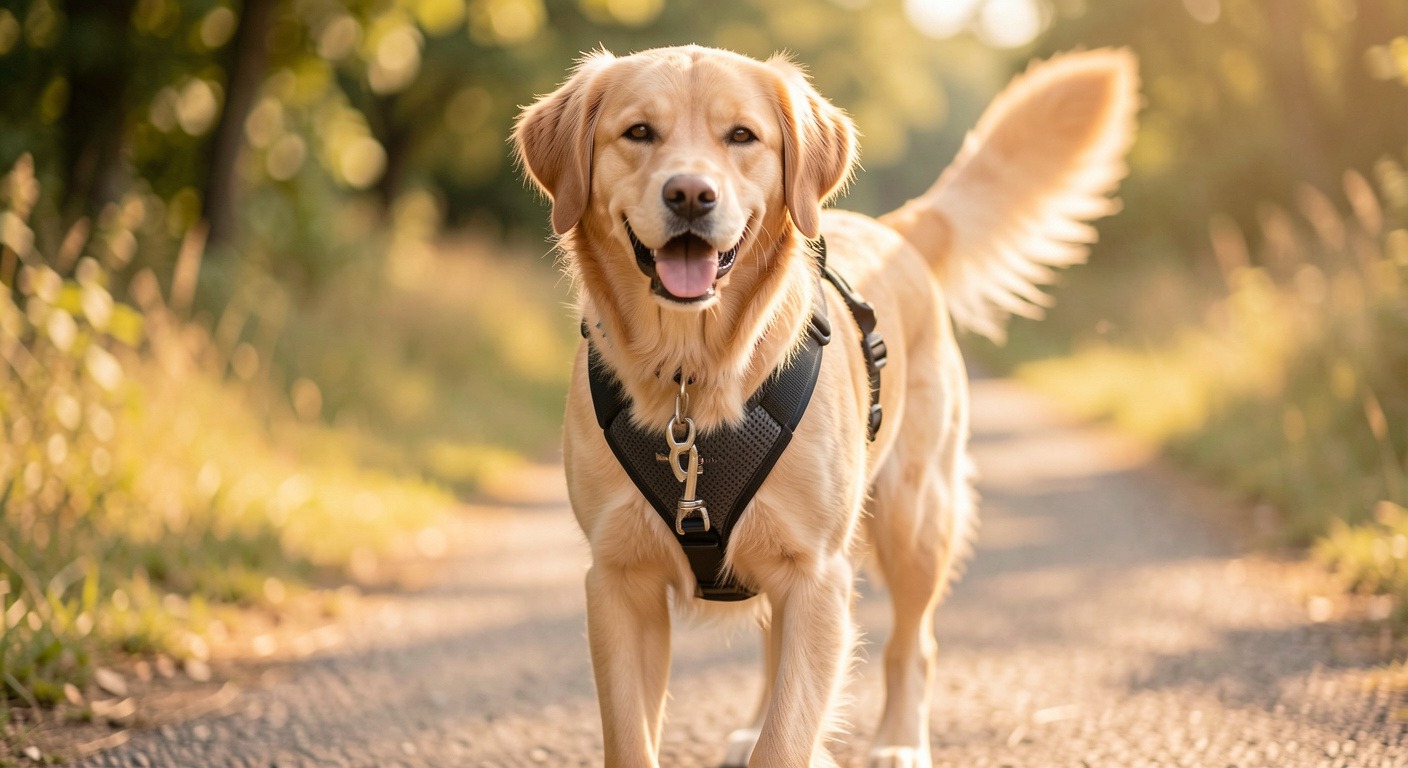
The Right Gear Changes Everything
Your dog’s daily walk should be the best part of both of your days. But if you’re getting dragged down the street or your dog is coughing and gagging against their collar, something needs to change. The harness versus collar debate isn’t just about preference , it’s about your dog’s physical safety, training outcomes, and long-term health.
For most dogs, a properly fitted front-clip harness is the safest and most effective choice for daily walks , it distributes pressure across the chest instead of the delicate neck, gives you better control without pain, and reduces pulling without choking. Collars still have their place for ID tags and quick potty breaks, but they shouldn’t be your primary walking tool. If your dog has a collapsing trachea, neck injury, or is a brachycephalic breed (Pug, Bulldog), skip the collar entirely for walks.
Why Vets Prefer Harnesses: The Neck Injury Problem
Your dog’s neck contains the trachea (windpipe), esophagus, thyroid gland, lymph nodes, and major blood vessels , all sitting just beneath the skin with minimal protection. When a dog pulls against a collar, the pressure concentrates on a few square inches of this vulnerable anatomy. A 2025 review in the Journal of Veterinary Science found that collar-related tracheal damage is significantly underdiagnosed because symptoms like chronic coughing are often mistaken for kennel cough or allergies.
VCA Animal Hospitals explicitly recommends body harnesses for dogs with tracheal disease and notes that a harness “puts minimal pressure on delicate tissue and is less likely to cause injury.” For brachycephalic breeds (Pugs, French Bulldogs, Boxers) that already struggle to breathe, any additional neck pressure is dangerous.
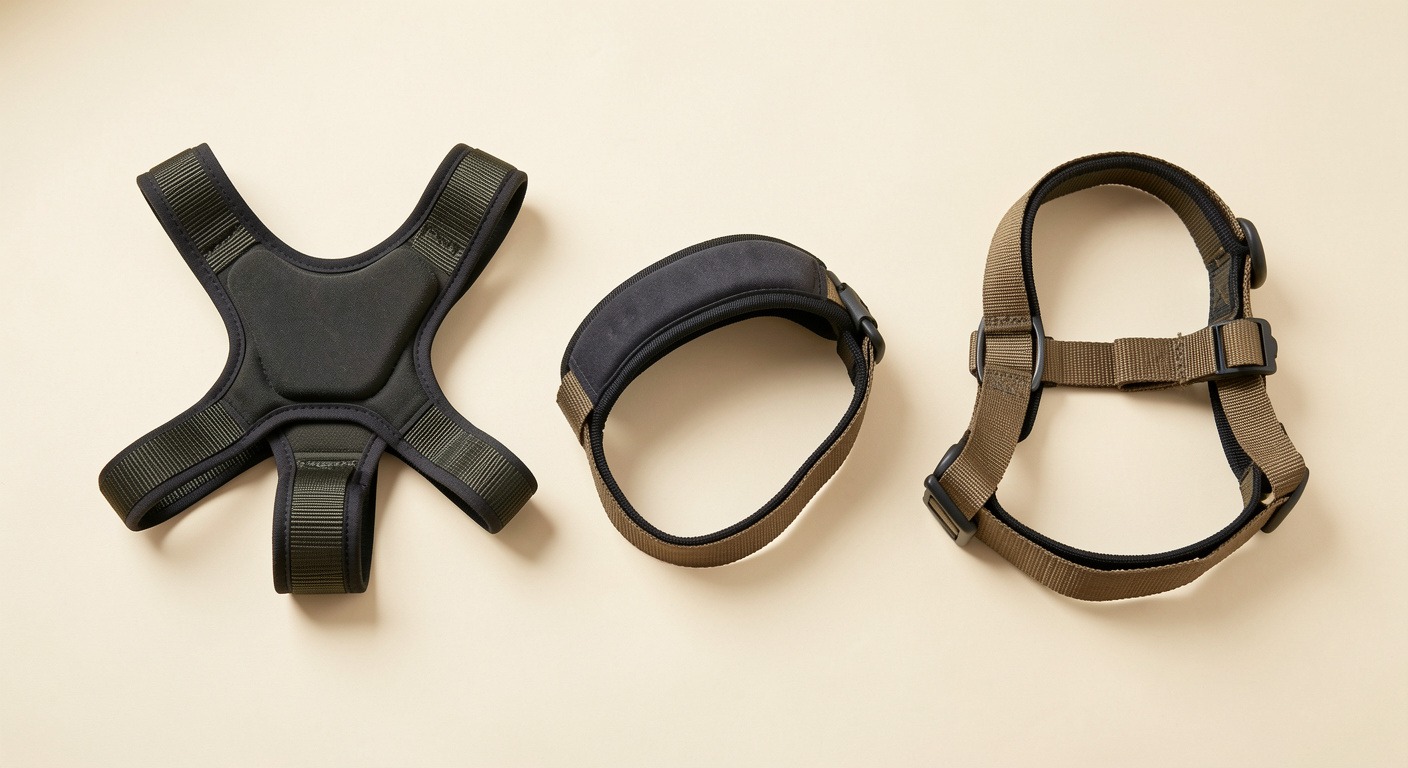
The Three Types of Dog Harnesses (And When to Use Each)
Front-Clip Harness
The leash attaches at the chest. When your dog pulls, the front attachment gently turns them sideways , redirecting momentum rather than fighting it. Best for: dogs that pull. Recommended by the AKC’s Canine Good Citizen program. Top picks: PetSafe Easy Walk, Ruffwear Front Range.
Back-Clip Harness
The leash clips between the shoulder blades. Comfortable and escape-proof for small dogs, but can actually encourage pulling in strong dogs , the back attachment gives them more leverage. Best for: calm, small dogs who already walk nicely on leash.
Step-In Harness
The dog steps into two leg holes and you clip it at the back. Simple to put on, especially for dogs who dislike things going over their head. Best for: small breeds and dogs with head-shyness. Look for padded straps , thin nylon versions can chafe.
When a Collar Makes Sense
Collars aren’t the enemy , they’re the wrong tool for the wrong job. A flat buckle collar is perfect for:
- Holding ID tags and rabies license , this is the collar’s most important job
- Quick potty breaks , when your dog is already calm and won’t be pulling
- Dogs who genuinely never pull , some senior dogs and well-trained adults walk beautifully on a flat collar
- Martingale collars for sighthounds , breeds like Greyhounds and Whippets have heads narrower than their necks and need a limited-slip collar to prevent escape
What to avoid: choke chains, prong collars, and shock collars all use pain or fear to suppress pulling. They don’t teach your dog what to do instead, and research consistently shows they increase stress, anxiety, and aggression risk. A front-clip harness achieves the same result without hurting your dog.
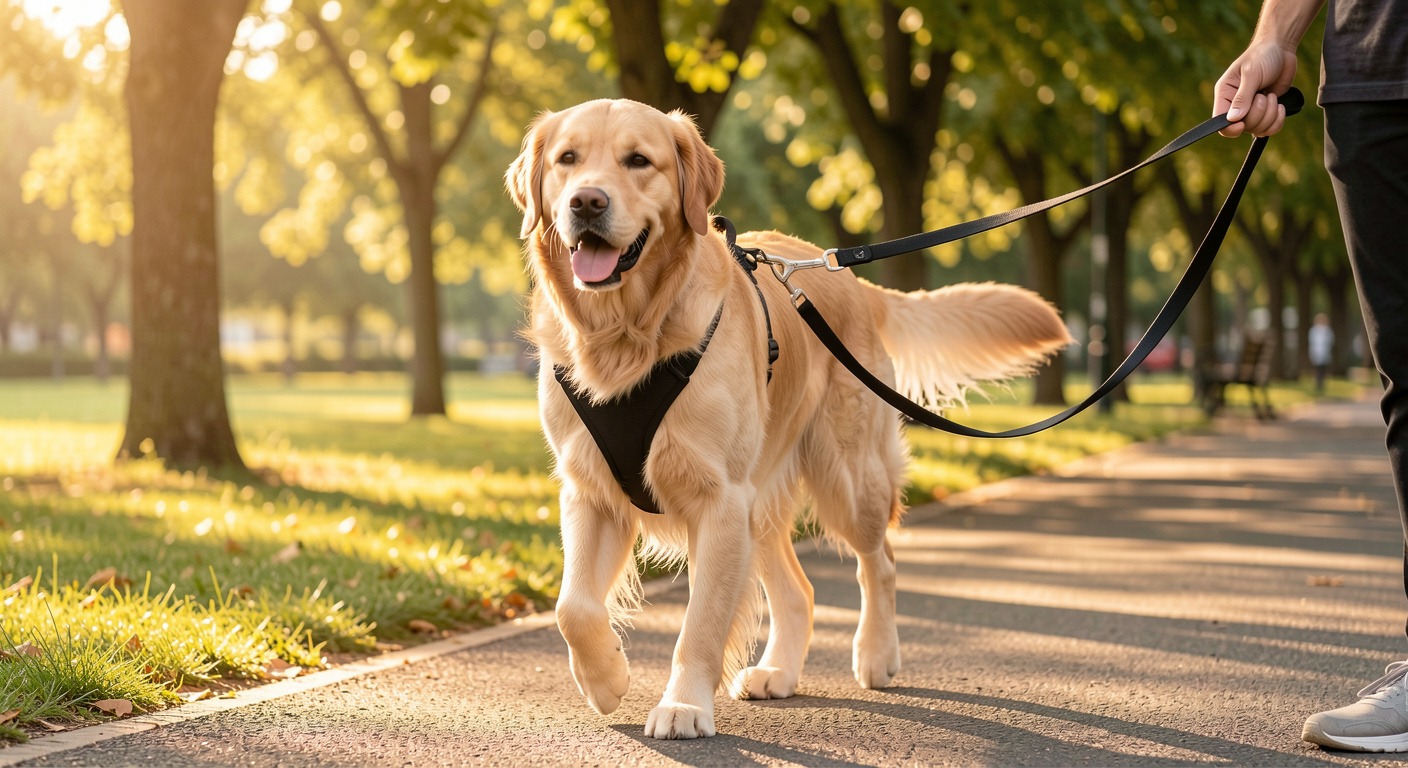
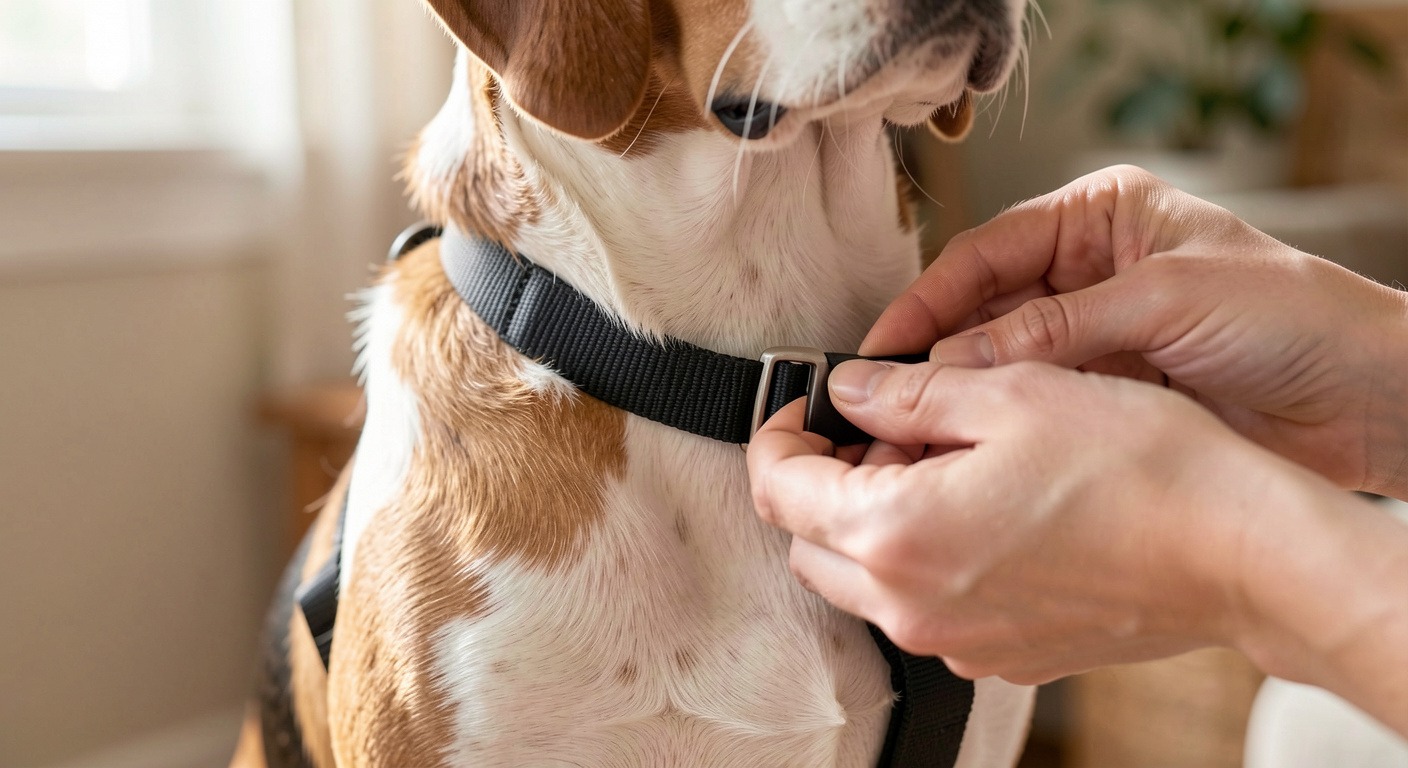
How to Get the Right Fit: The Two-Finger Rule
A harness is only safe if it fits correctly. Too loose, and your dog can back out and escape. Too tight, and it chafes or restricts breathing.
The two-finger test: After adjusting all straps, you should be able to slip two fingers (flat) between any strap and your dog’s body. If you can fit three fingers, it’s too loose. If you struggle to fit one, it’s too tight.
Measure your dog with a soft tape measure around the widest part of their chest (just behind the front legs) and the base of their neck. Every harness brand uses slightly different sizing, so always check the manufacturer’s chart , don’t guess based on your dog’s weight.
FAQ: Harness and Collar Questions Answered
Q: Can my dog wear both a harness and a collar at the same time?
Yes , and many owners do. Keep a flat collar on for ID tags at all times, and put the harness on just for walks. Just make sure the collar isn’t so tight that the harness pushes it against the neck.
Q: Do harnesses make dogs pull more?
Actually, the research says the opposite. A 2025 PMC review found that non-tightening front-clip harnesses significantly reduce pulling compared to both collars and back-clip harnesses. The myth that “harnesses teach pulling” came from sled dogs wearing pulling-specific back-clip harnesses , a completely different design for a completely different purpose.
Q: What harness do vets actually recommend?
Most vets recommend Y-shaped front-clip harnesses that sit away from the throat and distribute pressure across the chest. The Ruffwear Front Range, Blue-9 Balance Harness, and PetSafe 3-in-1 are frequently recommended. Avoid any harness that tightens when pulled , those are designed to cause discomfort.
Q: Is my puppy too young for a harness?
Puppies can start wearing a lightweight harness as early as 8 weeks. In fact, it’s the ideal time to introduce one , before they develop a pulling habit with a collar. Get an adjustable harness and expect to resize it every few weeks as they grow.
Q: Can a dog escape from a harness?
Some dogs can back out of an improperly fitted harness. If your dog is an escape artist, look for a harness with a third strap behind the rib cage (like the Ruffwear Web Master) or a martingale-style harness loop that tightens slightly when the dog tries to back out.
🐾 Keep Reading


Ready to Walk With Confidence?
Find the right gear for your dog and start enjoying walks that are calm, connected, and pull-free.
Browse Dog Gear Guides →