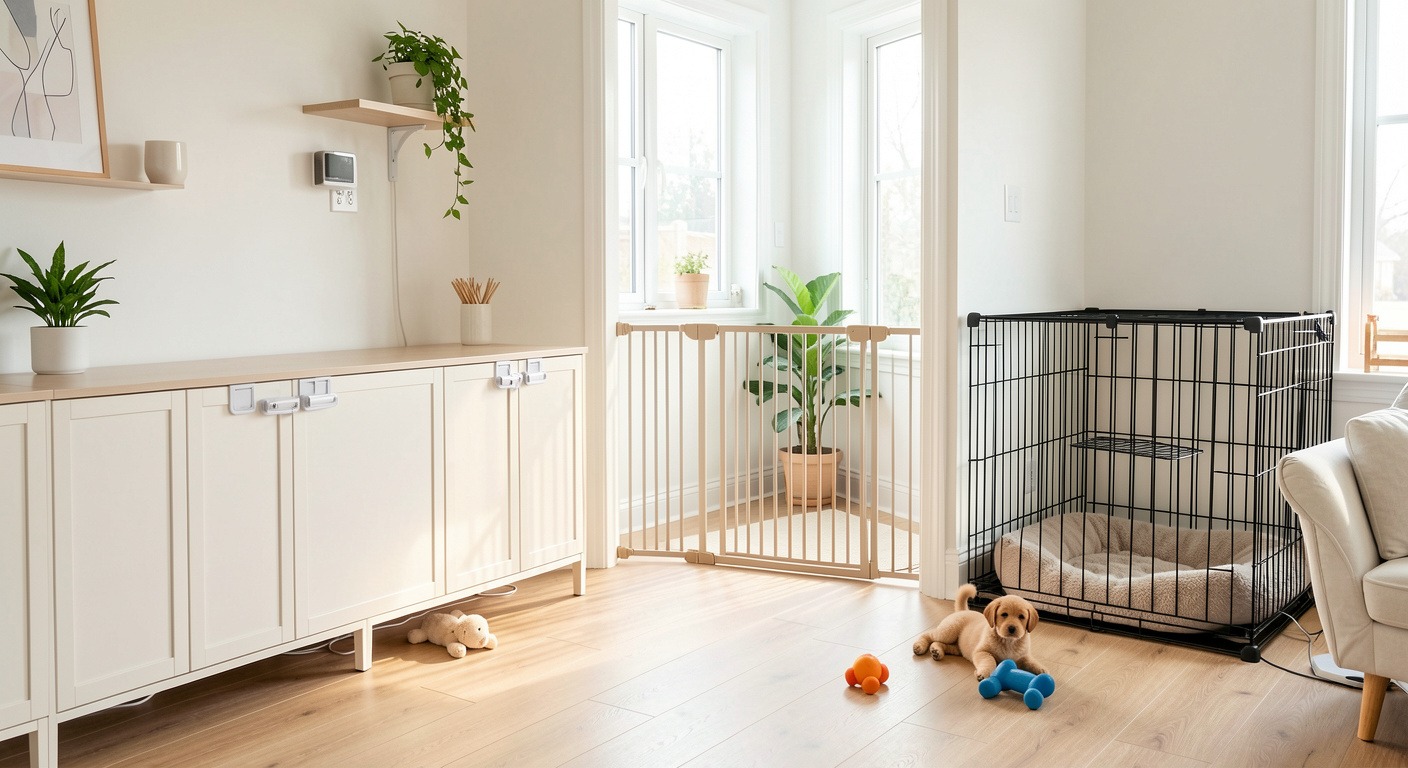
Make Every Room Safe Before Your Dog Walks Through the Door
Get on your hands and knees and crawl through every room at dog-eye level. You’ll spot dangers you’d never see standing up: dangling cords, loose buttons, accessible cleaning supplies. Focus on the big four: toxins (food, plants, chemicals, medications), choking/blockage hazards (small objects, socks, strings), escape routes (doors, fences, windows), and electrical (cords, outlets). Everything else is bonus.
Lock the Kitchen
Secure the trash can with a locking lid, latch lower cabinets, push all food and knives to the back of counters. The kitchen concentrates more dog dangers per square foot than any other room.
Hide Every Cord
Use plastic cord protectors and concealers. Puppies chew cords , it’s not defiance, it’s exploration. Unplug and store seasonal items when not in use.
Move Toxic Plants Up High
Common houseplants like lilies, pothos, aloe, and jade are toxic to dogs. Move them to high shelves or replace with dog-safe alternatives like spider plants and Boston ferns.
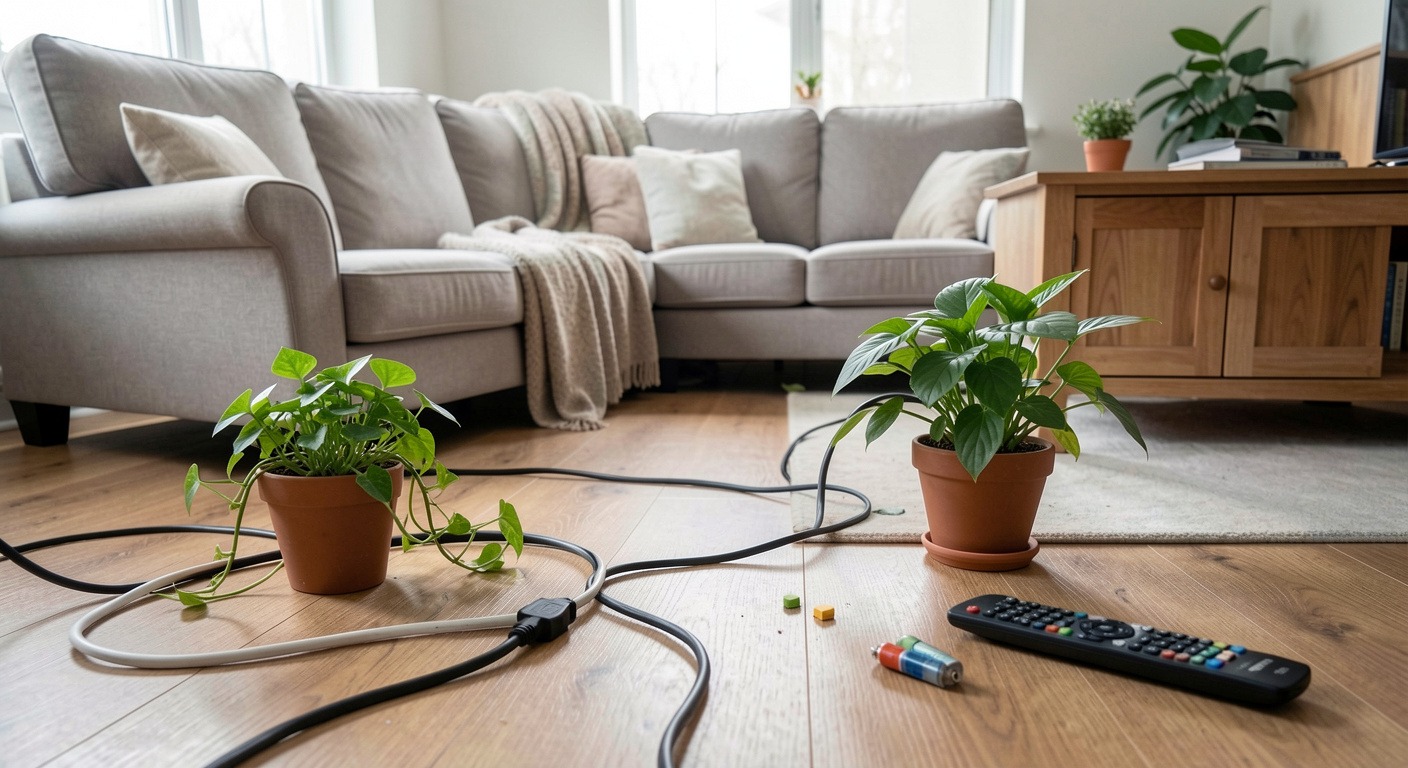
Get On Your Hands and Knees
The single best way to dog-proof your home: crawl through every room at puppy eye level. You’ll see dangers you would never notice standing up , dangling cords behind the TV stand, a loose button under the couch, the cleaning supplies under the bathroom sink that looked perfectly secure from adult height. This takes 15 minutes and could save your dog’s life. Do it before they arrive, then repeat monthly. Puppies find new dangers as they grow taller.
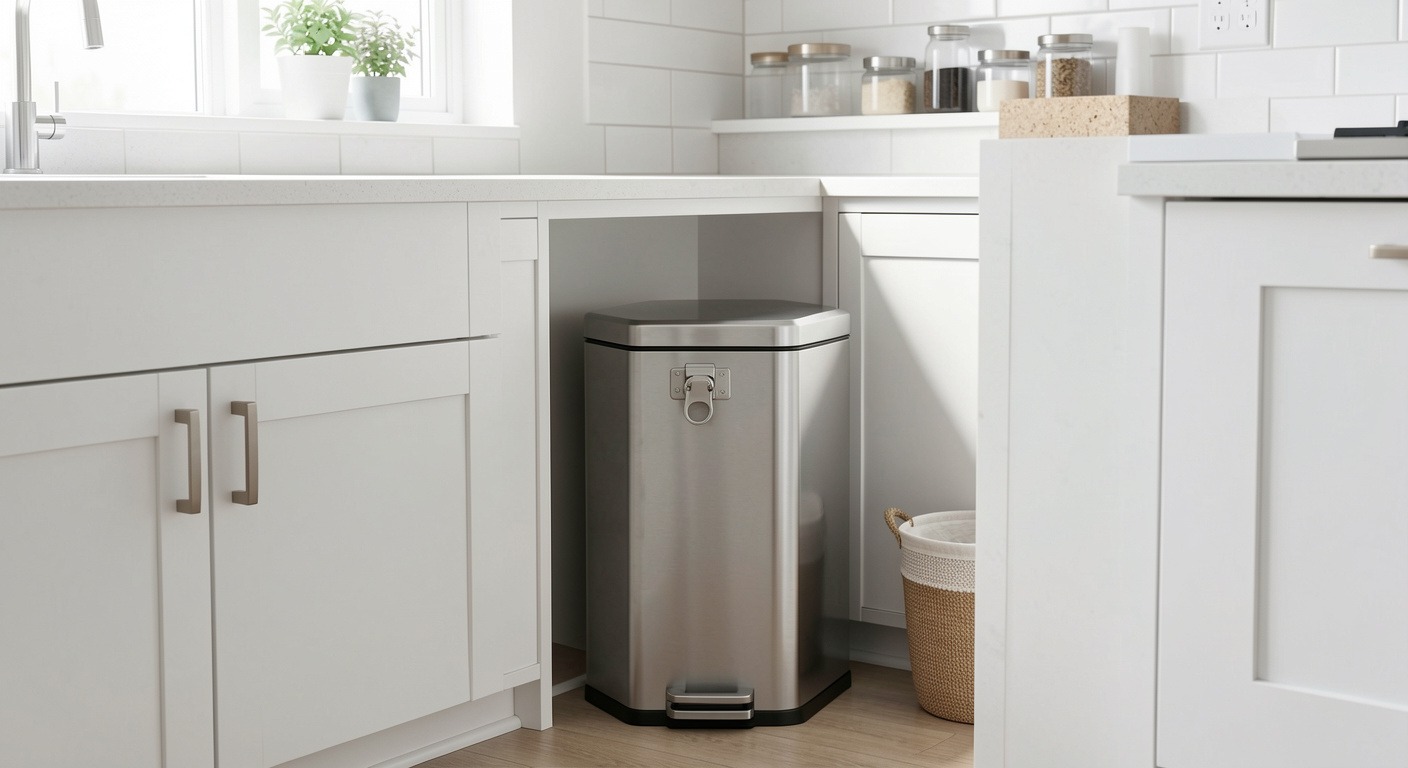
The Kitchen
Kitchens concentrate more dog dangers per square foot than any other room. Food, chemicals, sharp objects, hot surfaces, and garbage , the kitchen has it all.
Secure These Immediately
- Trash can. The single most-visited emergency room item for dogs. Chicken bones, onion scraps, chocolate wrappers, moldy food, string from roasts , a trash can contains a veterinary emergency buffet. Get a can with a locking lid or store it inside a latched cabinet.
- Lower cabinets. Childproof latches ($5–$10 for a 10-pack) on every cabinet below counter height. Cleaning supplies, dish detergent pods (which look like treats), and food storage containers all need to be inaccessible.
- Countertops. Dogs counter-surf. Assume anything within reach of a dog standing on hind legs is fair game. Push knives, food, medications, and chocolate to the very back. Better: nothing edible or dangerous ever sits on the counter edge.
- Stove knobs. Dogs have turned on gas burners by jumping up. Remove knobs when not cooking or install childproof stove knob covers ($10).
Foods to Never Leave Accessible
Even a “dog-proofed” kitchen sees food dropped during cooking. Know the worst offenders: chocolate (especially dark/baking), grapes/raisins, onions/garlic, xylitol (in gum and some peanut butter), macadamia nuts, raw bread dough, and alcohol. A single dropped grape can cause kidney failure. A square of dark chocolate can stop a small dog’s heart. When cooking with these ingredients, gate the dog out of the kitchen entirely.
Save these numbers in your phone before you need them: ASPCA Animal Poison Control Center: (888) 426-4435. Pet Poison Helpline: (855) 764-7661. Both charge a consultation fee but can save your dog’s life. Never induce vomiting without professional guidance , some substances cause more damage coming back up.
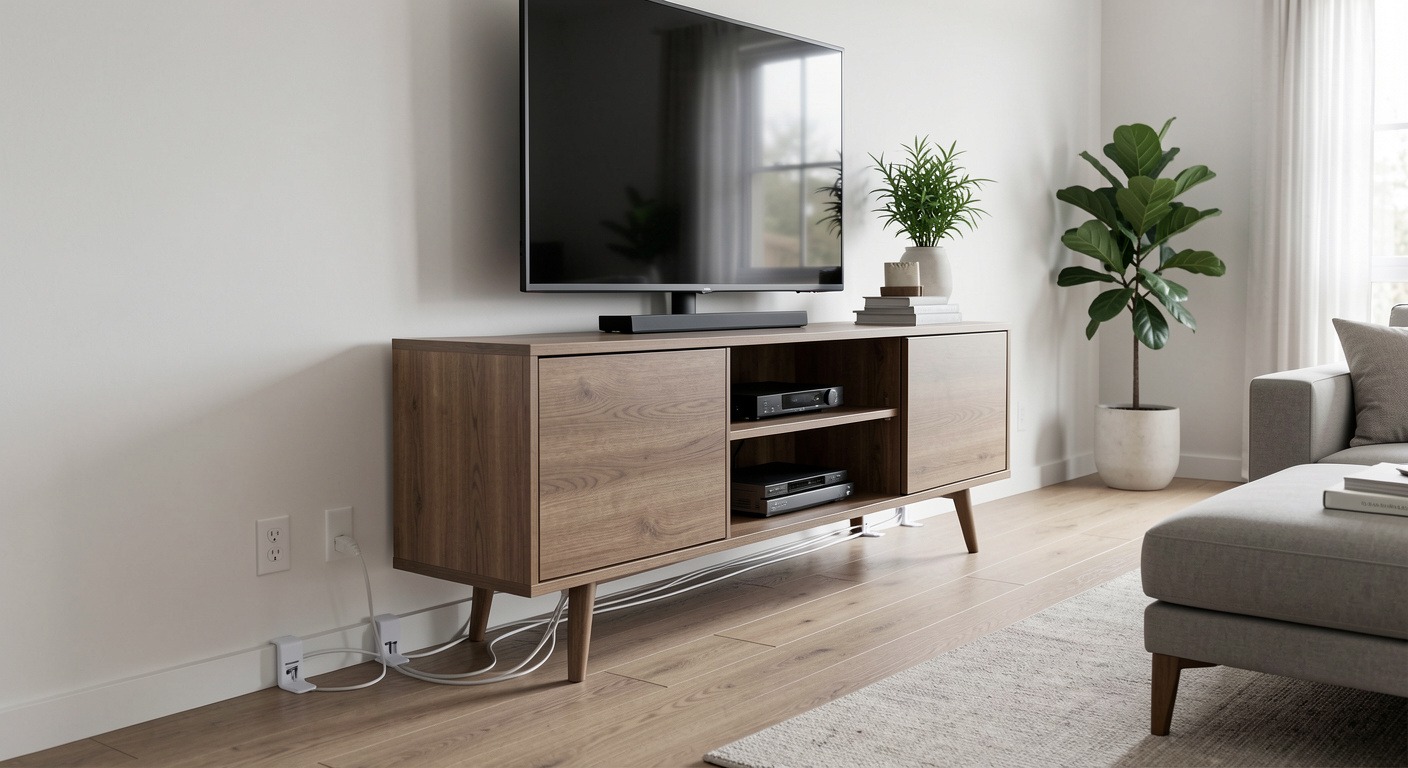
The Living Room
Electrical Cords
Puppies chew cords. It’s not defiance , it’s exploration, and cords happen to be the perfect texture and diameter for teething. Cord protectors ($10–$20) are plastic sheaths that slide over cords. Cord concealers mount cords against baseboards. For cords that must cross open floor, use a rubber cord cover ramp ($15). Unplug and store seasonal items (space heaters, fans) when not in use.
Houseplants
Many common houseplants are toxic to dogs. The ASPCA maintains a searchable database, but the worst offenders in most homes: lilies (many species cause acute kidney failure), sago palm (liver failure , extremely deadly), dieffenbachia/dumb cane (oral irritation and swelling), pothos/devil’s ivy (mouth and stomach irritation), aloe vera (vomiting, diarrhea), and jade plant (vomiting, depression). Move toxic plants to high shelves, hanging planters, or rooms the dog cannot access. Or replace them with dog-safe alternatives: spider plants, Boston ferns, areca palms, prayer plants, and African violets.
Blinds and Curtains
Dangling blind cords are a strangulation hazard , dogs get tangled and panic, tightening the cord. Cut looped cords or use cord cleats to wrap them out of reach. Cordless blinds are the safest option. Long curtains may be pulled down if a dog runs through them or grabs the fabric; tie-backs or shorter panels prevent this.
Small Objects
Remote controls (batteries), loose change (zinc poisoning from pennies minted after 1982), hair ties, children’s toys with small parts, batteries of any kind, and small electronics (earbuds) are all swallowable and dangerous. A dog’s throat can pass objects you wouldn’t believe , and intestinal blockage surgery costs $3,000–$7,000. Pick up the floor every night.
The Bathroom and Laundry Room
- Medications. Human medications are the number one cause of pet poisoning calls to the ASPCA. Over-the-counter pain relievers (ibuprofen, acetaminophen), antidepressants, ADHD medications, and heart medications are all extremely dangerous. Never leave pills on counters, nightstands, or in open purses. Dogs can chew through pill bottles.
- Toilet. Keep the lid closed. Toilet bowl cleaners are toxic, and dogs will drink from the toilet , especially if their water bowl is empty. Automatic toilet bowl cleaner tabs make the water continuously poisonous.
- Laundry. Dryer sheets and fabric softener sheets cause gastrointestinal obstruction and contain cationic detergents that cause ulcers. Socks and underwear are the most common intestinal blockage items in dogs. Use a closed hamper. Detergent pods are attractive to dogs and extremely concentrated; keep them in a high cabinet, not on top of the washer.
The Garage and Outdoor Areas
- Antifreeze. Ethylene glycol tastes sweet and is lethal in tiny amounts , one teaspoon can kill a small dog. Even a few drops lapped from a garage floor. Clean all spills immediately. Switch to propylene glycol antifreeze (less toxic, though still not safe). Store all automotive fluids on high shelves.
- Rodenticides and insecticides. Rat poison and ant bait stations often contain ingredients that cause internal bleeding or neurological damage. Dogs eat the bait directly or eat a poisoned rodent. Avoid using these entirely if you have a dog. If you must, use tamper-resistant bait stations secured in areas the dog absolutely cannot reach.
- Fertilizers and lawn chemicals. Many contain bone meal, blood meal, or fish emulsion , all of which smell delicious to dogs and cause vomiting, pancreatitis, or obstruction when ingested. Keep bags sealed and off the ground. Keep dogs off treated lawns for the manufacturer-recommended duration (typically 24–72 hours).
- Fencing. Walk your fence line. Look for gaps under the fence (dogs dig), loose boards, and points where the fence meets the house or gate. A motivated dog can squeeze through a gap you’d swear is too small. Bury chicken wire 6–12 inches underground along the fence line to prevent digging out.
Gates, Crates, and Safe Zones
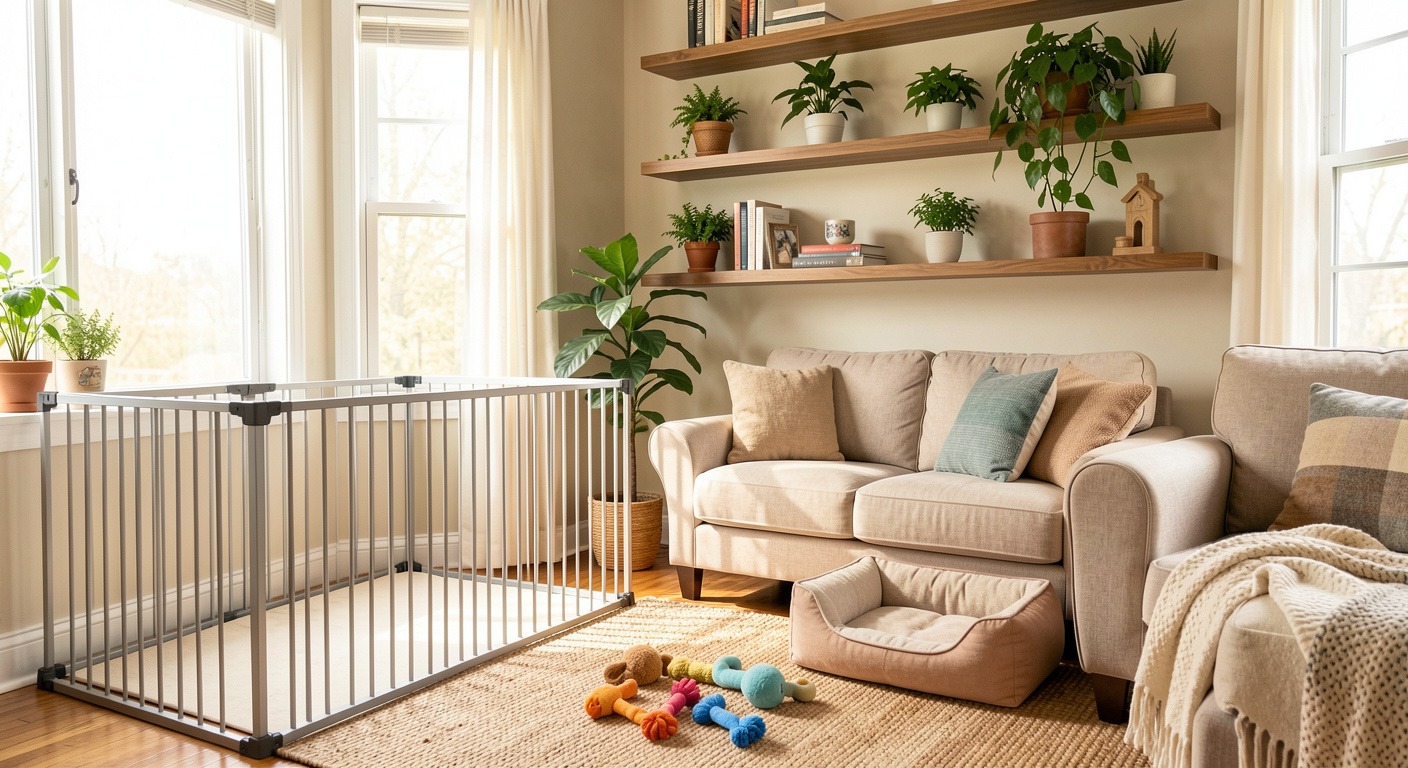
You can’t dog-proof every inch of your home 24/7 , and you don’t need to. Create designated safe zones where your dog can be unsupervised without risk.
- Baby gates. Pressure-mounted gates are fine for blocking access to rooms; for top-of-stairs, use hardware-mounted gates only. A dog leaning against a pressure-mounted gate at the top of stairs can dislodge it and fall.
- Exercise pens. A freestanding 8-panel pen creates an instant safe zone in any room. Add a crate (with door open), water bowl, and safe toys, and you have a puppy-proofed area in minutes.
- Crate training. A properly crate-trained dog has a safe space that goes with them anywhere. The crate is not punishment , it’s their bedroom. Never use the crate as timeout; never force entry.
Seasonal and Holiday Hazards
Christmas and Holidays
- Tinsel and ribbon: if swallowed, can cause a linear foreign body , the intestine “accordions” along the string, requiring emergency surgery. Skip tinsel entirely if you have a dog.
- Christmas tree water: often contains preservatives, fertilizers, and bacteria. Use a covered tree stand.
- Ornaments: glass ornaments shatter and cut paws. Hang fragile ornaments on upper branches only.
- Holiday foods: chocolate, fruitcake (raisins + alcohol), turkey bones, fatty scraps (pancreatitis risk).
Summer
- Citronella candles and torch fuel: toxic if ingested. Place well out of reach.
- Pool chemicals: store in locked bins. Chlorine tablets are highly toxic.
- BBQ: corn cobs (common intestinal obstruction), skewers (perforation risk), cooked bones (splinter).
Include: your regular vet’s number, the nearest 24-hour emergency vet address and phone, ASPCA Poison Control number, and your dog’s microchip number. In a crisis, you won’t want to Google.
The New-Dog Arrival: First-Day Checklist
| Area | Before the Dog Arrives | Day 1 |
|---|---|---|
| Kitchen | Lock trash, latch cabinets, push food back from counter edges | Feed in crate or designated spot, supervise around stove |
| Living Room | Cover cords, remove toxic plants, pick up small objects | Leash-drag indoors for supervision, crate for unsupervised moments |
| Bathroom | Close toilet lid, remove medications from surfaces | Close door unless supervised |
| Bedrooms | Pick up shoes, socks, charging cables, jewelry | Crate in bedroom for nighttime settling |
| Yard | Walk fence line, remove toxic plants, secure gate | Leashed potty breaks only , no free yard access until fence verified |
| Garage | Store all chemicals on high shelves, sweep for spills | Door closed , garage is off-limits |
What’s Actually Worth Worrying About
You can drive yourself crazy trying to eliminate every possible danger. Focus on the big four: toxins (food, plants, chemicals, medications), choking/blockage hazards (small objects, socks, bones, strings), escape routes (doors, fences, windows), and electrical (cords, outlets). Everything else is bonus points. A home that’s 90% dog-proofed with consistent supervision is safer than a perfectly proofed home where you ignore the dog. Your attention remains the most important safety tool.
Frequently Asked Questions
Q: How long does it take to dog-proof a home?
A thorough first pass takes about 2–3 hours for an average home. Focus on kitchens, living rooms, and bathrooms first. Then do a monthly 15-minute crawl-through to catch new hazards as your puppy grows or as household items shift.
Q: Which houseplants are most dangerous to dogs?
Sago palm (liver failure , often fatal), lilies (kidney failure), dieffenbachia (oral swelling), pothos (mouth irritation), and aloe vera (vomiting/diarrhea). Check the ASPCA’s toxic plant database for your specific plants. When in doubt, move them out of reach.
Q: Are baby gates enough to keep my dog safe?
Yes , for blocking access to rooms. Use pressure-mounted gates for doorways and hardware-mounted gates for the top of stairs. Combined with an exercise pen and crate, gates create safe zones throughout your home without requiring 24/7 supervision.
Q: What’s the most overlooked danger in homes?
Medications on nightstands and in purses. Human medications are the #1 cause of pet poisoning calls. A single ibuprofen can be fatal to a small dog. Store all medications in closed cabinets, never on surfaces your dog could reach.
Q: How do I know if my fence is secure enough?
Walk the entire fence line. Look for gaps underneath (dogs dig), loose boards, rusted sections, and gaps where the fence meets the house or gate. If you can fit your fist through, your dog can potentially escape. Bury chicken wire 6–12 inches deep along the fence base to prevent digging.
Keep Reading
Ready for Your New Dog?
A dog-proofed home is a gift of safety. Spend two hours now and you’ll save yourself , and your dog , from emergencies later. Your attention is the most important safety tool of all.
Explore All New Owner Guides →