Stop Guessing. Start Measuring.
Most dog parents follow the bag label and hope for the best. The result? Over half of dogs are overweight, and many owners do not even realize it. This how much to feed dog portion guide gives you a simple, vet-backed system so you know exactly what goes in the bowl, every single meal.
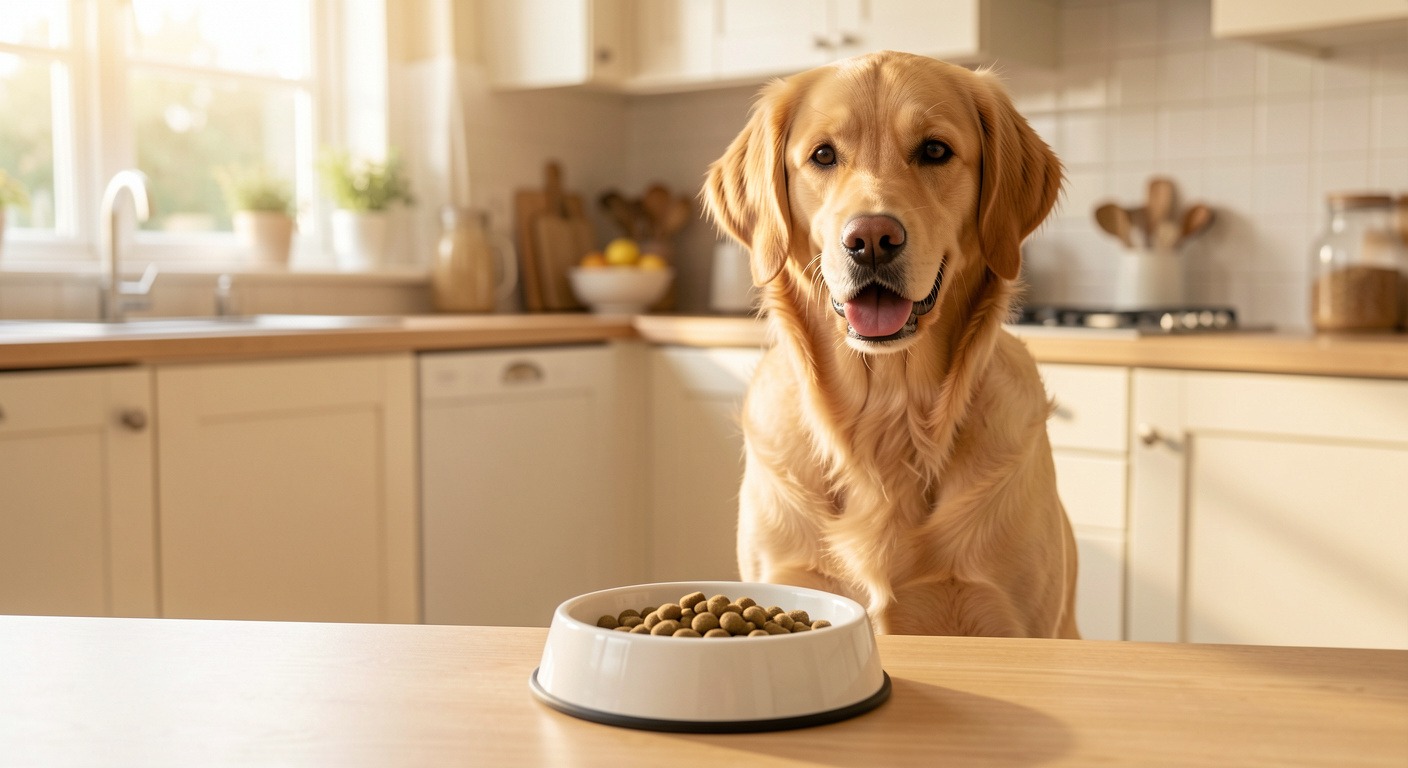
A healthy adult dog needs roughly 25 to 30 calories per pound of body weight per day, split into two meals. The real number depends on age, activity level, and whether your dog is spayed or neutered. Use the formula below to calculate your dog’s specific needs, and check with your vet if you are unsure.
Use a bathroom scale. For small dogs, weigh yourself holding the dog, then subtract your weight.
Plug your dog’s weight in kilograms into the formula: 70 × (weight in kg)^0.75.
Find the calories per cup on your dog food label. Every brand is different, sometimes by 150+ calories.
How Much to Feed Dog Portion Guide: The Complete System
The bag label gives rough estimates for active, intact adult dogs. Most pets need less. This system, built on veterinary guidelines, helps you get portions right from day one. Consistent, measured meals are the foundation of dog portion control weight management that lasts.
Why Portion Control Matters
Over 50% of dogs in the United States are overweight or obese. Extra weight can shorten a dog’s life by up to 2.5 years. It stresses joints, strains the heart, and raises the risk of diabetes. Portion control is not about restriction, it is about giving your dog exactly what their body needs. No more, no less.
The Simple Math: Calculate Your Dog’s Daily Calories
Veterinarians start with the Resting Energy Requirement, or RER: RER = 70 × (body weight in kg)^0.75. You then multiply by a life-stage factor. Think of this as your built-in dog calorie calculator, no app needed.
Worked example for a 50 lb dog:
50 lbs ÷ 2.2 = 22.7 kg
RER = 70 × 22.7^0.75 = 728 kcal/day
Neutered adult factor: 1.6
Daily calories: 728 × 1.6 = roughly 1,165 kcal
Life-stage multipliers: puppy (2.0 to 3.0), intact adult (1.8), neutered adult (1.6), senior or weight loss (1.4). These are starting points. Adjust based on body condition, not the math alone.
How to Convert Calories to Cups
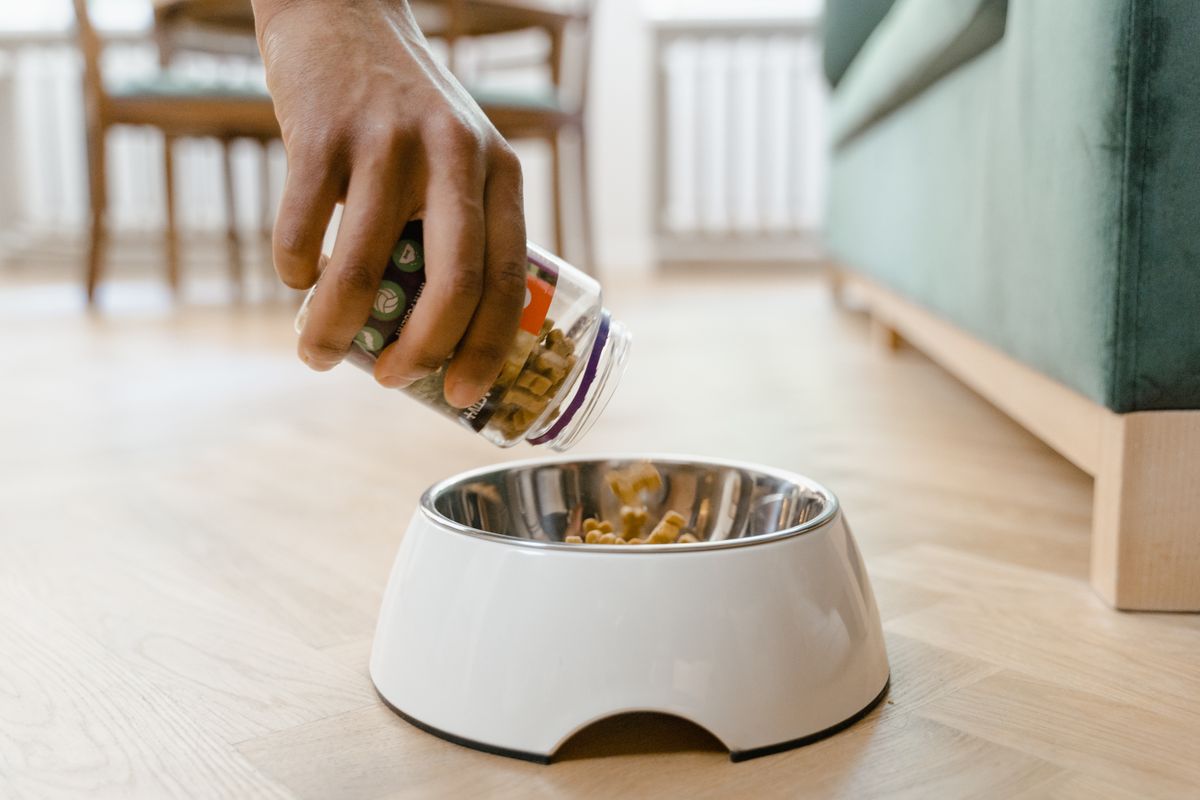
Once you know the daily calorie target, the next question is how many cups to feed dog each day. Find the “kcal per cup” number on your dog food bag, usually under the feeding guide or guaranteed analysis.
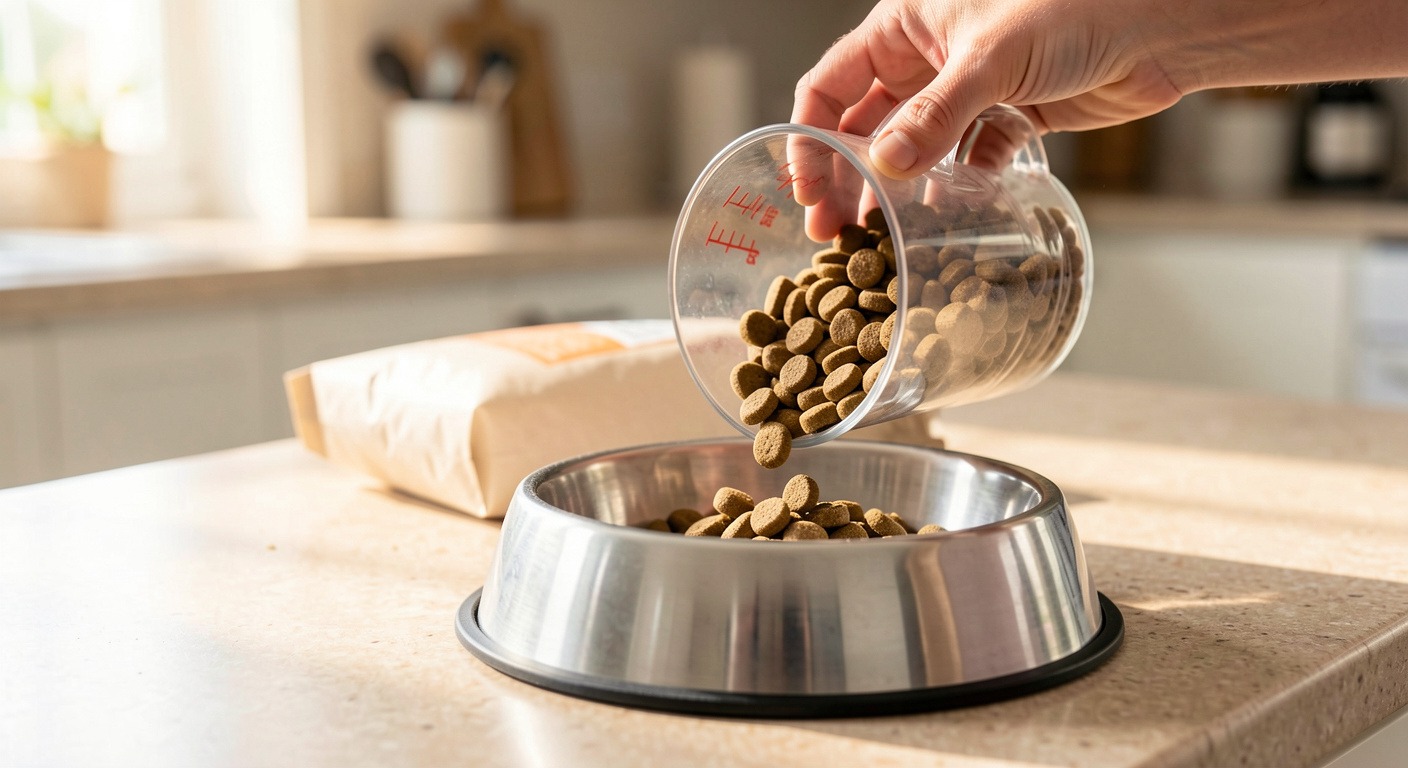
Divide daily calories by kcal per cup. If your dog needs 1,165 kcal and the food has 350 kcal per cup, that is roughly 3.25 cups per day, split into two meals. Always use a standard 8-ounce dry measuring cup, not a random scoop. A scoop from one brand might hold half a cup while another holds two. For the most accurate dog feeding chart by weight, always reference the specific food you are using.
If you are switching foods, see our guide to reading dog food labels for a full walkthrough of what those numbers mean.
Dog Feeding Schedule by Age
A dog feeding schedule by age changes as your pup grows. Puppies need frequent meals because their stomachs are small and they burn energy fast. Adult dogs thrive on a predictable twice-daily routine. Seniors may need smaller, more frequent portions or fewer calories as activity drops.
- Puppies (8 to 12 weeks): 3 to 4 meals per day
- Puppies (3 to 6 months): 3 meals per day
- Puppies (6 to 12 months): 2 meals per day
- Adults (1 to 7 years): 2 meals per day
- Seniors (7+ years): 2 meals per day, adjusted for lower activity
Free-feeding, or leaving food out all day, removes your ability to track intake. Stick to scheduled meals and pick up the bowl after 15 to 20 minutes.
Growing dogs need extra energy. Use the high end for active large-breed pups.
The most common profile. Most pet dogs fall into this category.
Lower metabolism and reduced activity mean fewer calories are needed.
Body Condition Score: The Real Test
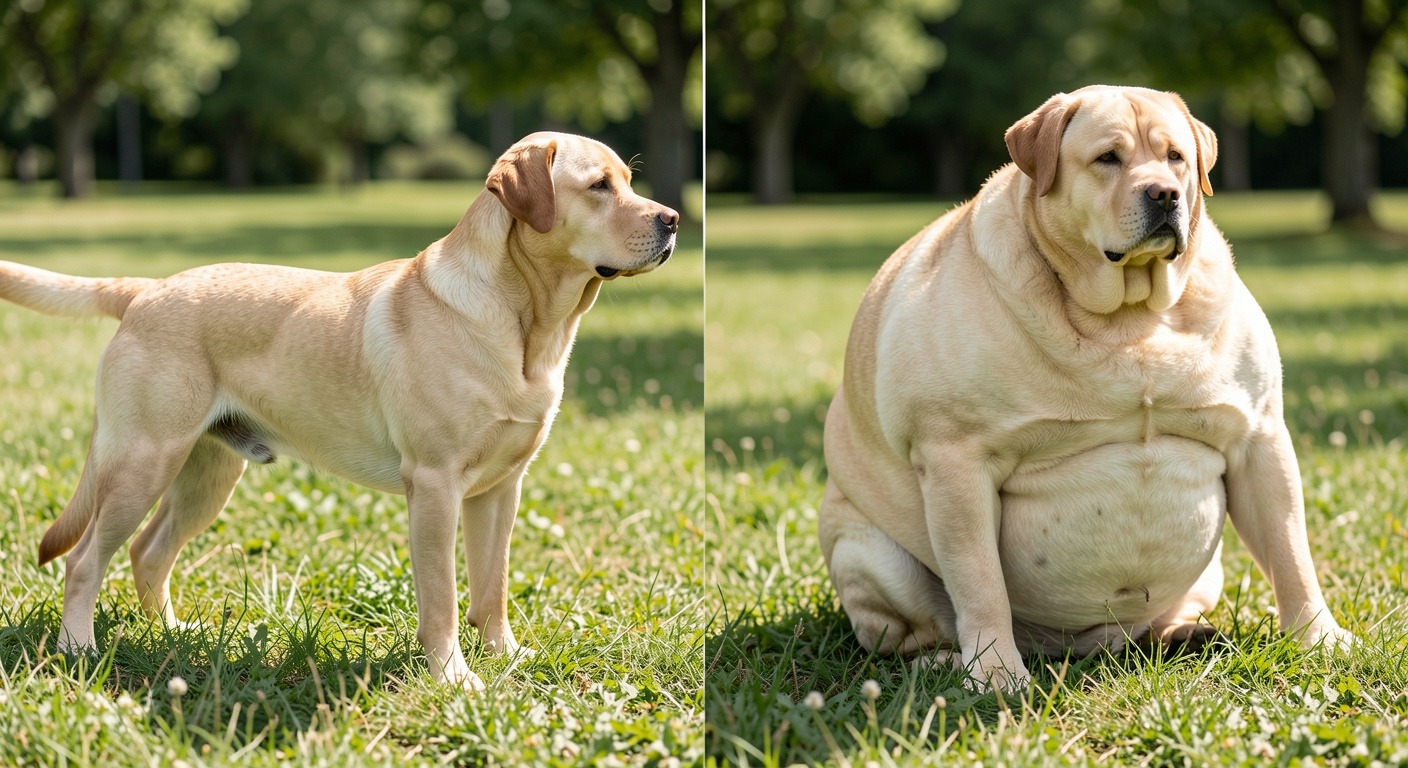
Numbers help, but the best feedback comes from looking at and touching your dog. Veterinarians use the Body Condition Score, a 1 to 9 scale where 4 to 5 is ideal. Here is how to check at home:
- Ribs test: Run your hands along the ribcage. You should feel the ribs easily with a thin layer of fat, like the back of your hand. If you cannot feel them at all, your dog is likely overweight. Ribs that visibly protrude mean your dog is too thin.
- Waist check: Look at your dog from above. You should see a visible waist behind the ribs, an hourglass shape.
- Abdominal tuck: From the side, the belly should tuck up behind the ribcage, not hang straight down.
Overfeeding Dog Signs to Watch For
Even well-meaning dog parents overfeed without realizing it:
- Weight gain visible on the scale week over week
- No visible waist when looking down from above
- Ribs are hard or impossible to feel under fat
- Low energy or reluctance to exercise
- Heavy breathing after short walks
If you notice these signs, reduce portions by 10 to 15 percent and recheck body condition in two weeks. Small adjustments add up. Our dog obesity and weight management guide covers safe weight loss strategies in detail.
Breed Size Differences
Small breeds like Chihuahuas and Yorkies have faster metabolisms. They burn more calories per pound and often need more calorie-dense food. A 10 lb dog might need 35 to 40 calories per pound, while a 100 lb dog might need only 18 to 22 calories per pound.
Large and giant breed puppies need controlled growth to avoid hip dysplasia and other developmental orthopedic diseases. Feed large-breed puppy formulas and follow your vet’s timeline for switching to adult food. See our puppy feeding guide for the first year.
Daily Calorie Targets by Weight
Use this dog feeding chart by weight as a starting point for a neutered adult dog eating food with roughly 350 kcal per cup. Adjust based on your dog’s actual food label and body condition score.
| Dog Weight | Daily Calories (Neutered Adult) | Approx Cups/Day (350 kcal/cup) |
|---|---|---|
| 10 lbs | 330 to 370 kcal | ~1 cup |
| 25 lbs | 650 to 720 kcal | ~2 cups |
| 50 lbs | 1,100 to 1,200 kcal | ~3.25 cups |
| 75 lbs | 1,450 to 1,600 kcal | ~4.5 cups |
| 100 lbs | 1,800 to 1,950 kcal | ~5.5 cups |
Puptify provides general education, not veterinary diagnosis. If your dog has rapid weight changes, shows signs of illness, or you are unsure about appropriate portions, consult your veterinarian. Never feed grapes, raisins, onions, garlic, chocolate, xylitol, macadamia nuts, alcohol, caffeine, or raw dough. Contact your veterinarian or a pet poison helpline immediately if your dog eats something toxic.
Frequently Asked Questions
Q: How do I know if I am feeding my dog enough?
Use the body condition score: ribs should feel like the back of your hand with light fat cover. A visible waist from above and an abdominal tuck from the side confirm your dog is at a healthy weight. Combine this hands-on check with the calorie formula for a reliable read.
Q: Should I feed my dog once or twice a day?
Twice a day is best for most adult dogs. It prevents hunger between meals, reduces the risk of bloat in large breeds, and keeps energy levels steady. One large meal per day can cause digestive stress.
Q: Can I use a regular cup to measure dog food?
Use a standard 8-ounce dry measuring cup, not a drinking glass or random scoop. A kitchen scale is even better if your food label gives a weight-based serving. Accuracy matters when each quarter cup makes a difference in daily intake.
Q: How many treats can I give my dog per day?
Treats should not exceed 10 percent of your dog’s daily calories. For a dog eating 1,000 kcal per day, that is 100 calories worth of treats total. Subtract treat calories from meals to stay on target.
Q: What if my dog is always hungry even after eating enough?
Some dogs are simply food-motivated. Try splitting meals into three smaller portions, adding low-calorie green beans as filler, or using a slow feeder bowl. If your dog is losing weight despite eating, see your vet to rule out medical causes.
Explore More Nutrition Guides
Ready to take control of your dog’s diet? Browse our complete collection of vet-reviewed nutrition articles for every life stage.
Visit Dog Nutrition Hub →