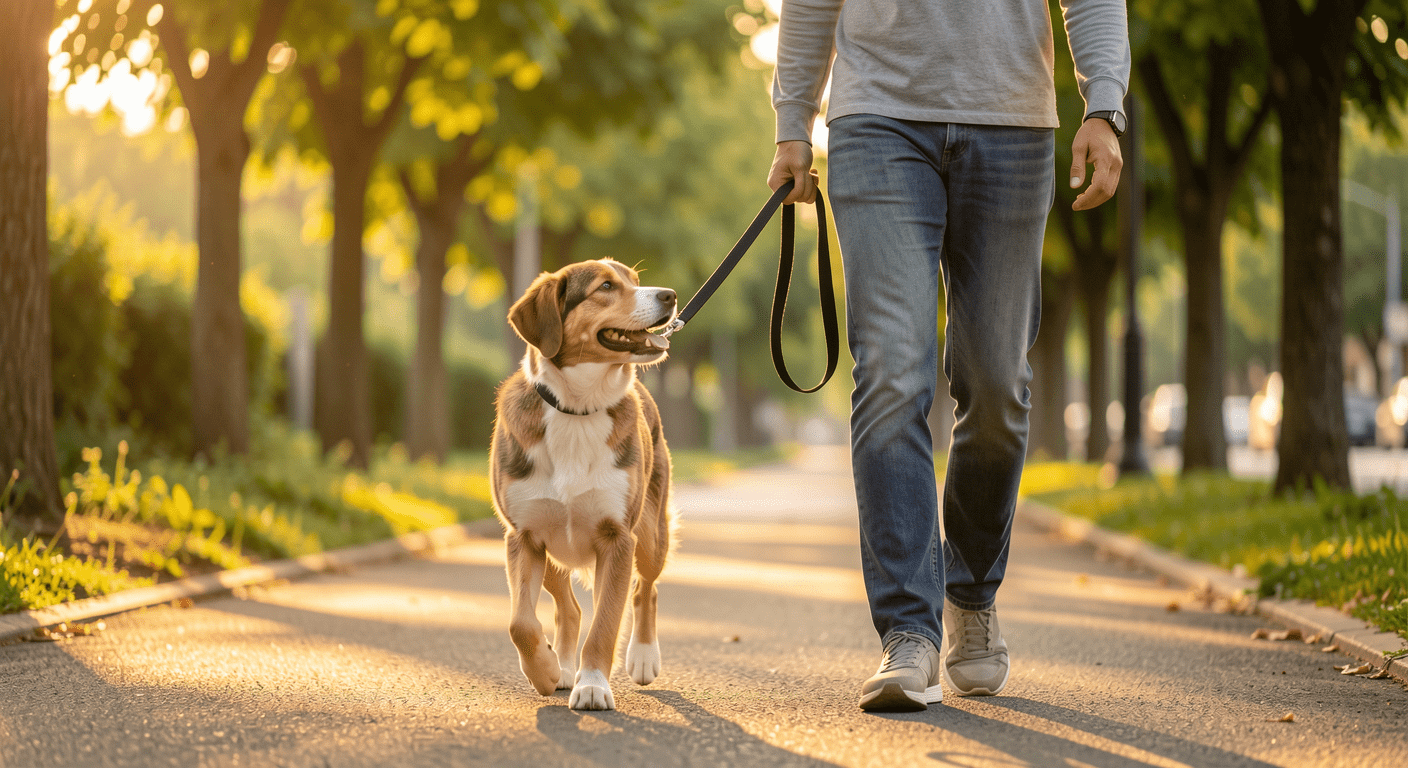
Stop the Pull: A Positive No-Pull Walking Plan
You stop leash pulling by teaching your dog that a loose leash equals forward movement and treats, while a tight leash means you stop. Every time the leash tightens, stop walking immediately. When your dog looks back or steps toward you, mark the moment with a word like “yes” and reward with a high-value treat. Practice in low-distraction areas first, then gradually add distractions. For most dogs, 2-4 weeks of consistent daily practice produces noticeable improvement.
Walking a dog that pulls can turn a simple walk into an exhausting tug-of-war. If you dread every trip around the block because your arm aches and your dog drags you down the sidewalk, you are not alone. Leash pulling is one of the most common frustrations dog parents face. The good news: you can leash train a dog that pulls without force, without frustration, and without spending a fortune on gadgets. Dogs pull because it works , the natural drive to move forward is strong, and even occasional success at dragging you toward a tree or another dog reinforces the behavior. This guide gives you a clear, positive plan to turn pulling into pleasant walks.
No tool fixes pulling by itself. Training is what changes behavior. If your dog lunges, growls, or redirects toward you when frustrated, this may be reactivity , not simple pulling. Contact a certified force-free trainer. Puptify supports humane, reward-based training methods that do not rely on pain, fear, or intimidation.
Most dogs pull , it is a reinforced behavior, not stubbornness or dominance. With consistent training, every dog can learn to walk politely.
Dogs need time to build new habits. Short, daily sessions work better than one long weekend attempt.
Your dog does not need to walk in perfect position. A relaxed leash near you , with room to sniff , is the real win.
Why Dogs Pull on the Leash
Dogs pull for three main reasons, and none of them are about dominating you. The first is reinforcement: pulling works. Every time your dog leans into the leash and gets one step closer to a bush, a person, or another dog, the pulling is rewarded. The second is excitement. The outside world is packed with smells, sounds, and movement. For a dog who has been inside most of the day, stepping out the door is like a child entering an amusement park. The third is fear or frustration. Some dogs pull toward things they want to investigate, while others pull away from things that scare them. Understanding why your dog pulls helps you pick the right training approach.
Dogs also walk faster than humans naturally. Your relaxed stroll is their slow motion. Add a four-foot leash, and the mismatch is immediate. Your dog is not trying to lead you , they are simply moving at a pace that feels normal.
Loose Leash Walking vs Heel: What You Actually Need
There is an important difference between loose leash walking and a formal heel, and most pet dogs do not need the latter.
Loose leash walking (LLW) means your dog walks near you with the leash hanging in a relaxed J-shape. Your dog can sniff, look around, and be a dog , as long as there is no tension on the leash. This is what most families want: a calm, enjoyable walk where no one is getting dragged.
Heel is a precise obedience position where the dog walks with their shoulder aligned to your left leg, paying attention to you at all times. This is useful for competitive obedience or navigating crowded streets, but it is not necessary for a good walk around the neighborhood. Teaching a formal heel is more demanding and not required for stopping pulling.
Focus on loose leash walking first. Once your dog walks nicely on a relaxed leash, you can layer in a heel cue for specific situations if you want.
Best Equipment for Dogs That Pull
Choosing the right walking equipment can make training easier and safer. The table below covers 11 common tools. Remember: no tool trains the dog , training does. The right equipment helps you manage the pulling while you teach new skills.
| Equipment | Best for | Why it helps or hurts | Important warning |
|---|---|---|---|
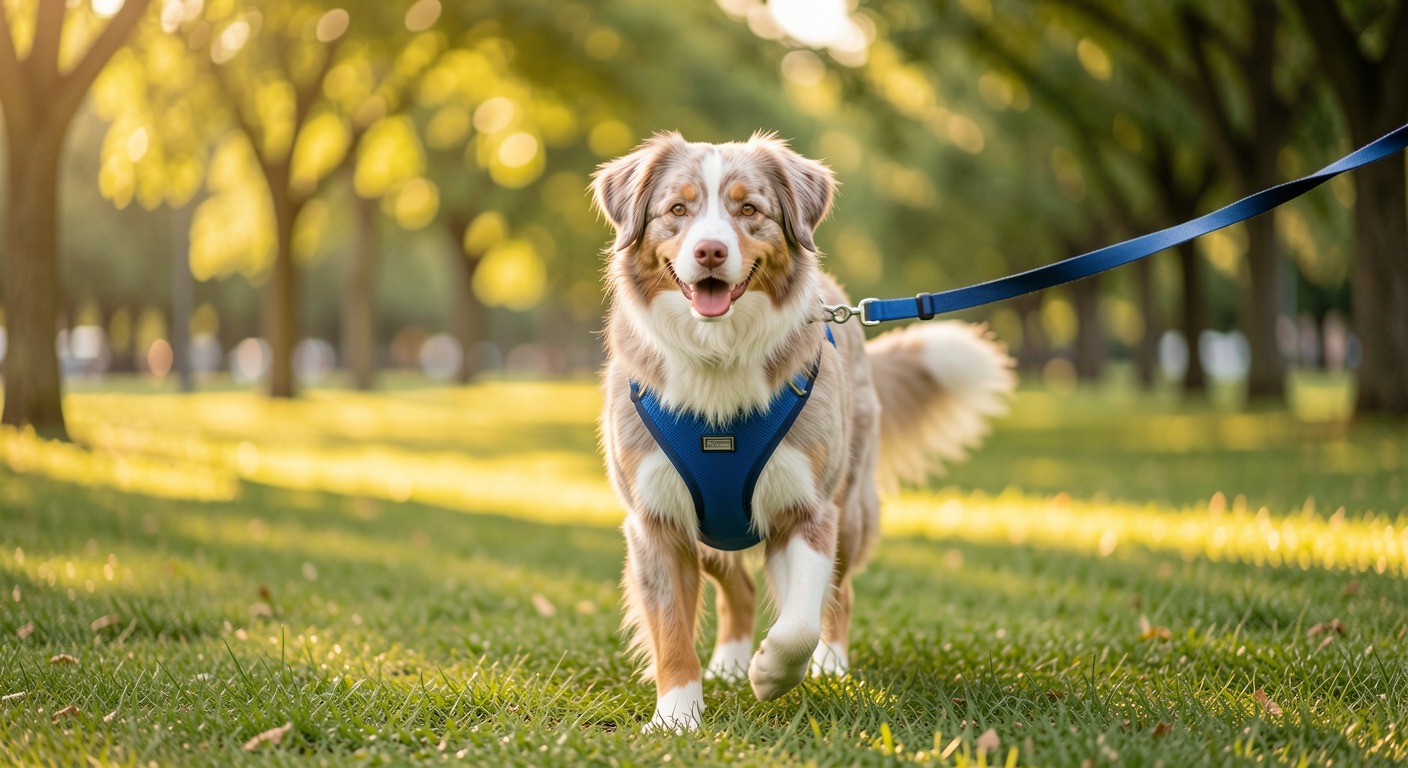
| Front-clip harness | Most dogs learning loose leash walking | Gently turns the dog toward you when they pull, reducing forward leverage. Helps manage but does not train the behavior alone. | Check fit around the shoulders , a poorly fitted harness can restrict movement. Pair with training, not as a standalone fix. |
| Back-clip harness | Small dogs, dogs who do not pull hard, or dogs with sensitive necks | Distributes pressure across the chest instead of the neck. Does not discourage pulling on its own , dogs can lean into it like a sled harness. | Not ideal for strong pullers , the back attachment point gives the dog more pulling power. |
| Y-shaped harness | Dogs who need full shoulder freedom | The Y-shape sits low on the chest and allows natural stride. Comfortable for everyday walks. | Like a back-clip harness, the rear attachment point does not reduce pulling. Choose a front-clip Y-harness for training. |
| Flat collar | Dogs who already walk politely; for holding ID tags | Safe for relaxed walkers. Convenient for quick potty breaks. | Pulling on a flat collar puts pressure directly on the throat, trachea, and thyroid. Not suitable for dogs who pull. |
| Martingale collar | Dogs with narrow heads (sighthounds) who slip out of flat collars | Tightens slightly under tension to prevent escape without choking. Safer escape-prevention alternative to choke chains. | Must be fitted correctly , it should still allow two fingers underneath when tightened. Not a training tool for pulling. |
| Head halter | Strong pullers who need management during training | Works like a horse halter , where the head goes, the body follows. Gives you control without force. | Requires slow conditioning over several days. Should never be jerked or yanked , this can injure the dog’s neck. Many dogs need time to accept it. |
| 4-6 foot leash | Everyday walking and training | Gives your dog enough room to sniff while keeping them close enough for training. A shorter leash reduces lag time between pulling and your response. | Avoid extremely short leashes (under 4 feet) , they create constant tension even when the dog is trying to walk politely. |
| Retractable leash | Not recommended for training or dogs who pull | Teaches the dog that tension equals more distance. The constant light pressure makes it impossible for the dog to learn what a loose leash feels like. | Can cause burns, cuts, or entanglement. The thin cord can snap under a strong dog. Avoid for training. |
| Choke chain | Not recommended | Choke chains and prong collars may suppress pulling temporarily but rely on discomfort or pain and can increase fear, stress, or reactivity. They create negative associations with walking and do not teach the dog what you want instead. | Can cause tracheal damage, increased anxiety, and redirected aggression. AVSAB and leading veterinary behavior organizations advise against them. |
| Prong collar | Not recommended | Similar to choke chains , may suppress pulling temporarily through pain but does not teach loose leash walking. Risk of physical injury and behavioral fallout is high. | Can damage the trachea, esophagus, and skin. May worsen fear or reactivity. Not supported by modern behavioral science for leash training. |
| Slip lead | Not recommended for pulling | A combined collar and leash that tightens under tension. Useful for quick handling in shelters or vet clinics but not a training tool. | Without a stopper, it can choke the dog. Should not be used as a primary walking tool for dogs who pull. |
Check your dog’s harness or collar regularly for wear, proper fit, and chafing signs. A sudden equipment failure during a walk can be dangerous. For more on choosing safe walking gear, see the best harness vs collar for dogs guide.
Tools to Avoid When Leash Training
Beyond the equipment table above, there are products marketed as quick fixes for pulling that can cause more problems than they solve:
- Prong collars and choke chains , rely on discomfort or pain and can increase fear, stress, or reactivity. The American Veterinary Society of Animal Behavior (AVSAB) recommends reward-based methods over aversive tools.
- Retractable leashes , teach tension equals more distance and make it impossible for your dog to learn loose leash walking.
- “No-pull” harnesses that tighten under the arms , some designs create a tourniquet-like squeeze that is uncomfortable and can cause chafing.
- Shock collars (e-collars) , even when marketed as a “tap” or “vibration,” these use punishment to suppress behavior without teaching the dog what to do instead.
Before You Start: Set Your Dog Up for Success
Walk through this checklist before your first training session. A few minutes of preparation makes every session more productive.
- Load up on high-value treats. Use something your dog does not normally get , small pieces of chicken, cheese, or freeze-dried liver. Cut them pea-sized.
- Choose a low-distraction area. Your living room or a quiet hallway is the right starting point. Do not begin training at the park.
- Keep sessions short. 5-10 minutes is plenty. Dogs learn better in short, positive bursts than in long, frustrating sessions.
- Use a 4-6 foot leash attached to a front-clip or Y-shaped harness. Skip the retractable leash and pain-based tools entirely.
- Reward at your hip. Feed treats right next to your leg so your dog learns that the best things happen near you, not at the end of the leash.
- Let your dog sniff after success. Sniffing is mentally enriching and a natural reward. After a stretch of loose leash walking, say a release word and let your dog explore.
- Do not train when you are angry or rushed. If you feel frustrated, end the session. Your dog reads your energy. A short, positive session beats a long, tense one.
- Avoid busy parks, dog parks, and crowded streets early on. Start where your dog can succeed, then gradually add difficulty.
- Exercise your dog before training. A quick game of fetch or a short play session takes the edge off before you ask for calm walking.
They are how you communicate “that is what I wanted.” Over time, your dog will need fewer treats as walking nicely becomes a habit.
The living room is boring , and that is perfect. If your dog cannot walk on a loose leash at home, they definitely cannot do it outside.
5 minutes of focused training beats 30 minutes of frustrated pulling. End on a success, even if it is small.
5-Step Loose Leash Training Plan
This plan builds loose leash walking in manageable stages. Move to the next stage only when your dog succeeds 8 out of 10 times at the current stage. Rushing ahead is the most common reason training stalls.
| Stage | Environment | Goal | Session length | When to move forward |
|---|---|---|---|---|
| Stage 1 | Indoors (living room, hallway) | Dog walks a few steps near you on a loose leash and checks in for treats | 5 minutes | Dog stays near your side for 10+ steps with a loose leash at least 8/10 attempts |
| Stage 2 | Yard or building hallway | Dog walks on a loose leash in a slightly more stimulating space | 5-10 minutes | Dog can walk 20+ steps with a relaxed leash despite mild distractions (sounds, slight wind, familiar smells) |
| Stage 3 | Quiet street with minimal traffic | Dog walks on a loose leash in a real outdoor setting | 10 minutes | Dog recovers quickly after a distraction and checks in without being called |
| Stage 4 | Normal walking route | Dog walks politely past moderate distractions (other houses, distant people) | 10-15 minutes | Dog pulls less than 10% of the walk; most of the walk is on a relaxed leash |
| Stage 5 | Higher-distraction areas (near parks, busier streets) | Dog walks on a loose leash even with other dogs, people, and squirrels at a distance | 15+ minutes | Dog can pass triggers at a comfortable distance without pulling; loose leash is the default, not the exception |
Step 1: Start Indoors
Clip on the leash and stand still in your living room. Wait for your dog to look at you or move toward you. The moment they do, mark with “yes” and place a treat at your hip. Take one step. If your dog follows without pulling, mark and reward. If the leash tightens, stop and wait. Do not tug back , just pause until the leash loosens, then mark and reward the slack. Repeat for 5 minutes.
Step 2: Practice in the Yard or Hallway
Move to a slightly more interesting space , a fenced yard, a quiet hallway, or a driveway. Use the same pattern: walk forward on a loose leash, stop the instant the leash tightens, wait for slack, then mark and reward. At this stage, your dog is still close to home with limited novelty. Expect a small step backward in performance at first , that is normal when environments change.
Step 3: Move to a Quiet Street
Now you are outdoors. Pick a time of day when foot traffic is light. Walk 5-10 steps, stop before your dog reaches the end of the leash, and reward at your hip. If your dog pulls, stop immediately. Do not walk again until the leash is loose. This is the stage where patience pays off , your dog is learning that pulling no longer works, outdoors, where it always worked before.
Step 4: Add Distractions Slowly
Walk on your usual route but at quiet times. When you spot a distraction ahead , a person, another dog, a bicycle , increase your distance. Cross the street or turn around if needed. Reward heavily for any loose leash walking near the trigger. The goal is to teach your dog that staying near you is more rewarding than pulling toward the distraction.
Step 5: Use Sniff Breaks as Rewards
Once your dog walks nicely for a stretch, release them with a cue like “go sniff” and let them explore. Sniffing is a natural, enriching reward. After 30-60 seconds, call your dog back or wait for them to check in, then resume loose leash walking. This teaches your dog that walking politely earns the freedom to sniff , a powerful motivator for most dogs.
What to Do the Moment Your Dog Pulls
The pull moment is where training either sticks or stalls. Your response needs to be immediate and consistent. Use this decision flow every single time:
Leash tightens → stop moving immediately. Do not yank. Do not pull back. Just stop.
Dog looks back or steps toward you → mark with “yes” and reward at your hip.
Dog keeps pulling without checking in → turn and walk in the other direction. Give a cheerful cue like “this way” and reward when the dog follows.
Dog is too excited to think → increase distance from whatever is overstimulating them. Cross the street or step behind a parked car.
Lunging, barking, or panicking → this is reactivity, not simple pulling. Increase distance from the trigger and contact a certified force-free trainer for a personalized plan.
The key is consistency. If you let your dog pull you to the fire hydrant even once after a training session, you have just paid them for pulling. Every walk is a training opportunity , even the quick potty break.
How to Reward Loose Leash Walking
Rewarding correctly is just as important as stopping when the leash tightens. Follow these principles:
- Reward at your hip, not in front of you. If you hold the treat out ahead, your dog learns to surge forward for the reward. Feed the treat right next to your left or right leg.
- Reward the moment the leash is loose. The faster you mark and reward, the faster your dog connects the dots.
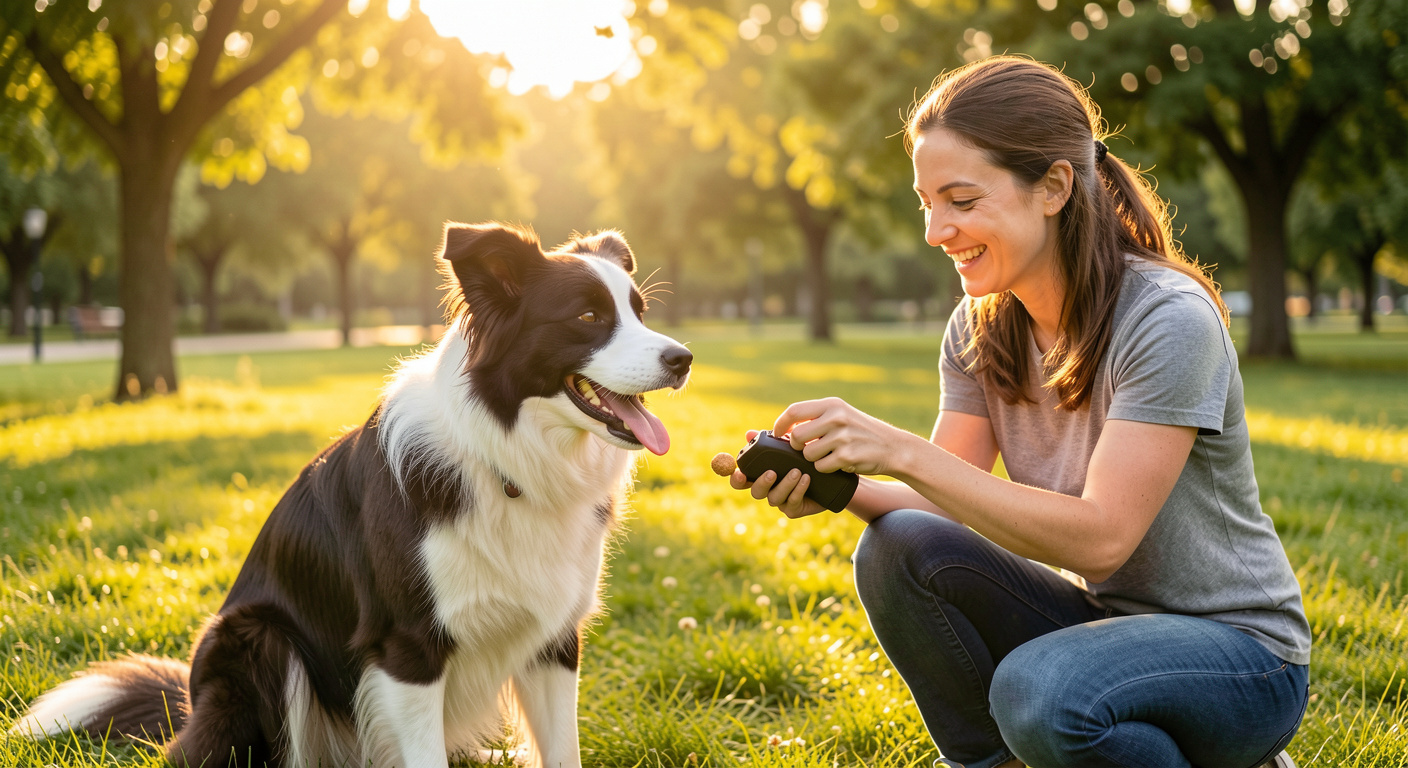
- Use a consistent marker word. “Yes” or a clicker tells your dog exactly which behavior earned the reward.
- Reward check-ins. Any time your dog voluntarily looks back at you on a walk, mark and reward. This teaches your dog that checking in with you pays off.
- Use sniff breaks as life rewards. After 10-20 steps of nice walking, release your dog to sniff. This rewards the loose leash with something dogs value more than treats.
- Vary the reward rate. Early training: reward every 2-3 steps. Later: reward every 10-15 steps. Gradually thin the rewards but keep them intermittent so your dog never knows when the next one is coming.
Leash Training Puppies vs Adult Dogs
Puppies (under 6 months): Start inside. Puppies have short attention spans, so keep sessions to 2-3 minutes. Focus entirely on making the area near you the best place to be , reward freely for any choosing-to-be-close behavior. Puppies do not need long walks. A 10-minute sniff walk around the yard with a loose leash is more valuable than a 30-minute pull-fest around the block. Expect puppies to regress during fear periods and adolescence , stay patient and go back to an easier stage when needed.
Adult dogs with a pulling history: Adult dogs have practiced pulling for months or years. It will take longer to replace that habit. Start in the least distracting environment possible and do not move forward until the dog is truly solid. Adult dogs may need higher-value treats and more sessions before the loose leash pattern sticks. The good news: adult dogs can absolutely learn. I have seen 8-year-old dogs with a lifetime of pulling learn to walk politely in 4-6 weeks of consistent work. It is never too late.
Rescue dogs: If you just adopted a dog, give them 2-3 weeks to settle before starting formal leash training. Focus on building trust and a positive relationship first. Once your dog feels safe, follow the same step-by-step plan. For more on the first month with a rescue, see the new rescue dog settling guide.
Puppies do not pull to be difficult , they pull because the world is new and exciting. Reward focus, keep sessions short, and let puppies be puppies.
Your adult dog has been pulling for a long time. Be patient. Changing a deeply practiced habit is harder than building a new one , but it works.
Trust first, training second. A newly adopted dog needs time to feel safe. Rushing into training can backfire.
How to Handle Strong Pullers and Reactive Dogs
If your dog is large, strong, or explosive on the leash, safety comes first. A 90-pound dog pulling toward another dog can injure you in a split second , and management equipment matters here.
Management (keeping everyone safe while you train): Use a front-clip harness combined with a second attachment point (a double-ended leash connected to both the front and back of a harness gives you more control). A head halter, slowly conditioned with plenty of treats, can give you steering control without force. Walk during quiet hours and on routes where you can see triggers from a distance and create space.
Training (replacing the pulling with calm walking): The principle is the same as for any dog , reinforce loose leash, stop when the leash tightens , but you need more distance from triggers, not more correction. If your dog pulls toward other dogs, cars, or squirrels, work at a distance where your dog can still think and take treats. Closing the distance too soon reinforces the pulling.
When pulling is reactivity: If your dog lunges, barks, growls, or redirects biting at the leash when frustrated, this is reactivity , not simple pulling. Pulling toward other dogs or cars may be excitement, fear, frustration, or a mix of all three. The fix is not a stronger tool or more “discipline” , it is a structured desensitization and counterconditioning plan from a qualified professional.
Contact a CCPDT-certified trainer, an IAABC consultant, or a veterinary behaviorist for lunging, growling, biting, or any behavior that feels unsafe. You can also check the Fear Free Happy Homes directory for force-free professionals near you.
If your dog lunges, growls, snaps, or redirects toward you when frustrated on the leash, stop training and consult a certified force-free professional. These behaviors are not a training failure , they are a sign that your dog is over their coping threshold and needs a specialized behavior modification plan. The sooner you get help, the faster things improve.
Common Mistakes That Keep Dogs Pulling
- Walking the same route every day. Your dog knows exactly where the exciting spots are and pulls in anticipation. Vary your route, especially during training.
- Moving forward on a tight leash. Every single time you take a step while the leash is tight, you are rewarding pulling. Stop every time.
- Skipping the indoor stage. If your dog cannot walk on a loose leash in a boring room, they will definitely not do it outside. Do not skip the foundation.
- Relying on equipment instead of training. A front-clip harness helps manage pulling, but it does not teach your dog what to do. Training is the permanent solution.
- Sessions that are too long. After 10 minutes, most dogs are mentally done. Frustrated training builds frustration, not skills.
- Using low-value treats. Kibble in the living room might work, but outside, you are competing with squirrels and smells. Bring the good stuff.
- Punishing pulling. Jerking the leash, yelling, or using aversive tools teaches your dog that walks are scary, not that loose leash walking is rewarding.
- Not exercising before training. A dog with pent-up energy cannot focus. A quick play session before the walk makes a huge difference.
- Inconsistent rules. If you stop pulling on training walks but let it slide on potty breaks, your dog learns the rule depends on the situation , and will test it.
Frequently Asked Questions
Q: How do you leash train a dog that pulls?
You leash train a dog that pulls by stopping every time the leash tightens and rewarding every moment the leash stays loose. Start in a quiet room with high-value treats. Take one step, reward at your hip when the dog follows without pulling. The moment the leash tightens, stop moving until it loosens. Repeat across increasingly distracting environments. Consistency is everything , every walk is a training session. Most dogs show improvement in 2-4 weeks with daily practice.
Q: Why does my dog pull on the leash?
Dogs pull because it works. Every time your dog leans into the leash and gets closer to something they want , a tree, a person, another dog , the pulling is reinforced. Excitement, fear, and lack of training are the three root causes. Dogs also walk faster than humans naturally. Pulling is not dominance or stubbornness , it is simply a behavior that has paid off in the past.
Q: What is loose leash walking?
Loose leash walking means your dog walks near you with the leash hanging in a relaxed J-shape , no tension, no pulling. Your dog can sniff and look around as long as the leash stays loose. This is different from a formal heel, which requires precise positioning and constant attention. Loose leash walking is the practical skill most pet dogs and their owners need for enjoyable daily walks.
Q: What is the best harness for a dog that pulls?
A front-clip harness is the best choice for most dogs that pull. The front attachment point gently redirects your dog toward you when they pull, reducing forward leverage without causing pain or discomfort. Look for a Y-shaped chest design that does not restrict shoulder movement. Pair the harness with a 4-6 foot leash and consistent training , the harness helps you manage the pulling while you teach loose leash walking. No harness fixes pulling by itself.
Q: Should I stop walking when my dog pulls?
Yes. Stop immediately when the leash tightens. Do not tug back or pull , just stop moving. Wait for any sign that the leash loosens: your dog looks back, steps toward you, or sits. The moment there is slack, mark with “yes” and reward at your hip. If your dog keeps pulling without checking in, turn and walk the other direction. Stopping every single time teaches your dog that pulling no longer works. Consistency is the most important part.
Q: How long does it take to stop leash pulling?
Most dogs show noticeable improvement in 2-4 weeks with daily 5-10 minute practice sessions. Puppies may learn faster because they have less practice at pulling. Adult dogs with years of pulling history may take 4-8 weeks. The timeline depends on consistency , practicing every day in progressively more distracting environments speeds progress. Sessions should be short and positive. Rushing the process or skipping stages slows things down.
Q: Can an older dog learn loose leash walking?
Yes, absolutely. Older dogs can learn loose leash walking with the same positive reinforcement approach. Years of pulling practice may mean it takes longer , 4-8 weeks instead of 2-4 for a puppy , but the process is the same. Start indoors, use high-value treats, and be extra patient. Older dogs may have joint issues or reduced stamina, so keep sessions short and comfortable. A 10-year-old dog who has pulled their whole life can still learn to walk on a loose leash.
Q: Are prong collars good for dogs that pull?
Prong collars are not recommended for dogs that pull. They may suppress pulling temporarily by causing discomfort or pain, but they do not teach the dog what to do instead. Prong collars can damage the trachea and skin, increase fear and anxiety, and worsen reactivity. Leading veterinary behavior organizations , including the American Veterinary Society of Animal Behavior , recommend reward-based training methods over aversive tools. A front-clip harness paired with positive training is a safer and more effective long-term solution.
Q: Why does my dog pull harder when I stop?
Your dog pulls harder because pulling has always worked before. From their perspective, more pulling equals more forward progress , it is an extinction burst. If stopping is new and you have previously given in to pulling, your dog will try harder for a while. Stay consistent. Do not move until the leash loosens, even slightly. The pulling will fade as your dog learns the old strategy no longer works. This phase usually lasts a few sessions.
Q: Should I use treats for leash training?
Yes. Treats are not bribery , they are how you communicate that your dog did the right thing. High-value treats (small pieces of chicken, cheese, or freeze-dried liver) are especially important in distracting outdoor environments where you are competing with smells, squirrels, and other dogs. Reward at your hip, not in front of you. Over time, you will thin the treats and mix in life rewards like sniff breaks. The goal is not to use treats forever , it is to build a strong habit that lasts without them.
Q: What side should my dog walk on?
Either side is fine for loose leash walking. The traditional left-side heel is a competitive obedience standard, not a requirement for pet dogs. Pick one side and be consistent , switching sides mid-walk confuses your dog. Most right-handed people find walking the dog on the left side more comfortable because their right hand is free. Whatever side you pick, reward at the hip on that side so your dog learns where the reinforcement zone is.
Q: Is a front-clip harness enough to stop pulling?
No. A front-clip harness helps manage pulling by reducing the dog’s forward leverage, but it does not teach the behavior you want. Without training, your dog may still pull , just with slightly less force. The harness is a management tool that makes training sessions safer and easier. The permanent solution is consistent reinforcement of loose leash walking across all environments. Use the harness and train the behavior together.
Q: How do I stop my dog pulling toward other dogs?
Start by working at a distance where your dog can still think and take treats , this might be 50 feet or more at first. Reward your dog for looking at the other dog and then looking back at you without pulling. Use the “engage-disengage” game: dog looks at trigger, you mark and reward for the look, then reward when the dog looks back at you. Over many sessions, gradually decrease the distance. If your dog pulls, barks, or lunges, you are too close , increase distance. A certified force-free trainer can create a customized plan for dog-reactivity on leash.
Q: How do I stop my dog pulling toward squirrels?
Squirrels trigger a dog’s prey drive , the instinct to chase. The same loose leash walking principles apply: work at a distance where your dog can still disengage, stop when the leash tightens, and reward heavily for any loose-leash moments near the trigger. Practice the “look at that” game: when your dog spots a squirrel, say “look at that” in a calm voice, then reward your dog for looking at the squirrel without pulling. Over time, your dog learns that seeing a squirrel and staying calm earns a treat, while pulling earns nothing. This takes time and patience , prey drive is powerful.
Q: Can I leash train a puppy that pulls?
Yes. Puppies are actually easier to train because they have not spent months or years practicing pulling. Start inside with 2-3 minute sessions using high-value treats. Reward any time the puppy chooses to be near you. Keep expectations low , puppies have short attention spans and the outside world is incredibly exciting. Focus on building the habit early rather than correcting pulling. If a puppy is pulling hard enough to strain against a collar, switch to a front-clip harness immediately to protect their developing trachea.
Q: Should I let my dog sniff on walks?
Yes. Sniffing is mentally enriching and naturally rewarding for dogs. It lowers stress, provides mental stimulation, and processes information about the environment. The key is to put sniffing on cue so your dog learns to walk nicely first, then earn the freedom to sniff. After 10-20 steps of loose leash walking, release your dog with a cue like “go sniff” and let them explore for 30-60 seconds. Then cue them back to walking. This makes loose leash walking the price of admission to the sniff party.
Q: What if my dog is too excited to take treats outside?
Your dog is over threshold , the environment is too stimulating. Move to a quieter location. Try starting on your front step or just outside your door rather than at the park. Use higher-value treats (real meat, cheese) and practice before mealtime when your dog is hungry. Some dogs need to start indoors with the front door open, then on the front step, then on the sidewalk , building tolerance gradually. If your dog still will not take treats outside after trying quieter locations and higher-value rewards, work on engagement games indoors first before adding outdoor distraction.
Q: When should I hire a dog trainer?
Consider hiring a certified force-free trainer if: your dog lunges, growls, or barks at people or other dogs on walks; your dog redirects biting or snapping at you when frustrated on the leash; you have been training consistently for 4+ weeks with no progress; your dog is large or strong enough that pulling creates a safety risk for you; or you simply feel stuck or overwhelmed. Look for certifications from the CCPDT or IAABC. A good trainer will teach you, not just work with your dog.
Final Tip: Make Loose Leash Walking Worth It
The single most important thing you can do is make walking near you the most rewarding place your dog can be. When the leash is loose, good things happen: treats appear, forward movement continues, sniff breaks open up. When the leash is tight, everything stops. Your dog figures this out faster than you expect.
Be patient. Be consistent. Stop every time. Reward generously. And remember: the goal is not a robot dog walking in perfect position. The goal is a relaxed walk where you and your dog both enjoy being outside together. That is what loose leash walking is really about.
Keep Reading
Ready for Better Walks?
Loose leash walking is a skill , and every skill gets better with practice. Explore more positive training guides to help your dog thrive.
Explore Dog Training Guides →