A Practical Guide to Soothing Your Dog’s Tummy
Puptify provides general education, not veterinary diagnosis or treatment. Sensitive stomach symptoms can overlap with serious medical conditions including parasites, pancreatitis, inflammatory bowel disease, and infections. This guide is vet-informed but not a substitute for a veterinarian’s care. If your dog has chronic diarrhea, vomiting, blood in stool, weight loss, lethargy, or severe pain, contact your veterinarian before changing their food. For homemade or therapeutic diets, consult a board-certified veterinary nutritionist.
Quick Answer: What Is the Best Dog Food for Sensitive Stomachs?
The best dog food for sensitive stomachs depends on your dog’s specific triggers. For most dogs, a highly digestible, limited-ingredient formula with a single novel protein, gentle carbohydrates like rice or oatmeal, moderate fat, and added prebiotics may help. There is no single food that works for every sensitive dog, and what helps one dog may not help another. If symptoms are chronic, severe, or include blood, weight loss, or lethargy, ask your vet before trying another over-the-counter food.
Identify the Pattern
Track when symptoms happen. After every meal? With certain proteins? During stressful events? The pattern points to the cause.
Choose the Right Food
Look for highly digestible protein, gentle carbs, moderate fat, and formulas that match your dog’s life stage. Avoid ingredients linked to your dog’s reactions.
Transition Slowly
Switch food over 7 to 14 days, watch for changes, and keep a food diary. If symptoms worsen, pause the transition and call your vet.
What Does “Sensitive Stomach” Mean in Dogs?
“Sensitive stomach” is not a medical diagnosis. It’s a descriptive term for a pattern of digestive symptoms: loose stools, gas, occasional vomiting, gurgling belly sounds, or inconsistent appetite. These symptoms can come from diet intolerance, parasites, pancreatitis, inflammatory bowel disease, infections, stress, or other underlying medical issues.
According to the American Kennel Club, no single food works for every sensitive dog because the underlying cause can vary widely. What looks like food sensitivity may actually be a medical condition that needs veterinary treatment, not just a diet change.
This guide helps you choose a safer food, transition slowly, track symptoms, and recognize when it’s time to call the vet. It does not replace veterinary care for chronic or severe symptoms.
Sensitive Stomach vs Food Allergy vs Medical Problem
These three conditions share overlapping signs but need different approaches. This table helps you understand the differences before you reach for a new bag of food:
| Issue | Common Signs | Common Triggers | Best Next Step |
|---|---|---|---|
| Food intolerance | Loose stool, gas, gurgling, mild vomiting | High fat, sudden diet change, certain proteins or carbs | Slow transition to a highly digestible diet; food diary |
| Food allergy | Itchy skin, ear infections, paw licking, chronic loose stool | Specific protein (often beef, dairy, or chicken) | Vet-supervised elimination diet trial |
| Parasites / infection | Sudden diarrhea, sometimes with blood or mucus, weight loss | Giardia, worms, bacterial overgrowth | Vet visit for fecal testing and treatment |
| Pancreatitis | Vomiting, painful belly, hunched posture, refusing food | High-fat meals, table scraps, fatty treats | Immediate vet visit; this is an emergency |
| IBD / chronic GI | Chronic intermittent diarrhea and vomiting, weight loss | Immune-mediated; can involve food triggers | Vet diagnosis via bloodwork, ultrasound, biopsy |
| Stress-related | Loose stool during boarding, travel, schedule changes | Environmental stress, anxiety | Manage stress; probiotic support may help |
Signs Your Dog May Need a Sensitive Stomach Food
Not every loose stool means a food change. Occasional mild digestive upset can be normal. The following patterns suggest diet may be a factor:
- Loose or soft stools that persist for more than a few days
- Frequent gas or loud stomach gurgling after meals
- Occasional vomiting of undigested food
- Inconsistent appetite or picky eating
- Stool quality that varies day to day on the same food
- Symptoms that appeared after a food change or new treats
If your dog shows any of these signs alongside weight loss, vomiting blood, black or tarry stool, severe lethargy, or signs of pain, skip the food aisle and go straight to your veterinarian.
Red Flags That Need a Veterinarian First
- Diarrhea lasting more than 48 hours
- Blood in stool (bright red or black/tarry)
- Repeated vomiting (more than 2-3 times in 24 hours)
- Unexplained weight loss
- Refusing food for more than 24 hours
- Severe lethargy or weakness
- Painful or swollen abdomen
- Signs of dehydration (dry gums, sunken eyes, skin tenting)
- Puppy with diarrhea (puppies dehydrate quickly)
- Senior dog with sudden digestive changes
- Symptoms after eating fatty food or getting into the trash
- Bloat signs: retching without producing vomit, distended abdomen, pacing, restlessness, collapse
These signs need veterinary care before trying another over-the-counter food. Delaying treatment can make some conditions significantly worse.
What to Look for in Dog Food for Sensitive Stomachs

When choosing a food for a dog with digestive sensitivity, look beyond marketing claims on the front of the bag. The ingredient list and nutritional adequacy statement tell you what actually matters.
AAFCO Complete and Balanced Statement
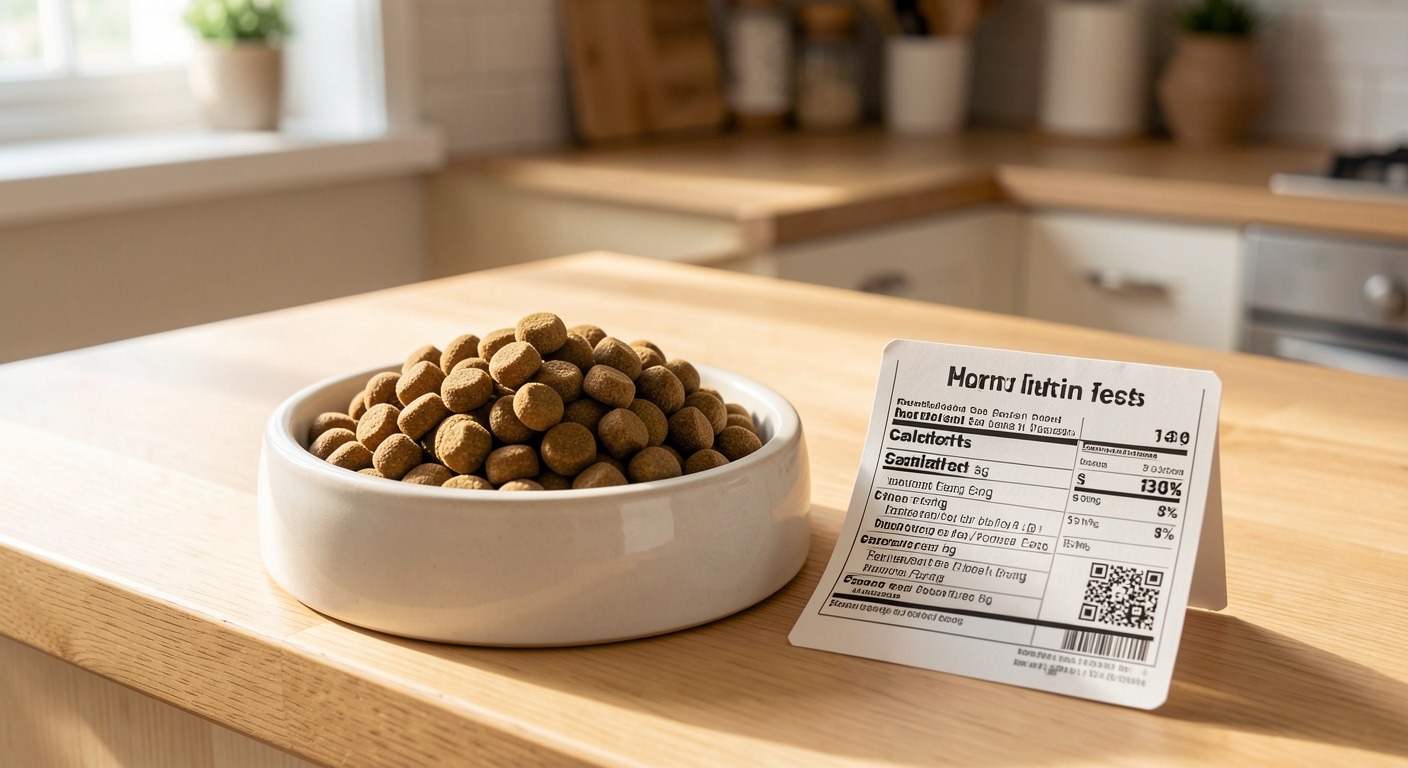
Look for the AAFCO nutritional adequacy statement on the label. It confirms the food meets minimum nutrient requirements for your dog’s life stage (growth, adult maintenance, or all life stages). A food labeled “for intermittent or supplemental feeding only” is not nutritionally complete and should not be the sole diet. For guidance on evaluating brands, see the WSAVA Global Nutrition Guidelines.
Highly Digestible Protein
A single, named animal protein source (such as chicken, turkey, lamb, or salmon) is easier for a sensitive digestive system to process. Some dogs react to certain proteins while tolerating others well. There is no universally “safe” protein. Hydrolyzed proteins, where the protein is broken down into particles too small to trigger an immune reaction, are available in veterinary prescription diets and may be recommended for dogs with confirmed food allergies.
Gentle Carbohydrates
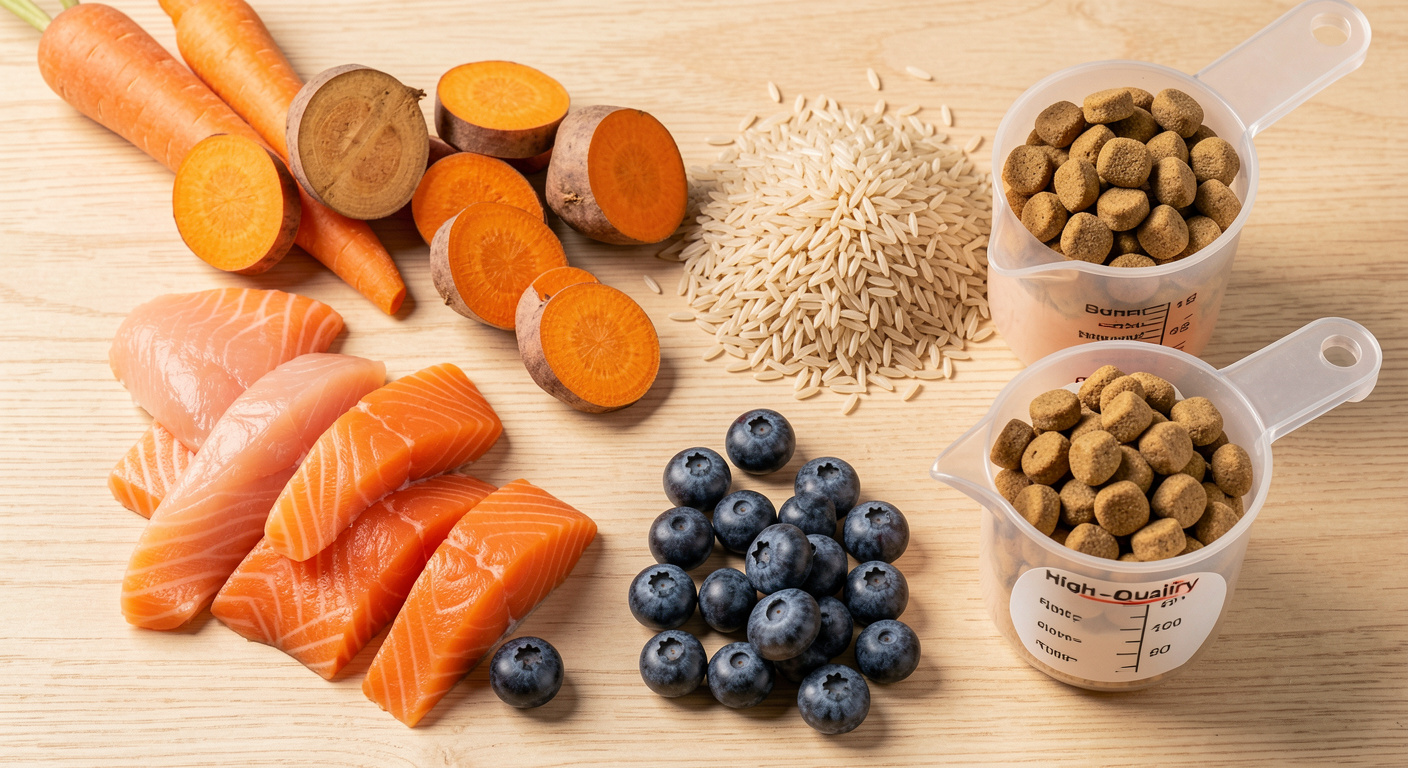
Rice, oatmeal, and sweet potato tend to be well tolerated. These provide digestible energy without the high fiber or legume content that can sometimes contribute to gas and loose stools. For many dogs with sensitive stomachs, a grain-inclusive formula with rice or oatmeal works better than a grain-free formula heavy in peas and lentils.
Moderate Fat Content
High-fat foods can trigger or worsen digestive issues, especially in dogs prone to pancreatitis. Look for foods with a moderate fat level appropriate for your dog’s activity level and life stage. If your dog has a history of pancreatitis, talk to your vet about a low-fat therapeutic diet.
Prebiotics and Probiotics
Prebiotic fibers like chicory root or beet pulp feed beneficial gut bacteria. Probiotics are live microorganisms that support gut health. Some sensitive stomach formulas include these, and they may help maintain stool quality during a food transition. However, research on which specific probiotic strains help dogs is still developing. Ask your vet if a probiotic supplement is appropriate for your dog.
Limited Ingredient Formulas
A limited ingredient diet (LID) uses fewer ingredients to reduce the chance of triggering a reaction. These formulas typically feature a single protein and a single carbohydrate source. They can be helpful during an elimination diet trial or for dogs with known sensitivities. However, not every dog with digestive issues needs a LID. Some dogs do better on balanced formulas with multiple gentle ingredients. And LIDs do not fix “most” dogs with digestive issues: they are one tool, not a universal solution.
Ingredients to Avoid for Sensitive Stomachs

| Ingredient / Formula Type | Why It May Cause Issues | Better Option | Important Note |
|---|---|---|---|
| Very high fat | Can trigger or worsen digestive upset and pancreatitis | Moderate fat formulas | Fat needs vary by activity level; ask your vet |
| Sudden protein changes | Abrupt switches stress the digestive system | Gradual 7-14 day transition | Same-brand protein rotations still need gradual switches |
| Artificial colors, flavors, preservatives | No nutritional value; some dogs may react | Naturally preserved foods | Natural preservatives like mixed tocopherols are fine |
| Dairy products | Many dogs are lactose intolerant | Avoid cheese, milk, yogurt as regular treats | Small amounts of plain yogurt may be tolerated by some |
| Table scraps | Unpredictable fat, spices, and ingredients | Stick to dog food and dog-safe treats | Even “healthy” scraps can be too rich |
| Bones and fat trimmings | Risk of pancreatitis, GI obstruction, or injury | No bones or fat trimmings | Cooked bones are especially dangerous |
| Grain-free with high peas, lentils, potatoes | May be linked to DCM in some dogs per FDA investigation | Grain-inclusive formulas with rice or oatmeal | See FDA DCM Q&A for context; not all grain-free is risky |
| Unbalanced homemade diets | Risk of nutrient deficiencies or excesses | Veterinary nutritionist-formulated recipes | See our homemade dog food safety guide |
| Multiple protein formulas (elimination trial) | Cannot identify the trigger protein | Single novel or hydrolyzed protein diet | An elimination trial requires strict single-source feeding |
Important: Some dogs react to common proteins like chicken or beef, and some dogs react to grains like wheat or corn. But many dogs tolerate these ingredients well. Do not assume a dog food ingredient is universally bad. The goal is to identify your individual dog’s triggers, not to avoid entire food groups without evidence.
Is Grain-Free Dog Food Better for Sensitive Stomachs?
Not necessarily. The idea that grain-free is automatically better for sensitive stomachs is a common misconception. For many dogs, easily digestible grains like rice and oatmeal are gentle on the stomach and provide useful energy and fiber. The FDA is investigating a potential link between certain grain-free diets (particularly those high in peas, lentils, and potatoes) and dilated cardiomyopathy (DCM) in dogs. While the investigation is ongoing and no definitive conclusions have been reached, it’s a reason to be thoughtful rather than assuming grain-free is safer.
If your dog has a diagnosed grain allergy (which is less common than protein allergies), a grain-free diet may be appropriate. For most dogs with sensitive stomachs, a grain-inclusive formula with a highly digestible grain like rice or oatmeal is often a better starting point. Reference: FDA DCM Investigation Q&A and Tufts Petfoodology.
Best Types of Dog Food for Sensitive Stomachs
| Food Type | Best For | Why It May Help | Caution |
|---|---|---|---|
| Limited ingredient diet | Identifying food triggers; known sensitivities | Fewer ingredients = fewer potential triggers | Not all dogs need LID; does not fix all digestive issues |
| Sensitive skin and stomach formula | Mild, intermittent digestive issues | Formulated for digestibility; often includes prebiotics and omega fatty acids | Over-the-counter; may not help moderate to severe cases |
| Veterinary GI prescription diet | Chronic or moderate to severe GI issues | Therapeutic formulations; highly digestible; may include hydrolyzed protein or specific fiber blends | Must be chosen with your veterinarian |
| Hydrolyzed protein diet | Confirmed or suspected food allergies | Protein broken into particles too small to trigger immune response | Prescription only; used in elimination trials |
| Grain-inclusive with rice or oatmeal | Dogs who tolerate grains; general sensitivity | Gentle, digestible carbohydrates; avoids high legume content | Not appropriate for diagnosed grain allergies |
| Homemade diet (vet nutritionist) | Dogs with multiple sensitivities; owner-managed diets | Full control over ingredients | Must be formulated by a board-certified veterinary nutritionist; unbalanced homemade diets risk deficiencies |
| Raw diet | Rarely the first-line choice for sensitive stomachs | Some owners report improved stool; limited evidence | Pathogen risk to dog and household; nutritional balance concerns; not recommended by most veterinary organizations |
Limited Ingredient Diets
LIDs strip the ingredient list down to a single protein and a single carbohydrate, plus essential vitamins and minerals. This simplicity makes it easier to identify which ingredient, if any, triggers symptoms. They are commonly used in elimination diet trials, though a true elimination trial requires strict control of all food, treats, and flavored medications, ideally under veterinary supervision.
Sensitive Skin and Stomach Formulas
These over-the-counter formulas are designed for dogs with mild digestive or skin issues. They typically include highly digestible proteins, gentle fiber sources, and omega fatty acids for skin and coat health. They can be a good starting point for dogs with occasional loose stools or mild gas, but they are not therapeutic diets and may not help dogs with chronic or severe symptoms.
Veterinary Prescription GI Diets
These are therapeutic diets available only through a veterinarian. They are formulated for specific medical conditions: gastrointestinal disease, food allergies, pancreatitis, or IBD. They may use hydrolyzed proteins, novel proteins, specific fiber blends, or very low fat content. If your dog has chronic vomiting, chronic diarrhea, weight loss, or has been diagnosed with a GI condition, a prescription GI diet chosen with your vet’s guidance may be the most appropriate option.
Hydrolyzed Protein Diets
In these diets, the protein source is broken down (hydrolyzed) into particles small enough that the immune system does not recognize them as allergens. They are used in elimination diet trials to diagnose food allergies and as long-term management for dogs with confirmed food allergies. They are prescription-only and should be used under veterinary guidance. Reference: AKC Guide to Dog Food Allergies.
Homemade Diets Formulated by a Veterinary Nutritionist
For dogs with multiple food sensitivities or owners who prefer full control over ingredients, a homemade diet formulated by a board-certified veterinary nutritionist can be an excellent option. The key phrase is “formulated by a veterinary nutritionist.” Recipes found online or in books are rarely nutritionally balanced. An unbalanced homemade diet can cause serious deficiencies or excesses over time. See our homemade dog food guide for more on the risks and the right process. You can find a board-certified veterinary nutritionist through the American College of Veterinary Nutrition (ACVN).
How to Choose a Trustworthy Dog Food Brand
When your dog has a sensitive stomach, brand quality matters. The World Small Animal Veterinary Association (WSAVA) provides guidelines for selecting a pet food. Here is what to look for:
- Employs qualified nutritionists: The company should have at least one full-time qualified nutritionist on staff, ideally a board-certified veterinary nutritionist (DACVN) or PhD in animal nutrition.
- AAFCO complete and balanced: The label should state the food is complete and balanced for your dog’s life stage, confirmed through feeding trials or formulation to meet AAFCO profiles. Feeding trials provide stronger evidence than formulation alone.
- Quality control and manufacturing transparency: The company should own its manufacturing facilities or have rigorous quality control oversight of co-packers. They should be able to answer where ingredients are sourced and how quality is verified.
- Recall transparency: Look up the brand’s recall history. No company is immune to recalls, but how they handle them matters. A transparent, proactive approach to recalls is a sign of a responsible manufacturer.
- Avoid buzzwords: Terms like “natural,” “premium,” “human-grade,” and “holistic” have no legal definition in pet food. They do not indicate higher quality or better digestibility. Focus on the nutritional adequacy statement and ingredient sourcing, not marketing language.
Reference: WSAVA Global Nutrition Guidelines.
How to Switch Your Dog’s Food Safely
Rushing a food change is one of the most common causes of digestive upset. A slow transition gives your dog’s gut bacteria time to adapt to the new ingredients.
| Days | Old Food | New Food | What to Watch For |
|---|---|---|---|
| Days 1-3 | 75% | 25% | Normal stool? Energy level? Appetite? |
| Days 4-6 | 50% | 50% | Any loose stool or gas? Continue if all looks good. |
| Days 7-9 | 25% | 75% | Close to full transition; monitor closely. |
| Day 10+ | 0% | 100% | Full transition complete. Keep tracking for at least 2 more weeks. |
For very sensitive dogs, stretch the transition to 2-3 weeks, moving even more slowly. If symptoms worsen at any stage, pause the transition and contact your veterinarian. Do not “push through” worsening diarrhea or vomiting. Adding a probiotic supplement during the transition may help some dogs; ask your vet if this is appropriate.
Pumpkin, Probiotics, and Fiber: What Helps?
Canned plain pumpkin (not pumpkin pie filling) is a commonly recommended home remedy for mild digestive upset. It provides soluble fiber, which may help firm loose stools and support regularity. A small spoonful mixed into your dog’s food may be enough. However, pumpkin is not a treatment for diarrhea caused by infection, parasites, or chronic illness.
Probiotic supplements formulated for dogs may support gut health, especially during food transitions, antibiotic courses, or periods of stress. Look for products that list the specific bacterial strains and colony-forming units (CFUs). Research on canine probiotics is still evolving, and not all products on the market have been studied. Ask your vet which probiotic, if any, makes sense for your dog’s situation.
Fiber type matters. Soluble fiber (like pumpkin or psyllium) absorbs water and can help firm loose stools. Insoluble fiber adds bulk and supports regularity. Too much fiber of either type can cause gas and bloating. The right amount and type depend on your dog’s specific symptoms.
How Long Should You Try a New Dog Food?
Most dogs show improvement within 1-2 weeks on a new food if the food is a good match. For elimination diet trials to diagnose food allergies, veterinarians typically recommend 8-12 weeks of strict feeding with no other foods, treats, or flavored medications to see the full effect.
If you see no improvement after 2-3 weeks on a new sensitive stomach formula, or if symptoms get worse, the food is probably not the right fit. Contact your vet. Continuing to cycle through different over-the-counter foods without success is a sign that your dog may need diagnostic testing, not just another bag switch.
Food Diary: How to Track Symptoms
A food diary is one of the most useful tools for figuring out what’s triggering your dog’s digestive symptoms. Print this template or copy it into a notebook. Bring it to your vet appointment.
| Date | Food Brand / Formula | Protein Source | Amount Fed | Treats / Table Scraps | Stool Quality | Gas / Bloating | Vomiting | Itching / Ear Symptoms | Energy Level | Notes |
|---|---|---|---|---|---|---|---|---|---|---|
Track for at least 2 weeks before a food change and 4 weeks after. Stool quality can be scored on a 1-7 scale (1 = hard pellets, 7 = liquid; 2-3 is ideal). This record gives your vet concrete data rather than vague descriptions of “sometimes loose stool.”
Frequently Asked Questions
What is the best dog food for sensitive stomachs?
The best food depends on your dog’s specific triggers and underlying cause. For most dogs with mild digestive sensitivity, a highly digestible, limited-ingredient formula with a single protein, gentle carbohydrates like rice or oatmeal, moderate fat, and added prebiotics may help. No single food works for every dog, and what helps one may not help another. For chronic or severe symptoms, consult your veterinarian before choosing a food.
How do I know if my dog needs sensitive stomach food?
Signs include persistent loose stools, frequent gas, occasional vomiting of undigested food, gurgling stomach sounds, and inconsistent appetite on a regular diet. If these signs are mild and intermittent, a sensitive stomach formula may help. If symptoms are chronic, severe, or include blood, weight loss, or lethargy, see your veterinarian first.
What ingredients are best for dogs with sensitive stomachs?
Highly digestible named animal proteins, gentle carbohydrates like rice and oatmeal, moderate fat levels, prebiotic fibers, and probiotic supplements formulated for dogs tend to be well tolerated. Look for AAFCO complete and balanced statements on the label.
What ingredients should I avoid?
Very high fat content, artificial additives, dairy products, table scraps, bones and fat trimmings, and unbalanced homemade diets are common triggers. Some dogs react to specific proteins or grains. The goal is to identify your dog’s individual triggers through a food diary and, if needed, an elimination diet trial with veterinary guidance.
Is grain-free food better for sensitive stomachs?
Not necessarily. For many dogs, easily digestible grains like rice and oatmeal are gentle on the stomach. Some grain-free formulas high in peas, lentils, and potatoes are under FDA investigation for a potential link to DCM. Unless your dog has a diagnosed grain allergy, a grain-inclusive formula is often a safer starting point.
How long should I try a new dog food?
Most dogs show improvement within 1-2 weeks on a new food. For elimination diet trials to diagnose food allergies, 8-12 weeks is typically recommended. If you see no improvement after 2-3 weeks, or symptoms worsen, stop the trial and contact your veterinarian.
Can pumpkin help a dog’s sensitive stomach?
Canned plain pumpkin provides soluble fiber that may help firm loose stools. A small spoonful mixed into food can support regularity. However, pumpkin is not a treatment for diarrhea caused by infection, parasites, or chronic illness. Do not use pumpkin pie filling, which contains sugar and spices.
When should I call a vet for dog diarrhea or vomiting?
Call your vet if diarrhea lasts more than 48 hours, if you see blood in stool or vomit, if your dog has repeated vomiting (more than 2-3 times in 24 hours), if there is weight loss, lethargy, signs of pain, dehydration, or if a puppy or senior dog shows any digestive symptoms. Do not wait to see if it resolves on its own with these signs.
What is the easiest protein for dogs to digest?
Cooked, lean, single-source animal proteins tend to be the most digestible. Chicken, turkey, lamb, and fish are common in sensitive stomach formulas. However, “easiest” varies by individual dog. Some dogs digest lamb well but react to chicken. Hydrolyzed proteins in prescription diets are designed to be the most digestible option for dogs with protein sensitivities.
Is chicken bad for dogs with sensitive stomachs?
Chicken is not inherently bad. It is a highly digestible protein for many dogs and is commonly used in sensitive stomach formulas. However, some dogs do develop sensitivities or allergies to chicken. If your dog consistently has digestive symptoms on chicken-based foods, a novel protein (such as lamb, venison, or fish) trial may be worth discussing with your vet.
Is rice good for dogs with sensitive stomachs?
Yes. Plain cooked white rice is one of the most digestible carbohydrate sources for dogs. It is commonly used in bland diets for digestive upset (the classic chicken and rice diet). Brown rice provides more fiber and nutrients but is slightly less digestible. For a sensitive stomach food, rice is generally a well-tolerated and appropriate ingredient.
Is salmon good for dogs with sensitive stomachs?
Salmon can be a good protein option for dogs who tolerate fish. It is a novel protein for dogs who have only been fed chicken or beef, and it contains omega-3 fatty acids that support skin and coat health. As with any protein, some dogs may react to salmon. Introduce it as part of a slow food transition.
Grain-free vs grain-inclusive: which is better for sensitive stomachs?
For most dogs with sensitive stomachs, grain-inclusive formulas with rice or oatmeal are the safer, more evidence-supported choice. Gentle grains are well tolerated and provide digestible energy. Grain-free diets heavy in peas, lentils, and potatoes are under FDA investigation for a potential link to DCM. Choose grain-inclusive unless your dog has a diagnosed grain allergy.
Will probiotics help my dog’s loose stools?
Probiotics may help some dogs with loose stools, particularly when the issue is related to diet change, antibiotic use, or stress. Look for canine-specific probiotic supplements with listed bacterial strains. Not all products have research backing, and probiotics are not a treatment for diarrhea caused by parasites, infection, or chronic disease. Ask your vet before starting a probiotic.
Can I feed my dog chicken and rice every day?
A plain chicken and rice diet is intended for short-term use (a few days) during digestive upset. It is not nutritionally complete for long-term feeding and lacks essential vitamins, minerals, and fatty acids. For long-term management of a sensitive stomach, choose a complete and balanced commercial food or a veterinary nutritionist-formulated homemade diet.
What is the best dog food for diarrhea?
There is no single “best” food for diarrhea because diarrhea has many possible causes. For mild, acute diarrhea, a bland diet of boiled chicken and rice for 24-48 hours may help, followed by a slow transition to a highly digestible commercial food. For chronic or severe diarrhea, or diarrhea with blood, weight loss, or lethargy, see your veterinarian. A prescription GI diet may be needed.
My dog has diarrhea after switching food. Is this normal?
Mild, temporary loose stool can happen during a food transition, especially if the switch was too fast. Slow down the transition (go back to mostly old food and increase the new food percentage more gradually over 2-3 weeks). If diarrhea is watery, frequent, or lasts more than a day or two, pause the transition entirely and contact your vet.
Does my dog need a prescription GI diet?
Not necessarily. Over-the-counter sensitive stomach formulas work for many dogs with mild, intermittent symptoms. A prescription GI diet may be appropriate if your dog has chronic vomiting or diarrhea, has been diagnosed with a specific GI condition (IBD, pancreatitis, food allergy), or has not improved on multiple over-the-counter foods. This decision should be made with your veterinarian.
Final Tip: Change Food Slowly and Watch the Whole Dog
Digestive health is about more than what’s in the bowl. It’s also about how you feed (consistent schedule, calm environment, appropriate portions), what else goes in (treats, chews, table scraps, things scavenged on walks), and your dog’s overall health (stress, medications, underlying conditions).
A slow food transition, a simple food diary, and realistic expectations are your best tools. If symptoms do not improve or get worse, your veterinarian is the next step, not another bag of food. The right food matters, but the right diagnosis matters more.
This guide provides general education about dog food for sensitive stomachs. It is not a substitute for professional veterinary advice, diagnosis, or treatment. Sensitive stomach symptoms can indicate serious medical conditions including parasites, infections, pancreatitis, inflammatory bowel disease, or food allergies. Always consult your veterinarian before changing your dog’s diet, especially if your dog has chronic vomiting, chronic diarrhea, blood in stool, weight loss, is a puppy or senior, or shows signs of lethargy, pain, or dehydration. For homemade or therapeutic diets, work with a board-certified veterinary nutritionist. Do not disregard veterinary advice or delay seeking it because of something you read on this site.


Found This Guide Helpful?
Bookmark it for your next food run. Share it with a friend whose dog has stomach issues. And if your pup’s symptoms aren’t improving, your vet is the best next call. Explore more of our dog nutrition guides and health resources.
Browse Dog Nutrition Guides