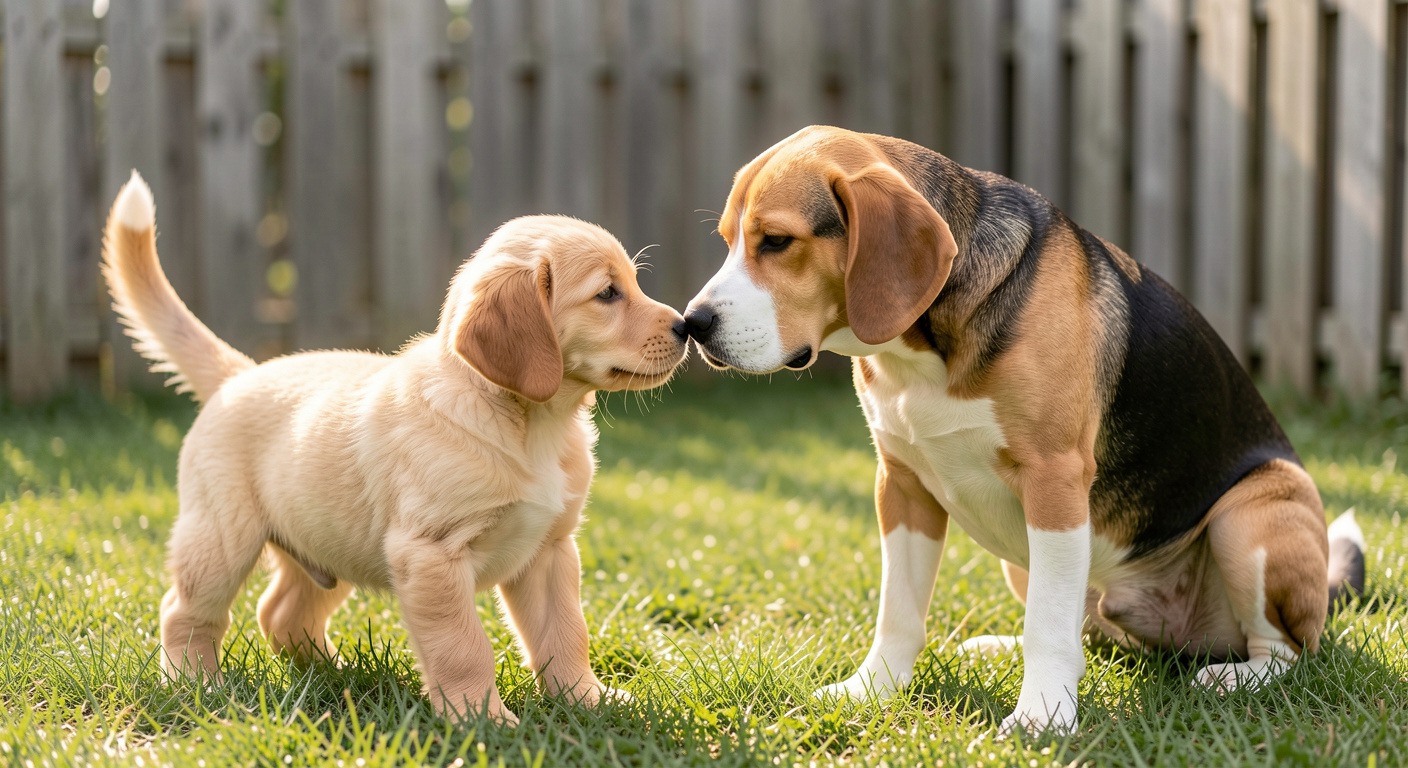
How to Raise a Confident, Fear-Free Dog
Puppy socialization means systematically exposing your puppy to new sights, sounds, people, animals, and experiences during their critical developmental period (roughly 4-16 weeks of age) , always at the puppy’s pace, never forcing them. The goal is not to have your puppy “meet everyone” but to teach them that the world is safe and predictable. Well-socialized puppies grow into confident adult dogs. Poorly socialized puppies are at higher risk for fear, anxiety, and aggression.
The prime socialization window peaks at 6-8 weeks and closes around 14-16 weeks. After that, new experiences are harder to accept , but never impossible.
One positive experience beats ten forced ones. If your puppy looks scared, you’re moving too fast. Back up to where they felt comfortable.
Systematic exposure beats random walks. Work through sights, sounds, surfaces, handling, people, and other animals , one category at a time.
What “Socialization” Actually Means
The word “socialization” is misleading. It’s not just about meeting other dogs and people , it’s about introducing your puppy to the entire human world they’ll need to navigate for the next 10-15 years. Vacuum cleaners, car rides, children running, bicycles, umbrellas, the vet’s examination table, the sound of thunder , all of it.
According to the American Veterinary Society of Animal Behavior (AVSAB), the critical socialization period peaks at 6-8 weeks and begins closing around 12-16 weeks. During this window, puppies are neurologically primed to accept new experiences as “normal” rather than “scary.” After the window closes, new things are met with more caution , making early socialization exponentially more effective than trying to fix fear later.
The AVSAB states that the risk of a puppy developing serious behavior problems from lack of socialization is far greater than the risk of disease from well-managed socialization. Carry your puppy in public, use puppy classes that require vaccination records, and avoid high-risk areas (dog parks, unvaccinated dogs) until the full vaccine series is complete. Controlled exposure is safe , isolation is not.
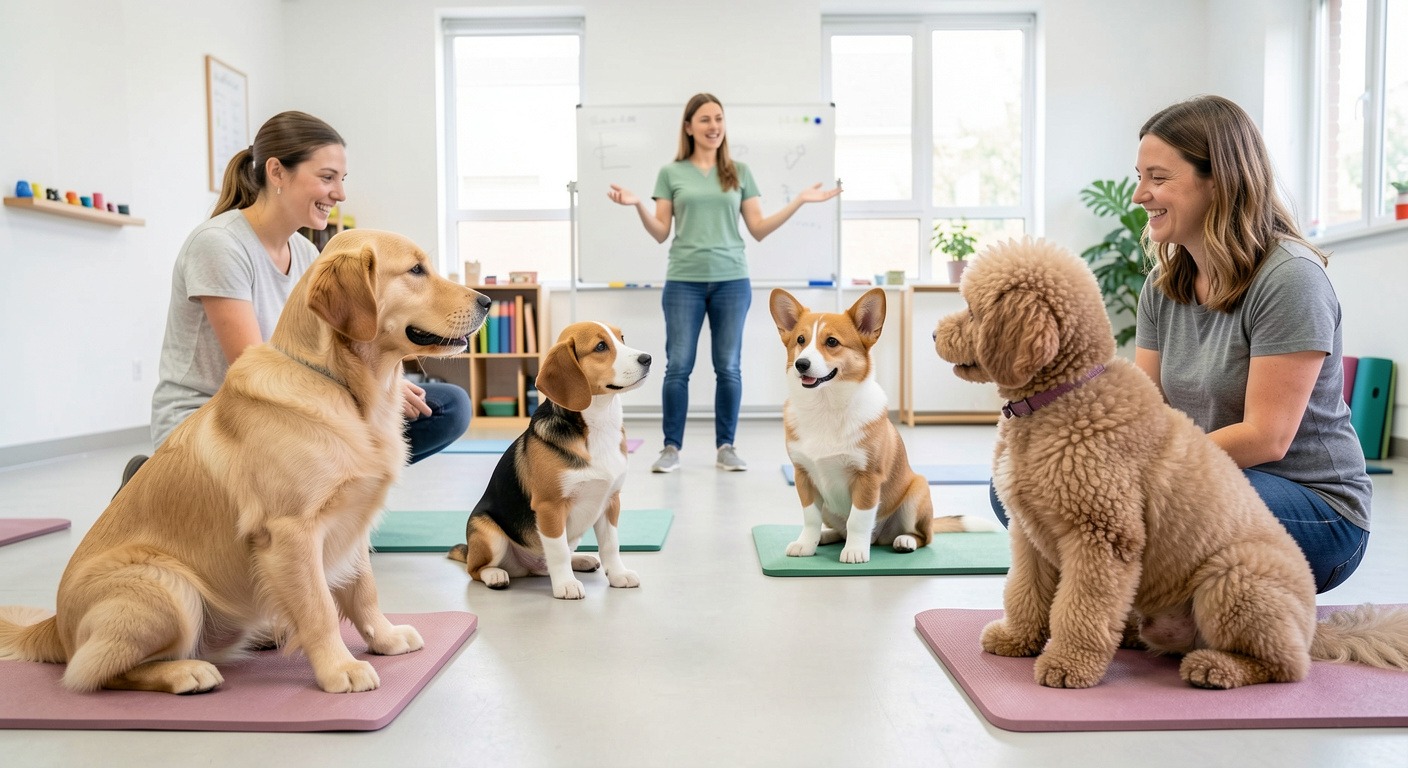
The Puppy Socialization Checklist
Work through these categories systematically. Aim for at least 3-5 positive exposures per category during the critical window. Use high-value treats and keep sessions short (5-10 minutes). If your puppy shows any sign of fear , ears back, tail tucked, trying to hide , increase distance until they’re comfortable and try again more slowly another day.
🖐️ Handling & Touch: Being held by different people, touched on paws/ears/tail/mouth, hugged gently, examined like a vet would, nail trimming (just touching the clippers counts), bath or gentle water exposure.
👥 People: Men with beards, people in hats, people in uniforms, children of different ages (supervised), people of different ethnicities, people using wheelchairs or walkers, someone jogging past, someone carrying an umbrella.
🐕 Animals: Calm, vaccinated adult dogs, other puppies in class, cats (safely separated), seeing livestock from a distance. Always prioritize quality interactions , one calm dog is worth more than ten chaotic meetings.
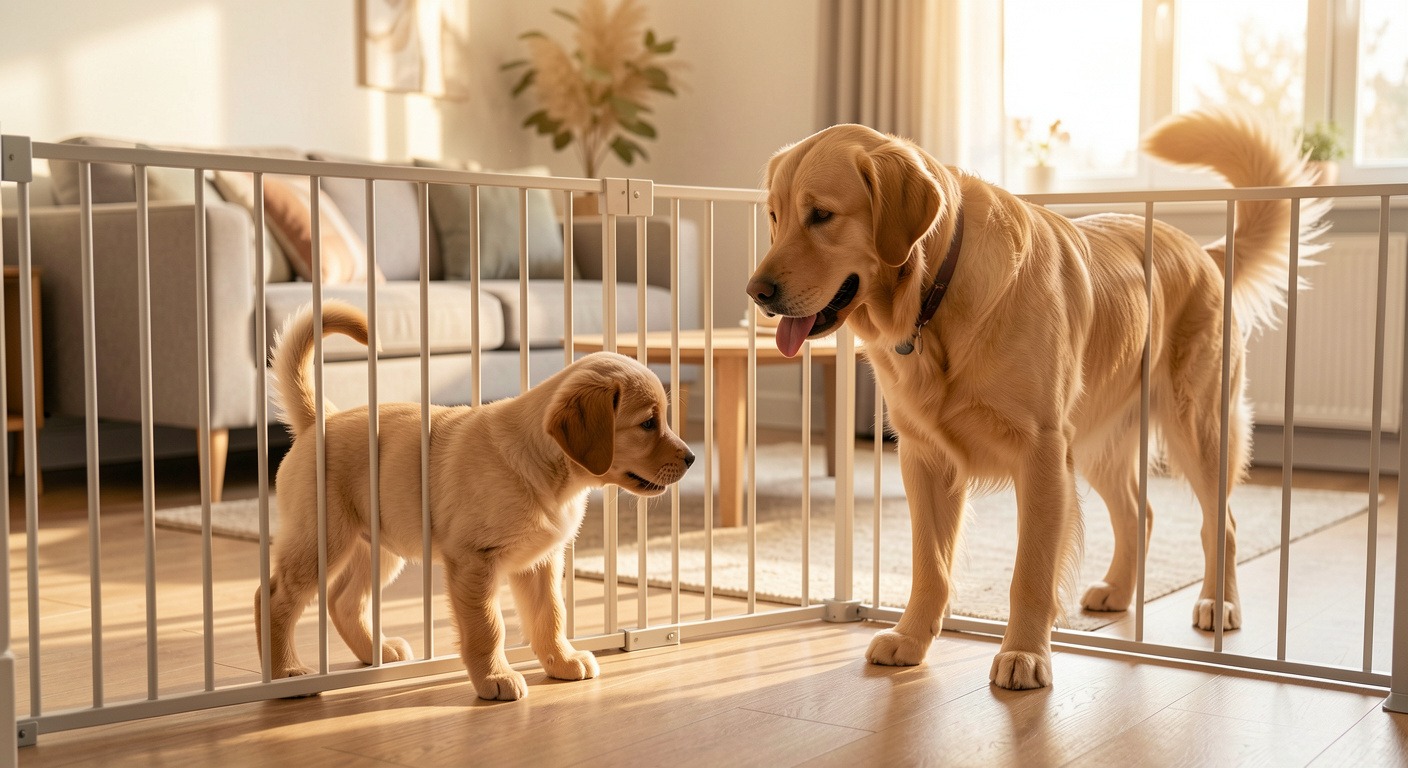
🔊 Sounds: Vacuum cleaner (start from another room), doorbell, thunderstorms (recordings at low volume), traffic noise, children playing, kitchen appliances, fireworks recordings (very low volume). The key is low volume + treats , create a positive association before the real thing happens.
🌍 Environments: Different floor surfaces (tile, carpet, grass, wet pavement), car rides, the vet’s office (just for treats and happy visits), a quiet sidewalk, a friend’s house, walking past a school at dismissal time (from a distance).
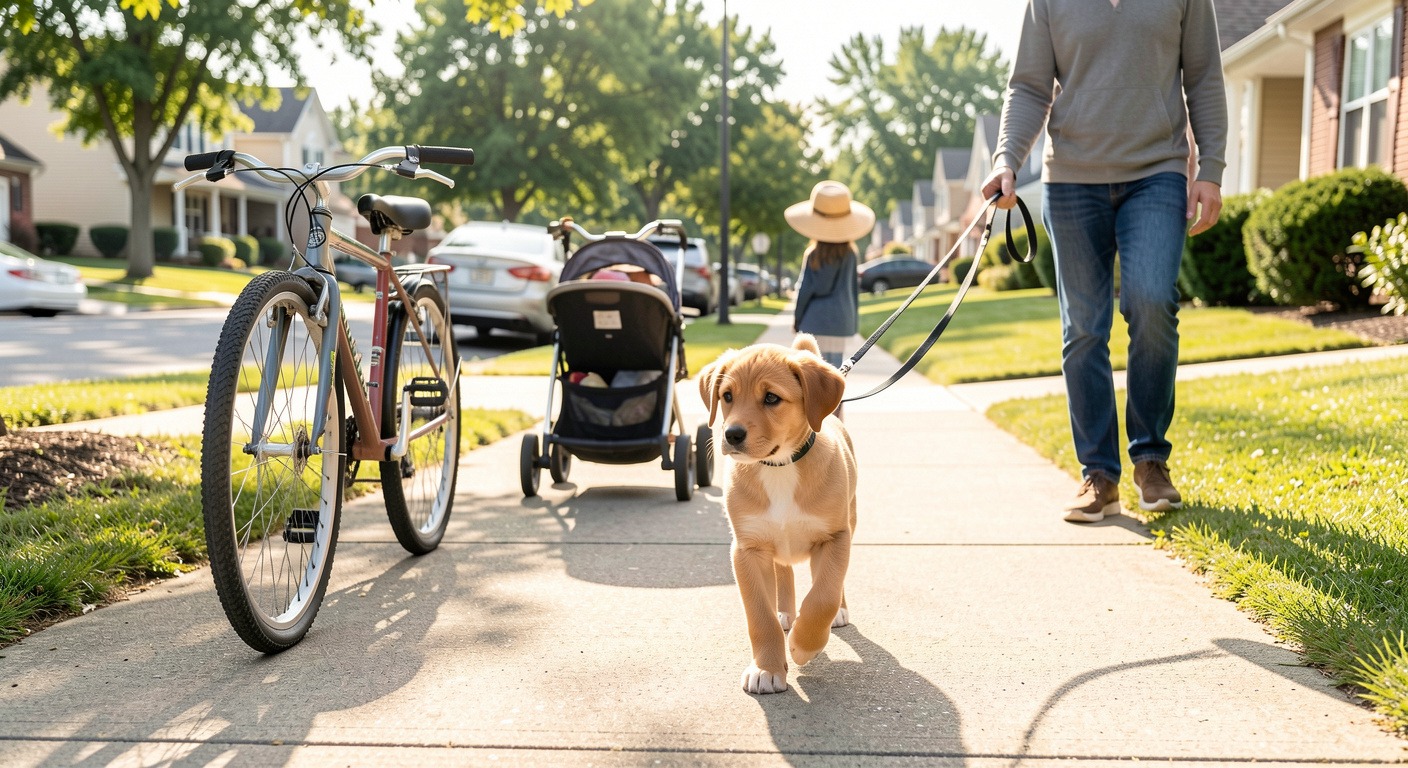
🚲 Objects & Movement: Bicycles, skateboards, strollers, shopping carts, automatic doors, flags blowing in the wind, people carrying large objects, umbrellas opening, balloons.
Common Socialization Mistakes
- Forcing interactions: If your puppy hides behind your legs, don’t push them toward the scary thing. That teaches learned helplessness (“nothing I do matters”), not confidence. Retreat, regroup, try again with more distance.
- Skipping handling practice: Many owners socialize their puppy to the outside world but forget to practice being handled. A dog who panics at the vet or groomer because they were never taught to accept restraint isn’t truly socialized.
- Dog parks too early: Dog parks are uncontrollable environments with unknown dogs. One bad experience during the critical period can create lifelong reactivity. Wait until your puppy is at least 6 months old and has solid recall.
- Stopping after 16 weeks: Socialization is lifelong. The critical window is when it’s easiest , but adult dogs still benefit from ongoing positive exposure to new experiences.
FAQ
What if I got my puppy after 16 weeks?
Don’t panic. Socialization after the critical window is slower and requires more patience, but it absolutely works. The principles are the same: controlled exposure, high-value rewards, and never forcing the puppy. You may need to take smaller steps and use more distance, but adult dogs can learn to accept new things.
Can I socialize my puppy before they’re fully vaccinated?
Yes , with precautions. The AVSAB strongly recommends beginning socialization before the full vaccine series is complete because the behavior risk of isolation is higher than the disease risk of controlled exposure. Carry your puppy in public spaces, use puppy classes that check vaccination records, and avoid dog parks, pet store floors, and unvaccinated dogs.
How do I know if my puppy is scared vs. just cautious?
Signs of fear: tail tucked, ears pinned back, trembling, trying to hide behind you, refusing treats they normally love, whale eye (showing the whites of their eyes), lip licking, yawning. If you see these, create distance immediately and let the puppy recover before trying again.
🏠 Raising a Confident Puppy Starts Now
Every positive experience during these early weeks pays off for years. Grab some treats and start today , even 5 minutes matters.
New Dog Owner Guides →