A Practical Plan to Help Your Dog Shed Pounds Safely
Safe dog weight loss starts with a vet-confirmed target weight, measured meals, fewer high-calorie treats, and gradual daily movement. Aim for steady progress, not crash dieting.
Dog Obesity: How to Help Your Overweight Dog Lose Weight Safely
A practical, vet-informed plan for helping your dog reach a healthy weight , without guilt, crash diets, or misery.
You look at your dog and wonder: Is he a little… round? Or is that just his build? You’re not alone. According to the Association for Pet Obesity Prevention, 59% of dogs in the United States are overweight or obese , making it the most common preventable health problem in dogs today.
But here’s what most weight-loss advice misses: this is not about judgment. Your dog doesn’t care about beach bodies. What they need is a longer, more comfortable, pain-free life. And that starts with a few simple, sustainable changes , not a crash diet.
Quick Answer: Help your overweight dog lose weight by measuring food precisely (not eyeballing it), cutting out between-meal treats, switching to 30+ minute daily walks, and working with your veterinarian on a target weight and calorie plan. Safe weight loss is 1–2% of body weight per week. Never put your dog on a crash diet , rapid weight loss can cause serious health problems. Always consult your vet before starting a weight loss program, especially if your dog has joint issues, heart problems, or is a senior.
Is Your Dog Overweight? The Quick Rib Test
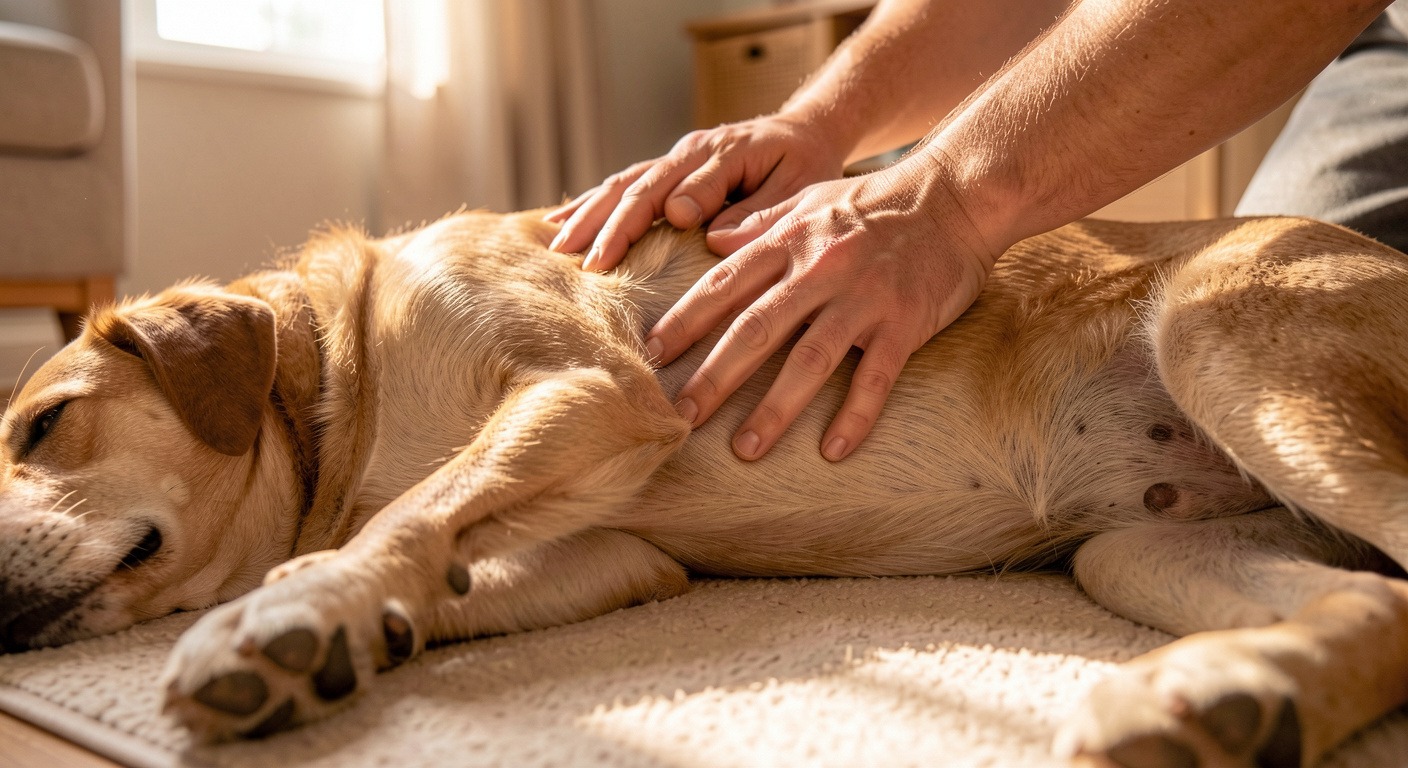
You don’t need a scale to get a rough answer. Place your hands on your dog’s ribcage with your thumbs on the spine. Can you feel each individual rib with light pressure , like the bones on the back of your hand? If you have to press hard, or if you can’t feel ribs at all, your dog is carrying extra weight.
The Body Condition Score (BCS) check:
- Too thin (1–3): Ribs, spine, and hip bones visible from a distance. No body fat.
- Ideal (4–5): Ribs easily felt with a thin fat covering. Visible waist from above. Belly tucks up from the side.
- Overweight (6–7): Ribs hard to feel under a thick fat layer. No obvious waist. Belly rounded.
- Obese (8–9): Ribs impossible to feel. Large fat deposits on the spine, tail base, and chest. Abdomen distended.
Why Extra Weight Is a Big Deal
Dog obesity isn’t a cosmetic issue. It shortens lives. Studies show that lean dogs live an average of 1.8 years longer than their overweight littermates. Extra weight contributes to:
- Arthritis and joint pain (every extra pound puts 4x more pressure on joints)
- Diabetes and insulin resistance
- Heart disease and high blood pressure
- Respiratory problems (especially in flat-faced breeds)
- Increased surgical and anesthesia risk
- Reduced lifespan and quality of life
- Higher cancer rates
The good news: weight loss reverses many of these risks. Arthritic dogs who lose just 6–9% of their body weight show measurable improvement in lameness and mobility. Your dog doesn’t need to be runway-ready , they just need to be healthier than yesterday.
The Safe Weight Loss Formula
Step 1: See Your Vet
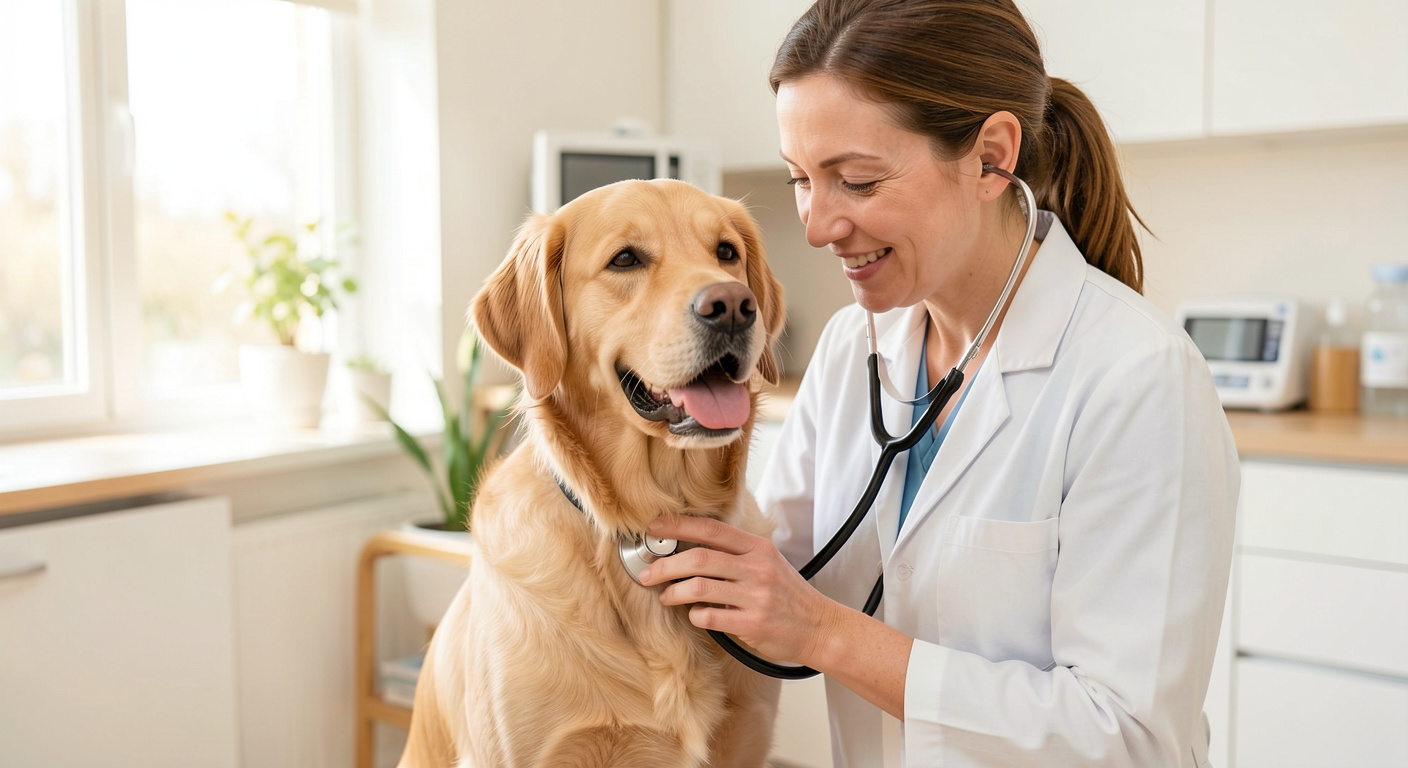
Before you change anything, get a veterinary checkup. Your vet will:
- Rule out medical causes of weight gain (hypothyroidism, Cushing’s disease)
- Set a realistic target weight
- Calculate your dog’s daily calorie needs for weight loss
- Recommend whether a prescription weight-loss diet is appropriate
The calorie math: For weight loss, most dogs need about 70% of their maintenance calories. A 50-pound dog that needs ~1,000 calories to maintain weight might need ~700 calories daily for weight loss.
⚠️ Important: Do NOT use the feeding guide on the dog food bag for a weight-loss plan. Those guidelines are for active, intact (unneutered) dogs maintaining weight , they almost always overestimate the calories your dog actually needs. Use your vet’s calculation instead.
Step 2: Measure Everything
“I feed him about a cup” is the enemy of weight loss. A “cup” scooped generously can be 30% more than a leveled measuring cup. Over a year, that’s tens of thousands of extra calories.
What to do:
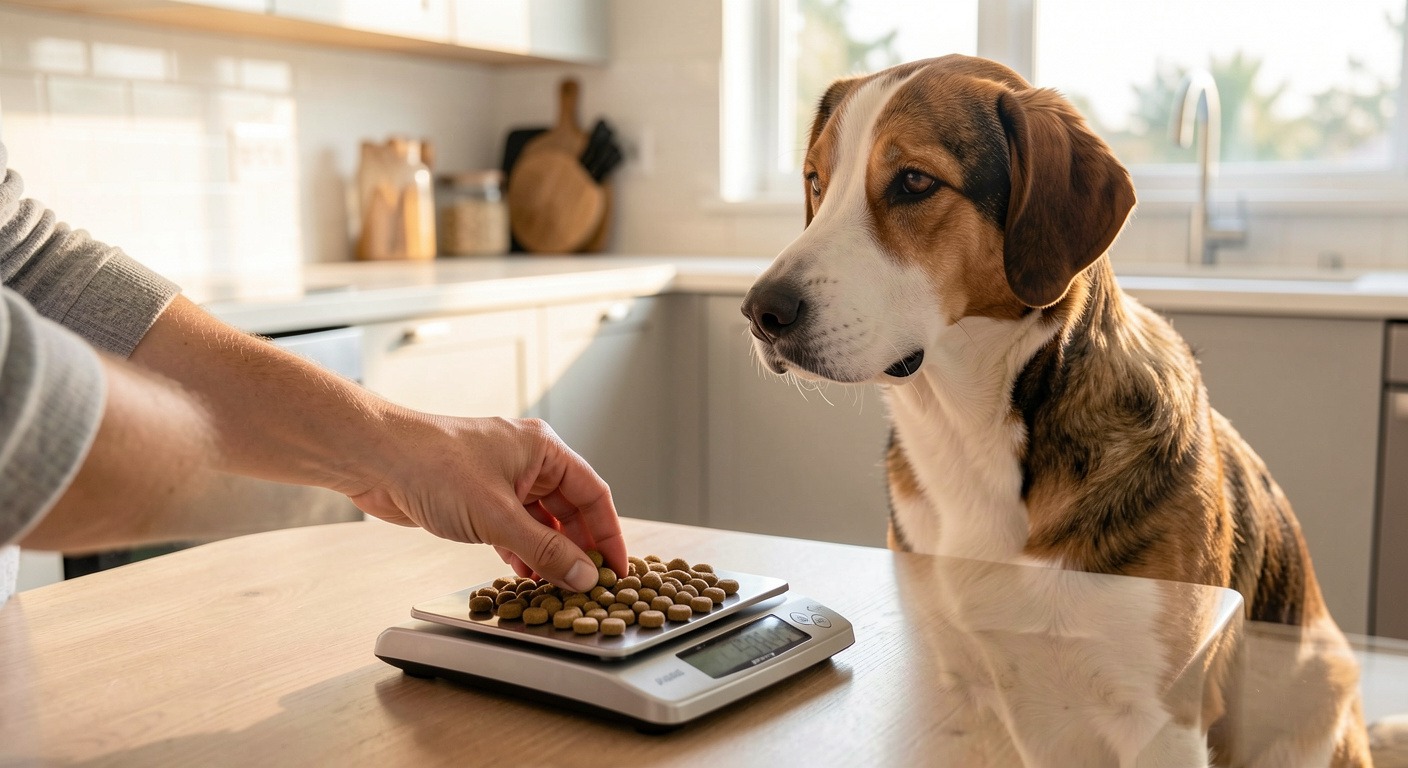
- Buy a kitchen scale (digital, under $15). Switch to measuring by weight (grams), not volume (cups).
- Ask your vet for the daily grams of your dog’s specific food.
- Pre-portion meals for the week on Sunday. No “he looks hungry” impulse scoops.
- Account for treats in the daily calorie total , they should be no more than 10% of calories.
Step 3: Rethink Treats
Treats are the #1 hidden calorie source for most overweight dogs. The average milk-bone has 30–50 calories. For a small dog on a 300-calorie daily budget, two milk-bones is one-third of their entire day’s food.
Low-calorie alternatives:
- Baby carrots (crunchy, sweet, ~4 calories each)
- Green beans (raw or frozen, ~1 calorie each)
- Cucumber slices (nearly zero calories)
- Apple slices without seeds (small amounts)
- Air-popped popcorn (plain, ~1 calorie per piece)
- A few pieces of their regular kibble, set aside from meals
💡 Mental Trick: Your dog doesn’t care about portion size , they care about the ritual of getting a treat. Break treats into pea-sized pieces. Your dog is just as happy with three tiny pieces as one big one. It’s not the calories they’re counting , it’s the attention.
Step 4: Upgrade the Exercise
Diet drives weight loss. Exercise maintains muscle, improves mood, and keeps the weight off long-term.
If your dog is currently sedentary: Start with 15-minute walks twice a day. Add 5 minutes per week. The goal is 30–60 minutes of daily movement, broken into whatever chunks work for your dog’s fitness level. Swimming is excellent for arthritic dogs , it’s a full-body workout with zero joint impact.
Other calorie-burning activities:
- Sniff walks (mental work burns surprisingly high calories)
- Flirt pole (5–10 minutes is intense exercise)
- Fetch with a ball or frisbee (on soft surfaces)
- Indoor hide-and-seek with treats/kibble
- Doggy daycare once a week
Step 5: Track Progress
Weigh your dog every 1–2 weeks (same scale, same time of day). Don’t get discouraged by small fluctuations , water weight changes daily. Look at the trend over 4+ weeks.
What healthy progress looks like:
- 1–2% body weight loss per week is ideal
- A 50-pound dog should lose about 0.5–1 pound per week
- A 15-pound dog should lose about 0.15–0.3 pounds per week
- If your dog isn’t losing after 4 weeks at measured portions, you need to reduce calories further (with vet guidance)
Common Weight-Loss Mistakes
- The “but he’s hungry” trap. Dogs are professional food-seekers. A dog who maintains eye contact near the food bin isn’t starving , they’ve trained you. Stick to the plan. Hunger cues often decrease after 1–2 weeks on a consistent feeding schedule.
- Multiple family members feeding. If three people each give “just a little something,” your dog’s getting triple snacks. Use a whiteboard on the fridge to track feedings. One designated feeder per day works best.
- Switching to a “light” food but feeding the same volume. Light foods have fewer calories per cup, but if you’re overfeeding by 50%, the math still doesn’t add up. Switch AND measure.
- Too much exercise too fast. An overweight dog put on a 3-mile run is at risk for joint injury and heatstroke. Build exercise gradually, on soft surfaces, at cooler times of day.
Simple Weekly Weight-Loss Checklist
This Week’s Action Plan
- ☐ Vet visit: get target weight and daily calorie goal
- ☐ Buy a kitchen scale; switch to gram measurements
- ☐ Clear out high-calorie treats; stock low-cal alternatives
- ☐ Set a phone reminder for meal times (consistency helps metabolism)
- ☐ Walk schedule: 2 × 15 minutes daily minimum
- ☐ Weigh-in: record weight every Sunday morning
- ☐ No table scraps , period
FAQ
Q: How fast should my dog lose weight?
A: 1–2% of body weight per week. Faster than that risks muscle loss, nutritional deficiencies, and liver problems (hepatic lipidosis). Slow and steady preserves lean muscle and is more likely to stay off long-term. A typical weight-loss program lasts 3–6 months for moderately overweight dogs and 6–12 months for obese dogs.
Q: Should I switch to a weight-management dog food?
A: It depends. Prescription weight-loss diets (like Hill’s r/d or Royal Canin Satiety) are formulated with higher protein-to-calorie ratios and added fiber for satiety , they can make weight loss easier. But many dogs succeed on their regular food simply by reducing portions. Ask your vet which approach is right for your dog. If you switch foods, transition gradually over 7–10 days to avoid digestive upset.
Q: My dog acts starving all the time. What can I do?
A: Split meals into 3 smaller feedings instead of 2. Add low-calorie bulk: steamed green beans or canned pumpkin (plain, not pie filling) mixed into kibble. Use puzzle feeders or snuffle mats to make meals last 15+ minutes , this triggers satiety signals. And remember: most dogs will act hungry whether they’re on a diet or not. That’s just being a dog. The first 2 weeks are the hardest , behavior usually settles as their body adjusts.
ⓘ Vet Safety Note: Never put your dog on a weight-loss plan without veterinary guidance if they have diabetes, heart disease, kidney problems, are on medication, or are a senior dog (7+ years for large breeds, 10+ for small). Rapid dietary changes can destabilize chronic conditions. If your dog stops eating, becomes lethargic, vomits, or develops diarrhea during a diet transition, contact your veterinarian immediately.
Final Takeaway
Your dog doesn’t need to be the leanest dog at the park. They just need to be healthier than they were last month. A pound lost. A longer walk. A few more years together. That’s the real goal , and it’s absolutely achievable.
Start today with one thing: measure their next meal on a scale instead of scooping it. That one habit, sustained over months, will do more for your dog’s health than any expensive supplement or specialty diet ever could.
🐾 Related Reading: Homemade Dog Food: The Complete Guide to Cooking for Your Dog →