🍎 Nutrition
Safe Foods, Risky Foods, and Vet Red Flags
Reading time: 8 minutes | ASPCA & veterinary-sourced
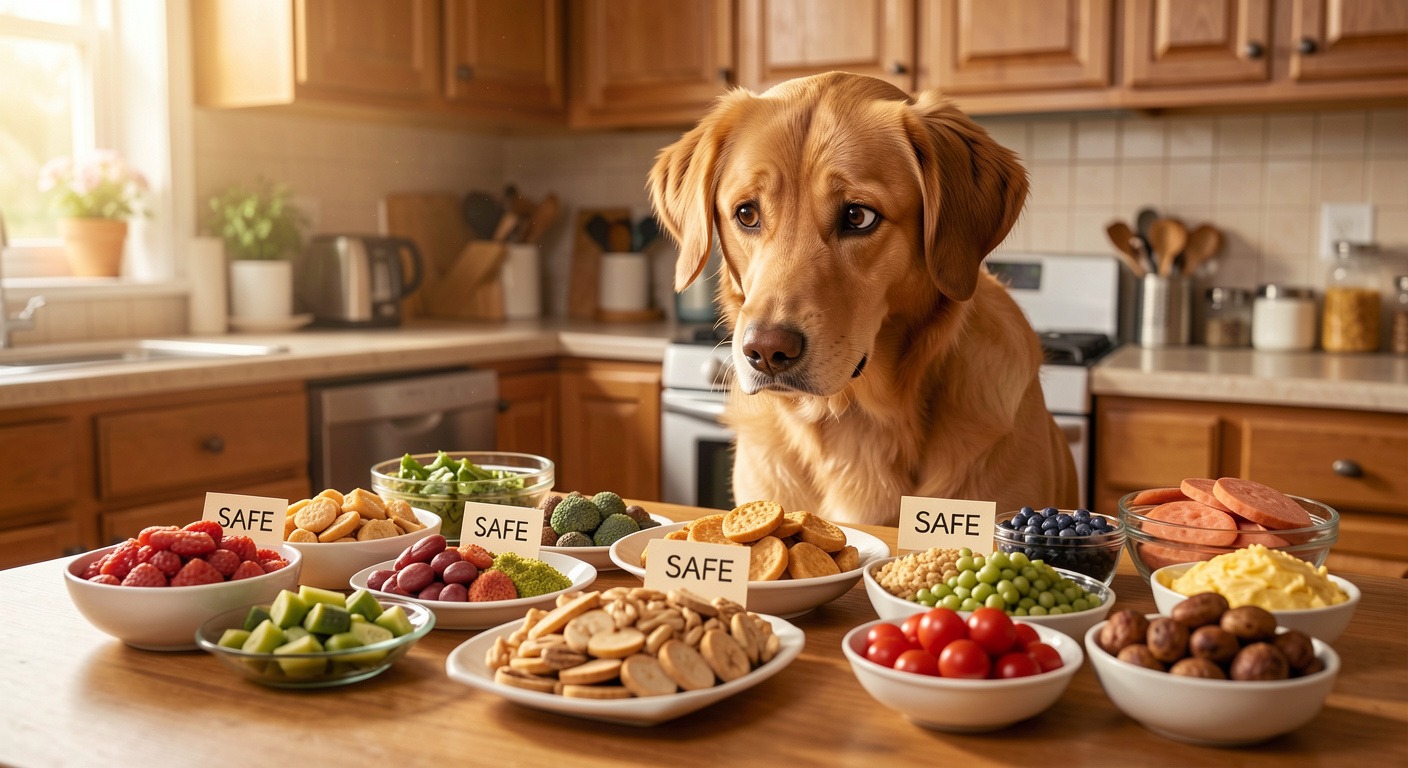
Your dog stares at you with those eyes while you’re eating. You want to share , but is it safe? The answer isn’t always obvious. Some foods that are perfectly healthy for humans can cause kidney failure, seizures, or even death in dogs within hours.
This guide covers the most common foods dog owners ask about, organized from most dangerous to safest, based on ASPCA Poison Control data and veterinary research.
Quick Answer
The most dangerous foods for dogs are grapes/raisins, chocolate, xylitol (sugar-free gum), onions/garlic, macadamia nuts, and alcohol. Even small amounts of these can be toxic. If your dog eats any of them, contact your veterinarian or the ASPCA Poison Control hotline (888-426-4435) immediately. Do not wait for symptoms.
🔴 Dangerous Foods , Never Feed These
Grapes and Raisins
Toxic dose: As few as 1-2 grapes can cause acute kidney failure in some dogs. The toxic compound is still unknown, which makes them especially dangerous , there’s no “safe amount.” Signs appear within 24 hours: vomiting, lethargy, and then kidney failure within 48-72 hours.
Chocolate
Toxic dose: Depends on the type. Dark chocolate and baking chocolate are far more dangerous than milk chocolate. As a rough guide: 1 oz of milk chocolate per pound of body weight is dangerous; for dark chocolate, only 0.1 oz per pound. Theobromine and caffeine cause vomiting, diarrhea, rapid heart rate, seizures, and death.
Xylitol (Sugar-Free Gum, Peanut Butter, Baked Goods)
Toxic dose: As little as 0.05 grams per pound of body weight. Xylitol causes a rapid, dangerous drop in blood sugar within 15-30 minutes and can lead to liver failure. Found in sugar-free gum, some “skinny” ice creams, and sneakily , in some peanut butter brands. Always check labels.
Onions, Garlic, Chives, Leeks
Toxic dose: 0.5% of body weight in onions (about 1 medium onion for a 45-lb dog). These damage red blood cells, causing anemia. Signs may not appear for 2-4 days: weakness, pale gums, rapid breathing. All forms are toxic , raw, cooked, powdered, and dehydrated.
Macadamia Nuts
Toxic dose: As few as 6 nuts can cause symptoms in a medium-sized dog. Causes weakness, vomiting, tremors, and inability to stand , usually within 12 hours. Most dogs recover within 48 hours with veterinary care, but it’s frightening and painful.
Also dangerous: Alcohol (even small amounts can be fatal), raw bread dough (expands in the stomach, produces alcohol), caffeine, avocado (persin toxin , more dangerous for birds and some other animals; the pit is a choking hazard for dogs), and moldy foods (tremorgenic mycotoxins).
🟡 Caution Foods , Safe in Moderation, With Rules
| Food | Safe? | The Rules |
|---|---|---|
| Peanut butter | ✅ Safe | Check for xylitol. Choose unsalted, no added sugar. Moderation , high in fat. |
| Cheese | ⚠️ Small amounts | Many dogs are lactose intolerant. Small cubes of low-fat cheese as a rare treat only. |
| Popcorn | ✅ Plain only | Unsalted, unbuttered. Remove unpopped kernels (choking hazard). |
| Cooked eggs | ✅ Safe | Fully cooked , no raw eggs (salmonella risk, biotin deficiency). Plain, no seasoning. |
| Bread | ✅ Plain only | Plain white or wheat. No raisin bread, no garlic bread, no raw dough. |
| Honey | ⚠️ Tiny amounts | High sugar. Not for puppies (botulism risk) or diabetic dogs. |
| Tuna | ⚠️ Occasional | Cooked, canned in water (not oil), no salt added. Limit due to mercury. |
🟢 Safe and Healthy Foods
Fruits Dogs Can Eat
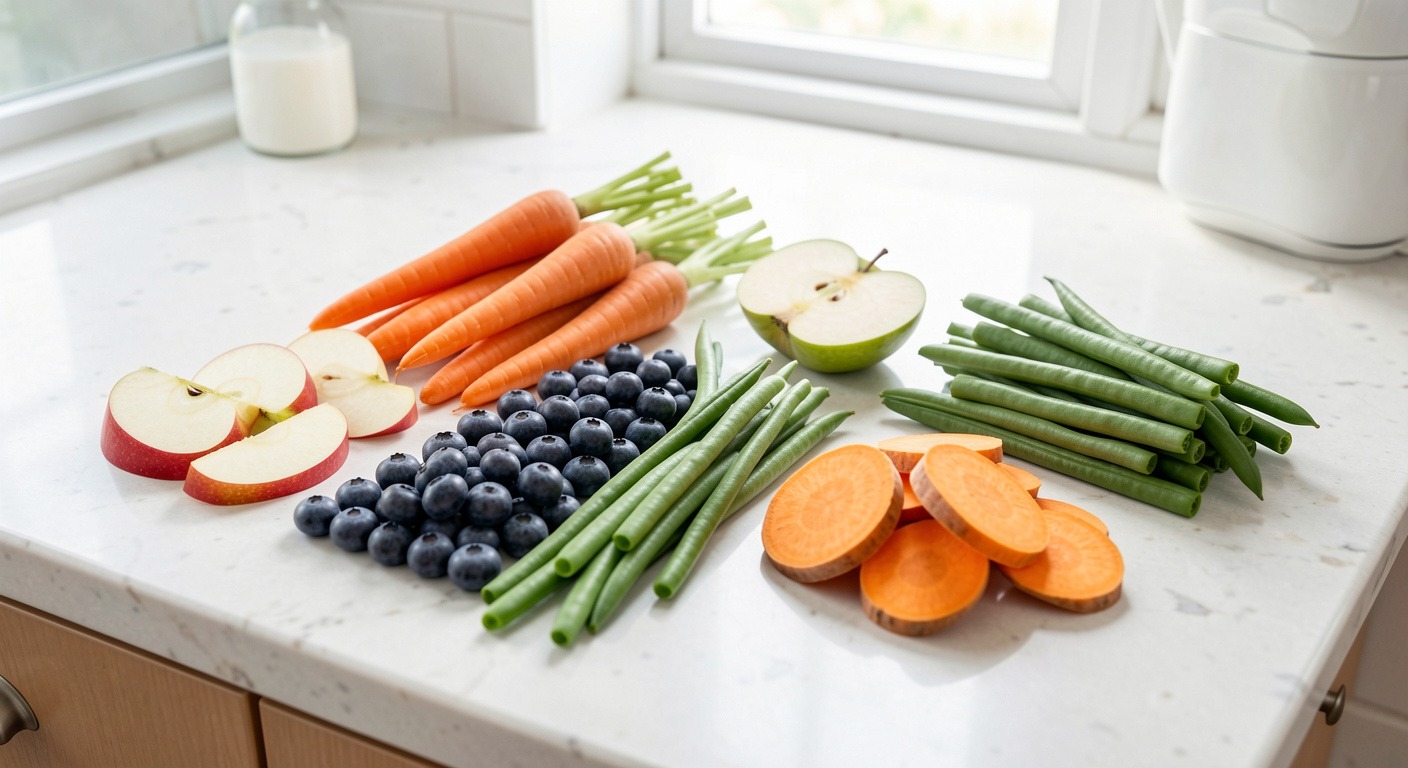
Blueberries (antioxidant-rich), apple slices (no seeds , they contain cyanide), banana (in moderation , high sugar), watermelon (seedless, no rind), strawberries, cantaloupe, pears (no seeds), mango (no pit), and pineapple (fresh only , no canned syrup).
Vegetables Dogs Can Eat
Carrots (raw or cooked , great low-calorie chew), green beans (plain, no salt), sweet potato (cooked, plain), pumpkin (plain canned , NOT pie filling with spices), cucumber (refreshing, low-calorie), broccoli (small amounts , can cause gas), celery (cut into small pieces to prevent choking).
Proteins and Grains
Cooked chicken, turkey, and lean beef (unseasoned, no bones), plain cooked salmon (fully cooked , never raw salmon , it can carry a parasite fatal to dogs), plain white or brown rice (easy on the stomach), plain oatmeal (no sugar or flavorings), and plain pasta (occasional, no sauce).
What to Do If Your Dog Eats Something Toxic
The 10% Rule: A Simple Guideline for Treats
All treats , including safe human foods , should make up no more than 10% of your dog’s daily calories. The other 90% should come from a complete, balanced dog food. A few blueberry treats are healthy; a bowl of blueberries replacing dinner is not.
FAQ
Can dogs eat peanut butter?
Yes, as long as it doesn’t contain xylitol. Check the ingredient label , some brands (especially “natural” or “skinny” varieties) now use xylitol as a sweetener. It’s deadly to dogs even in tiny amounts. Stick to peanut butter where the only ingredient is peanuts (or peanuts + salt).
My dog ate a grape 2 hours ago and seems fine. Do I still need to worry?
Yes , contact your vet immediately. Grape toxicity doesn’t always show symptoms right away. Early veterinary intervention (inducing vomiting, IV fluids) can prevent kidney damage. Waiting until symptoms appear may be too late.
Are there any foods that help clean dogs’ teeth?
Raw carrots and apple slices provide some mechanical scrubbing, but they’re not a replacement for brushing. For meaningful dental benefits, look for products with the VOHC (Veterinary Oral Health Council) seal on dental chews and diets.
🥕 More Nutrition Guides
Dive deeper into dog nutrition with our Dog Nutrition section , homemade food, feeding schedules, and more.