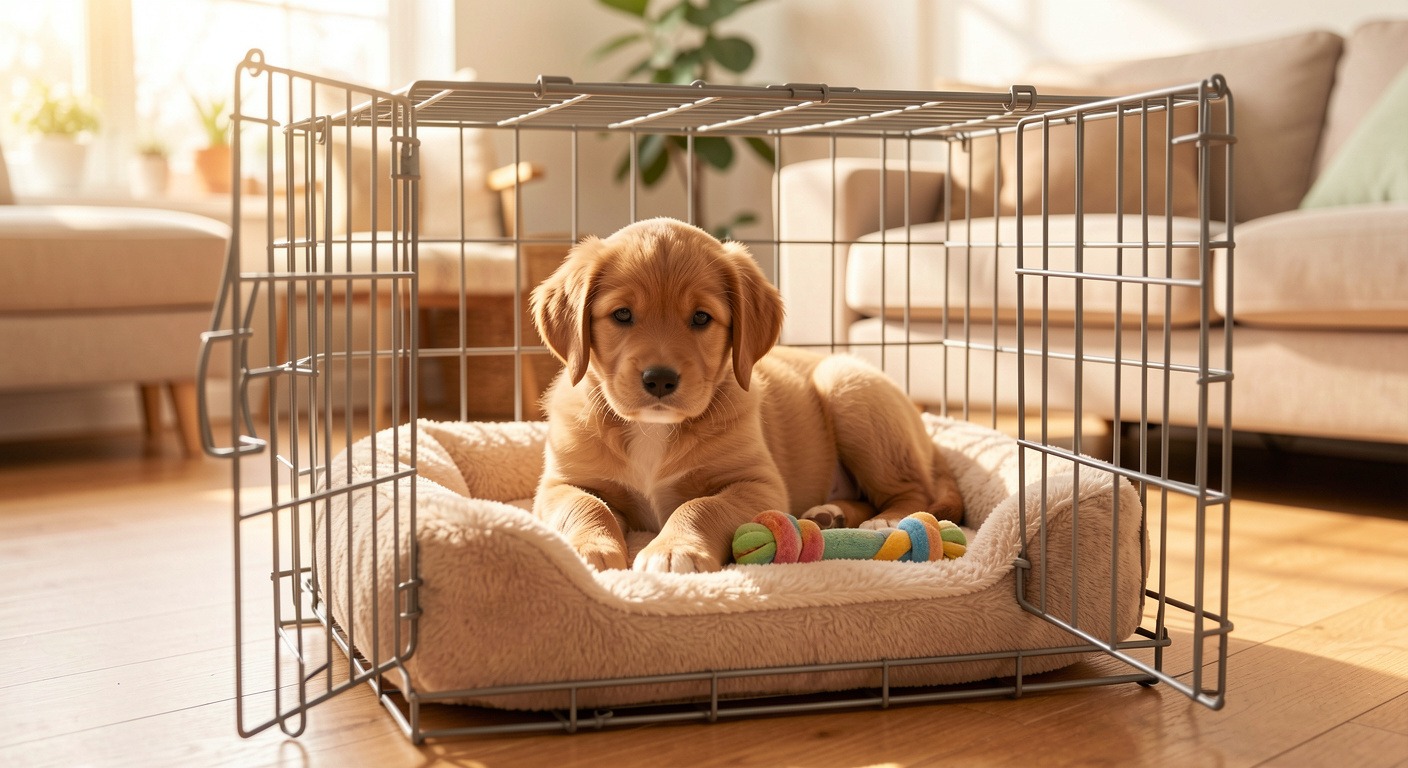
Your Puppy’s Safe Space , Crate Training the Positive Way
Crate training takes 1, 4 weeks with daily positive reinforcement, though every puppy moves at their own pace. Start with 30-second sessions and gradually extend. The goal is a puppy who chooses their crate willingly , never use it for punishment or force. If your puppy shows panic (screaming, clawing, drooling), stop immediately and consult a certified positive-reinforcement trainer or veterinary behaviorist.
1, 4 weeks with daily practice. Every puppy is different , go at your dog’s pace, not a fixed schedule.
The crate is always positive. Meals, treats, and praise happen inside. Punishment never happens inside.
Don’t use the crate as punishment. Don’t force your puppy inside. Don’t leave them crated too long.
What Is Puppy Crate Training?
Crate training is the process of teaching your puppy to see their crate as a safe, comfortable den , not a cage. Dogs are den animals by instinct. In the wild, canines seek out small, enclosed spaces to rest and feel protected. A properly introduced crate taps into this natural behavior.
When done correctly, crate training is a positive experience. Your puppy learns that the crate is their personal bedroom , a place where good things happen and where they can relax undisturbed. The American Kennel Club recommends crate training as a foundational skill that benefits both dogs and owners for a lifetime.
Why Crate Training Helps Puppies
Crate training supports several essential puppy-raising goals at once:
- Potty training. Dogs naturally avoid soiling their den. A properly sized crate helps your puppy learn bladder control and makes potty training dramatically faster.
- Safety when unsupervised. Puppies explore the world with their mouths. When you can’t actively supervise , during a shower, cooking, or a work call , the crate prevents destructive chewing and keeps your puppy away from dangerous items.
- Travel and vet readiness. A crate-trained dog handles car travel, boarding, and veterinary stays with far less stress because the crate is familiar, not frightening.
- Calm decompression. Overstimulated puppies benefit from quiet time in their crate. It’s a reset button for an overtired, bitey puppy who needs a nap but doesn’t know it yet.
- Separation practice. Short, positive crate sessions teach your puppy that being alone is safe , a foundational skill that helps prevent separation anxiety later.
According to the Humane Society of the United States, crate training uses a dog’s natural denning instinct to create a safe, familiar space , when introduced with patience and positive association, it becomes a lifelong comfort tool.
What Size Crate Does a Puppy Need?
Your puppy’s crate should be just large enough for them to stand up, turn around, and lie down comfortably , and no larger. A crate that’s too big allows your puppy to use one corner as a bathroom, which undermines potty training. For large-breed puppies, use a crate with a divider panel and expand the space as they grow.
| Sign | What It Means | Action |
|---|---|---|
| Can’t stand up fully | Crate is too small | Size up immediately , cramped quarters cause stress |
| Can stand, turn, lie down comfortably | Just right ✓ | This is your target , snug but not restrictive |
| Uses one corner as bathroom | Crate is too large | Add a divider panel to reduce interior space |
| Growing large-breed puppy | Will outgrow current setup | Buy adult-sized crate with divider; expand monthly |
Small breeds & puppies under 25 lbs. Chihuahua, Yorkie, Shih Tzu, young puppy.
Medium breeds 25, 60 lbs. Beagle, Border Collie, Bulldog, Cocker Spaniel.
Large/giant breeds 60+ lbs. Labrador, Golden Retriever, German Shepherd, Great Dane. Use divider while growing.
How to Set Up the Crate Correctly
Place the crate in a quiet corner of a room where your family spends time , not isolated in a basement or laundry room. Puppies are social and feel safer knowing their people are nearby. Avoid drafty areas, direct sunlight, and spots next to radiators or heating vents.
Inside the crate, include:
- A soft, washable bed or mat (avoid anything plush that a teething puppy could shred and swallow)
- One safe chew toy , a puppy teething-appropriate toy like a Kong or Nylabone (nothing with small parts they can bite off)
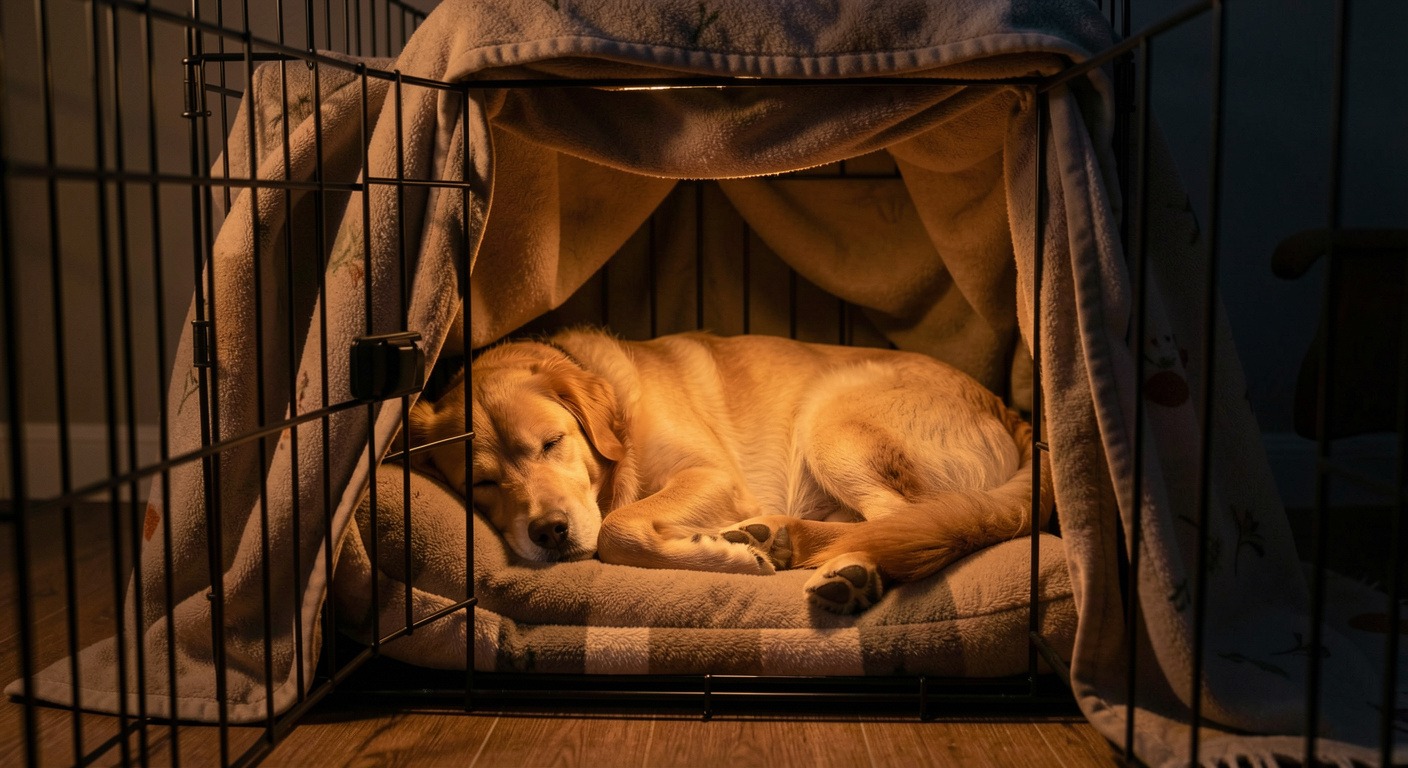
- A lightweight blanket draped over the top and sides to create a cozy, den-like feel. Leave the front uncovered for airflow
- For overnight: a small clip-on water bowl is fine for older puppies, but remove it 2 hours before bedtime for puppies still potty training
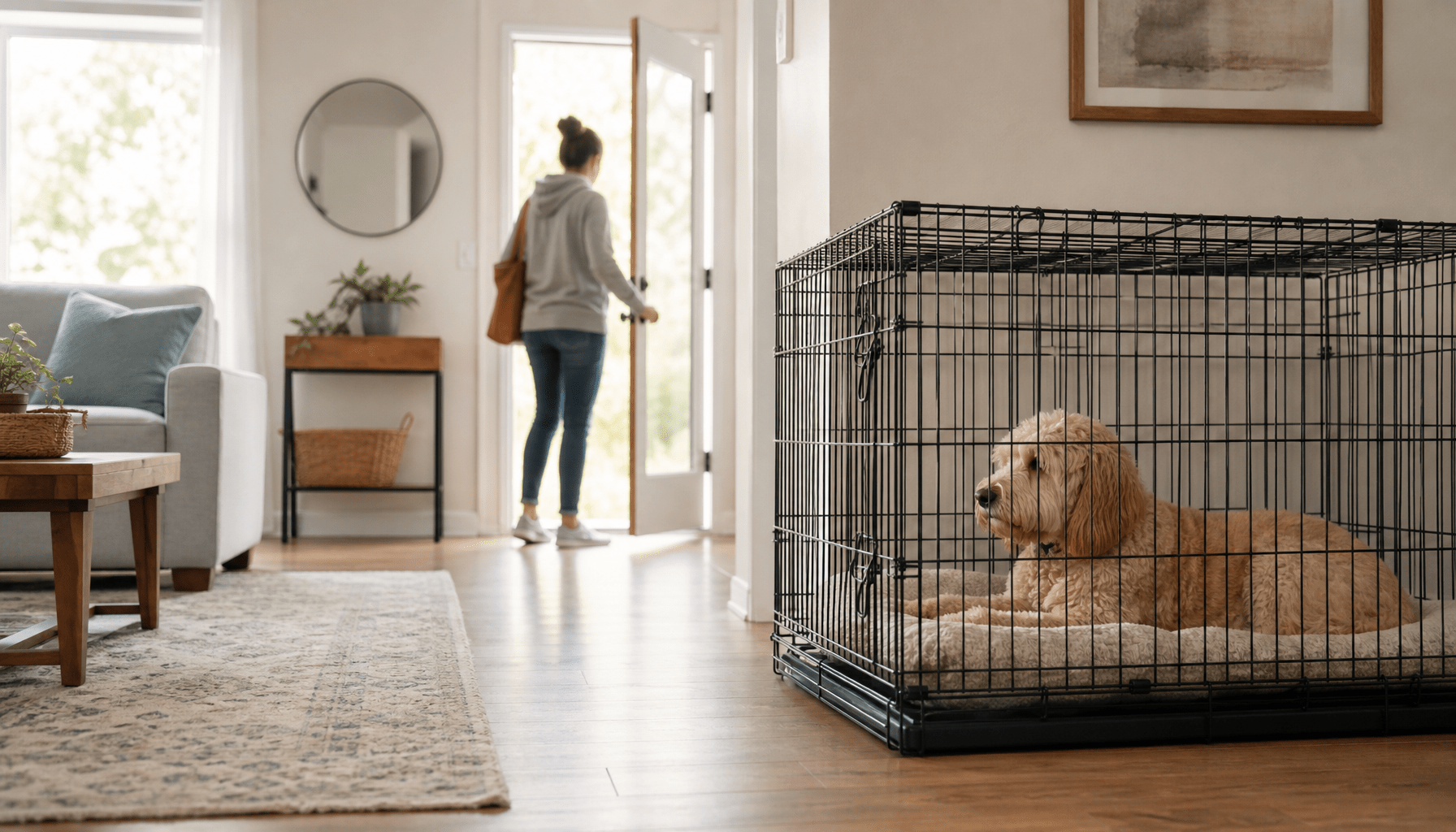
Puppy Crate Training Schedule by Age
Every puppy is different, but this table gives you realistic expectations for each stage. Always follow your puppy’s comfort level , if they’re stressed, slow down.
| Age | Daytime Max | Nighttime Max | Training Focus |
|---|---|---|---|
| 8, 10 weeks | 30, 60 min | 2, 3 hours | Open-door exploration, treat discovery, no closed-door sessions yet |
| 10, 12 weeks | 1, 2 hours | 3, 4 hours | Short closed-door sessions (30 sec → 5 min), you stay beside crate |
| 3, 4 months | 2, 3 hours | 5, 6 hours | Building duration, brief room departures, Kong/chew inside |
| 4, 6 months | 3, 4 hours | 6, 8 hours | Real-life practice (shower, cooking, work call), gradual freedom |
| 6+ months | 4, 5 hours | 8 hours | Maintenance, free-roam testing in puppy-proofed rooms |
Important: These are maximums, not targets. A 10-week-old puppy should not spend 2 continuous hours crated during the day , that’s the absolute upper limit for a puppy who is already comfortable with the crate. Most puppies earn free-roam privileges between 1, 2 years old, though many continue to enjoy their crate as a safe retreat. Leave the door open and let them choose.
Step-by-Step Puppy Crate Training Plan
Step 1: Let Your Puppy Explore the Crate
Leave the crate door open. Toss a few high-value treats inside , small pieces of chicken, cheese, or freeze-dried liver , and walk away. Let your puppy discover the treats on their own. Do this randomly throughout the day for the first 2, 3 days. Say nothing. Don’t lure them in or push them. Curiosity does the work. The message: “This place has treasure, and I choose to go in.”
Step 2: Feed Meals Inside the Crate
Once your puppy willingly enters the crate, start feeding all meals inside with the door open. Place the bowl at the back so they have to go all the way in. If your puppy is hesitant, start with the bowl just inside the door and gradually move it deeper over several meals. The Animal Humane Society recommends meal feeding as one of the most effective ways to build a positive crate association , food is a primary reinforcer that makes the crate genuinely rewarding.
Step 3: Practice Short Closed-Door Sessions
When your puppy happily eats meals inside, close the door for 30 seconds while you sit right beside the crate. Toss a treat through the bars. Open the door before they whine. If they do whine, you waited too long , next time, open sooner. Gradually extend: 1 minute, 2 minutes, 5 minutes. Always end on a positive note , let them out while they’re still calm. The goal at this stage is never endurance; it’s building the association that “door closes = treats appear, door opens = I was calm.”
Step 4: Build Duration Slowly
Give your puppy a stuffed Kong, a long-lasting chew, or a puzzle toy before closing the door. The food keeps them occupied and builds positive association. Extend from 5 minutes to 10, then 15. The rule: your puppy stays calmly occupied with their chew, and you open the door before the chew is finished. If they finish the chew and start to whine, you pushed too far , shorten next time.
Step 5: Practice Leaving the Room
Now it’s time to step away. Close the door with a high-value chew inside, then walk across the room for 1, 2 minutes. Return before your puppy finishes the treat. Gradually extend both distance and time: walk into the next room, step outside the front door for 30 seconds, take out the trash. Always return while they’re still calm and occupied. Your puppy learns: “You leave, but you always come back , and good things keep happening while you’re gone.”
Step 6: Use the Crate During Real-Life Moments
Now integrate the crate into daily life. Practice during natural crate opportunities: your morning shower, cooking dinner, a 15-minute work call, folding laundry. Start with short windows and work up to 1, 2 hours for a puppy who is reliably comfortable. Always provide a long-lasting chew. Never crate a puppy and leave the house until they’re fully comfortable with you being gone for that duration , practice departures while you’re still home first.
Puppy Crate Training at Night
Nighttime is often the hardest part of crate training. Your puppy just left their litter , being alone in a dark, quiet room is genuinely frightening. Here’s a sample first-night routine that sets you both up for success:
9:00 PM , Final potty break (boring, no play). 9:10 PM , Small treat tossed into crate, puppy walks in. 9:15 PM , Lights out. Crate beside your bed. If puppy whines, a quiet “it’s okay” and a few fingers through the bars. 2:00, 3:00 AM , One middle-of-night potty break for puppies under 12 weeks (boring trip, straight back to crate). 6:30 AM , Wake up, immediate potty break, big celebration for making it through the night.
Place the crate next to your bed for the first 3, 5 nights. Your presence is the most powerful anti-anxiety tool. Within a week, you can gradually move the crate a few feet each night toward its permanent location. Most puppies sleep through the night (6, 8 hours) by 12, 16 weeks.
What to Do If Your Puppy Cries in the Crate
Brief, soft whining (under 5 minutes) is normal settling behavior , wait it out. Persistent restless whining with occasional barks usually means “I need a potty break” , take them out for a boring trip, then right back. High-pitched panic screaming, non-stop clawing, or excessive drooling means genuine distress , open the crate immediately, comfort your puppy, and slow your training pace. Never let a puppy “cry it out” in panic.
The difference between normal settling and genuine distress matters enormously. Here’s how to tell them apart:
| Behavior | What It Sounds Like | What to Do |
|---|---|---|
| Brief whining | Soft, intermittent, stops within 3, 5 minutes | Wait it out , this is normal settling behavior. Puppy is self-soothing. |
| Restless whining | Persistent, occasional barks, shifting around, may have been 2+ hours since last potty break | Quick, boring potty break (no play, no lights, no talking), then right back in crate. |
| ⚠️ Panic / distress | High-pitched screaming, frantic clawing at bars, excessive drooling, non-stop intensity | Open the crate immediately. Comfort your puppy. You moved too fast. Go back to open-door sessions with you present. If panic persists across attempts, consult a certified positive-reinforcement trainer or veterinary behaviorist , some dogs have confinement phobia requiring a different approach. |
The SPCA emphasizes that crying in the crate should never be ignored when it signals genuine distress , responding to panic is not “giving in,” it’s preventing emotional harm and protecting the trust your puppy has in you.
How Long Can a Puppy Stay in a Crate?
During the day: 1 hour per month of age, maximum 4 hours for puppies under 6 months. At night: most puppies can hold it 6, 8 hours by 4 months, though 8, 10 week-olds need a middle-of-night potty break. Adult dogs can manage 6, 8 daytime hours, but 4, 5 hours is ideal. These are biological limits, not training goals , never push past what your puppy’s body can handle.
The VCA Animal Hospitals recommend the “month-plus-one” rule for daytime crating: a 2-month-old puppy = 3 hours max, a 3-month-old = 4 hours max, and so on. Nighttime stretches can be slightly longer because puppies (like humans) produce less urine while sleeping.
Crate vs. Playpen: Which One Do You Need?
Many new puppy owners wonder whether they need a crate, a playpen, or both. They serve different purposes and work best together:
| Feature | Crate | Playpen (Exercise Pen) |
|---|---|---|
| Purpose | Rest, sleep, den instinct, potty training aid | Safe play area when you can’t fully supervise |
| Size | Snug , stand, turn, lie down only | Larger , room to play with toys, walk around |
| Potty training help | Strong , dogs avoid soiling their den | Weaker , enough space to potty in one corner and sleep in another |
| Best for | Overnight, naps, short absences, travel | Daytime when you’re home but busy, gradual freedom training |
| Can replace crate? | , | No , playpens don’t support den instinct or bladder control training the way a crate does |
The ideal setup for most new puppy owners: a crate in a quiet corner for sleep and short absences, plus a playpen in the main living area for daytime containment when you’re cooking, working, or need hands-free time. Many owners attach the playpen to the crate opening, creating a safe “apartment” with a sleep zone and a play zone. As your puppy earns trust, the playpen area expands and the crate stays as their permanent den.
Common Puppy Crate Training Mistakes
- Rushing the process. If your puppy panics when the door closes, you moved too fast. Go back to open-door treat sessions for several days before trying again.
- Using the crate as punishment. The crate must never be associated with being in trouble. If you send your puppy to the crate when you’re angry, you undo weeks of positive association in seconds.
- Leaving a puppy crated too long. Puppies physically cannot hold their bladder beyond the 1-hour-per-month guideline. Exceeding this isn’t a training failure , it’s a biological impossibility that causes distress and potty-training setbacks.
- Crating with collar or harness on. Collars and harnesses can catch on crate bars and cause strangulation. Remove them every time , no exceptions. This is a non-negotiable safety rule.
- Letting a puppy “cry it out” in panic. Brief settling whines are normal. Panic screaming is not. Responding to panic isn’t spoiling your puppy , it’s preventing trauma that can create lifelong crate aversion.
- Putting the crate in an isolated room. Puppies are social animals. A crate tucked away in a basement or laundry room feels like banishment. Keep the crate in a family area , your presence is comforting.
Puppy Crate Safety Rules
Remove all collars, harnesses, and tags before crating , they can catch on bars and cause strangulation. Never crate a dog in direct sunlight, extreme temperatures, or a parked car. Remove the crate door if it swings inward (pinch hazard). Check for loose wires or sharp edges regularly.
Never crate a dog with separation anxiety without professional guidance. Confinement can intensify panic in dogs with true separation anxiety. If your dog shows signs , destructive escape attempts, self-injury, excessive drooling, non-stop vocalization , stop crating and consult a veterinary behaviorist or certified separation anxiety trainer. These dogs need a desensitization protocol, not a crate.
Puptify provides general education, not diagnosis. If your dog injures themselves trying to escape a crate, shows severe distress, or has a history of confinement trauma, contact your veterinarian or a certified positive-reinforcement behaviorist immediately.
When Crate Training May Not Be Right for Your Dog
Crate training is not cruel when done correctly , it meets a dog’s natural denning instinct and provides a safe, predictable retreat. It becomes harmful when used for punishment, excessive confinement, or when a dog with confinement phobia is forced inside. The difference is always in how the crate is introduced and used. A well-trained dog chooses their crate; a traumatized dog fears it. If your dog shows panic distress, stop and seek professional help.
Crate training is not appropriate for every dog. Some dogs have confinement phobia , a genuine panic disorder triggered by enclosed spaces. Signs include frantic escape attempts (broken teeth, bloody paws), non-stop screaming, self-injury, and extreme drooling. This is not “being dramatic” , it’s a phobia that requires professional intervention, not persistence. If you see these signs, stop crate training immediately. Work with a certified positive-reinforcement trainer or veterinary behaviorist who can develop a desensitization plan or recommend alternatives like a puppy-proofed room with a baby gate.
Similarly, dogs with separation anxiety may not benefit from crating during departures , confinement can intensify panic. A proper separation anxiety protocol addresses the underlying fear, not just the containment.
Frequently Asked Questions
Q: What age should I start puppy crate training?
Start the day your puppy comes home , usually around 8 weeks. Begin with open-door exploration and treat discovery. No closed-door sessions in the first few days. The earlier you start positive associations, the easier training will be. Older puppies and adult dogs can absolutely be crate trained too , just go slower and expect 2, 4 weeks instead of 1, 2.
Q: Should I close the crate door on the first day?
No. The first 2, 3 days should be open-door only. Toss treats inside randomly and let your puppy explore without any pressure. Closing the door too soon risks creating a negative first impression that’s hard to undo. Build trust before you build duration.
Q: Should my puppy’s crate be in my bedroom?
Yes , for at least the first 3, 5 nights. Your puppy just left their litter and the only family they’ve ever known. Sleeping alone in a new, dark room is terrifying. Placing the crate beside your bed lets them smell and hear you, which dramatically reduces nighttime crying. Once they’re comfortable, gradually move the crate a few feet each night toward its permanent spot.
Q: Can I crate my puppy while I am at work?
Only if someone can come home for a midday potty break. A puppy under 6 months cannot hold their bladder for a full 8-hour workday , it’s a biological limit, not a training issue. Hire a dog walker, ask a neighbor, or come home at lunch. If that’s impossible, use a playpen setup with a potty pad area (far from the bed) as a temporary solution, and transition to crate-only once your puppy’s bladder capacity catches up.
Q: What should I put inside my puppy’s crate?
A soft, washable bed or mat, one safe chew toy (Kong, Nylabone , nothing with small parts), and a lightweight blanket draped over the top and sides for a den-like feel. Do not put food bowls (except during meal-training sessions), potty pads (they undermine bladder-control learning), or toys that can be destroyed and swallowed. For teething puppies, freeze a stuffed Kong for longer-lasting comfort. See our puppy teething guide for safe chew recommendations.
Q: Should I cover my puppy’s crate with a blanket?
Yes , covering the top and sides with a lightweight, breathable blanket creates a cozy den atmosphere and blocks visual stimuli that can keep a puppy alert. Leave the front uncovered for airflow. Make sure the blanket is secure and can’t be pulled through the bars (chewing and swallowing fabric is a blockage risk). Some puppies prefer no cover , watch your puppy’s response and adjust.
Q: When should I stop using the crate?
Most dogs earn free-roam privileges between 1, 2 years old, once they’re reliably potty trained, non-destructive, and can settle calmly without confinement. Transition gradually , start with 15 minutes of supervised free time after a potty break, then extend. Many dogs continue to love their crate as a safe retreat even after earning full house freedom. Leave the door open and let them choose.
Q: What if my puppy hates the crate?
True crate hatred is rare , it’s almost always fear from moving too fast. Go back to square one: open door, treats inside randomly, no pressure. Feed all meals in the crate with the door open for a full week before trying to close it again. If your puppy still refuses to enter after a week of this, or shows panic (screaming, clawing, drooling), stop and consult a certified positive-reinforcement trainer. Some dogs need an alternative to crating , and that’s okay. A professional trainer can help you find what works.
Q: Can I crate train an older dog?
Absolutely. The same positive-reinforcement principles apply, but go even slower , expect 3, 6 weeks instead of 1, 4. Older dogs may have negative associations with confinement from past experiences. Start with the crate door completely off for the first week. Feed meals inside with zero pressure. Let the dog choose to enter at their own pace. Adult dogs often become the most enthusiastic crate-users once trust is established.
Q: Should I put water in the crate?
Not during short daytime sessions (under 2 hours). For overnight, a small clip-on water bowl is fine for puppies over 4 months. For younger puppies still potty training, remove water 2 hours before bedtime and provide access immediately upon waking. Never withhold water as a training strategy , it’s cruel and dangerous. If your puppy is crated for 2+ hours during the day, attach a clip-on water bowl.
Q: Why does my puppy bark in the crate when I leave the room?
This is normal FOMO (fear of missing out) , your puppy hears you and wants to be part of the action. Practice short departures where you leave and return before barking starts. Gradually extend. A stuffed Kong or long-lasting chew given right before you step out helps redirect the “you’re leaving” moment into “good things happen when you leave.” For persistent barking, see our guide on stopping excessive barking.
Q: Is a wire crate or plastic crate better?
Both work well. Wire crates offer better ventilation and visibility , most puppies feel more connected to their family when they can see out. Plastic crates (airline-style) create a darker, more den-like environment and are required for air travel. For home use, wire crates with a blanket cover give you the best of both: ventilation plus cozy darkness. Choose based on your puppy’s temperament , anxious puppies sometimes prefer the enclosed feel of a plastic crate.
Q: How do I know if my puppy is ready for crate training to end?
Your puppy is ready for more freedom when they consistently: (1) hold their bladder through the night and during 3, 4 hour daytime stretches, (2) show zero destructive chewing when supervised, (3) settle and nap calmly outside the crate, and (4) voluntarily enter their crate with the door open. Transition slowly: start with 15-minute free-roam sessions after a potty break and extend only when accident-free.
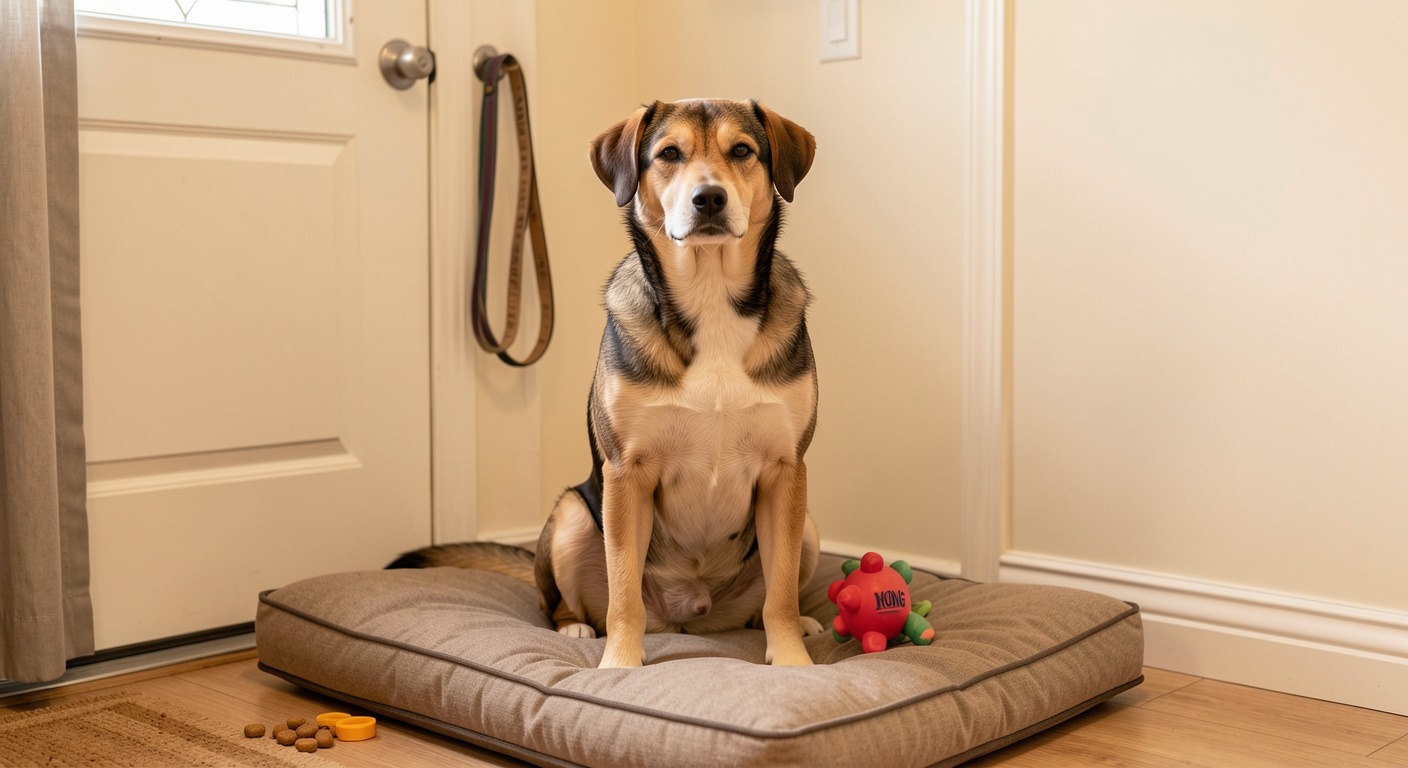
Start Crate Training Tonight
Toss a few treats in the crate, leave the door open, and let your puppy explore. That’s all you need for day one. The rest builds from there , one calm session at a time.
Explore the Training Hub →Puptify provides science-backed dog care education for everyday dog parents. Our guides are researched using veterinary sources and positive-reinforcement training methodology. This article references the American Kennel Club, Humane Society of the United States, Animal Humane Society, SPCA, and VCA Animal Hospitals. For specific concerns about your dog’s behavior or health, consult your veterinarian or a certified positive-reinforcement trainer.