Stop Searching for the “Best” Brand. Start Finding What Works.
A good dog food brand is one that follows WSAVA nutrition guidelines, employs qualified nutrition experts, runs AAFCO feeding trials, matches your dog’s life stage and health needs, fits your budget without stress, and produces visible results in your actual dog after 4 to 6 weeks. There is no single best brand for every dog, but there is a reliable way to evaluate any brand you encounter. This guide gives you that framework.
Ingredient lists are designed to sell bags, not inform. “Chicken first” sounds great but ingredients are listed by raw weight including water. Your job isn’t to decode ingredients like a chemist. Your job is to evaluate the company behind them.
A sedentary senior Pug and a working-line Border Collie need fundamentally different nutrition. The brand your neighbor’s Goldendoodle thrives on might give your dog loose stools. Brand quality sets the floor , individual fit decides the outcome.
Price correlates with marketing spend far more than nutritional quality. Some $120-a-bag boutique brands have never fed a single dog in a controlled study. Budget-friendly brands like Purina Pro Plan and Iams employ board-certified veterinary nutritionists and run extensive feeding trials.
Puptify provides general education, not veterinary diagnosis or dietary prescription. Every dog is an individual, and nutritional needs shift with age, activity, and health status. This guide helps you ask better questions , it does not recommend one brand over another for your specific dog. If your dog has a medical condition including kidney disease, liver problems, food allergies, pancreatitis, diabetes, or unexplained weight loss, work directly with your veterinarian before making any diet change. For complex or homemade diets, consult a board-certified veterinary nutritionist (DACVN). Find one through the ACVN directory.
Quick Answer: What Makes a Dog Food Brand Good?
A good dog food brand isn’t defined by the prettiest bag, the loudest social media presence, or the highest price tag. It’s defined by five measurable things: (1) whether the brand follows WSAVA nutrition guidelines, (2) whether the food matches your dog’s life stage and health needs, (3) whether you can verify the brand’s claims, (4) whether the food fits your budget long term, and (5) whether the food is actually working for your dog. Run any brand through these five questions and you’ll have your answer faster than any “Top 10” list could give you.
Why “Best Dog Food Brand” Lists Can Be Misleading
Pet food roundups are everywhere. Most are written by content marketers who spent an afternoon Googling, not by anyone with animal nutrition training. They rank brands by Amazon reviews, ingredient-list aesthetics, and whatever affiliate commission pays highest. They rarely mention WSAVA guidelines, never ask whether the brand employs a board-certified veterinary nutritionist, and almost never differentiate between “formulated to meet AAFCO standards” and “tested in AAFCO feeding trials.”
A 2020 review in the Journal of the American Veterinary Medical Association noted that the vast majority of pet food rating websites use criteria unrelated to nutritional science , ingredient perception, marketing language, and owner reviews , rather than objective measures like nutrient digestibility, quality control protocols, or feeding trial data. This guide replaces those criteria with questions that veterinary nutritionists actually ask.
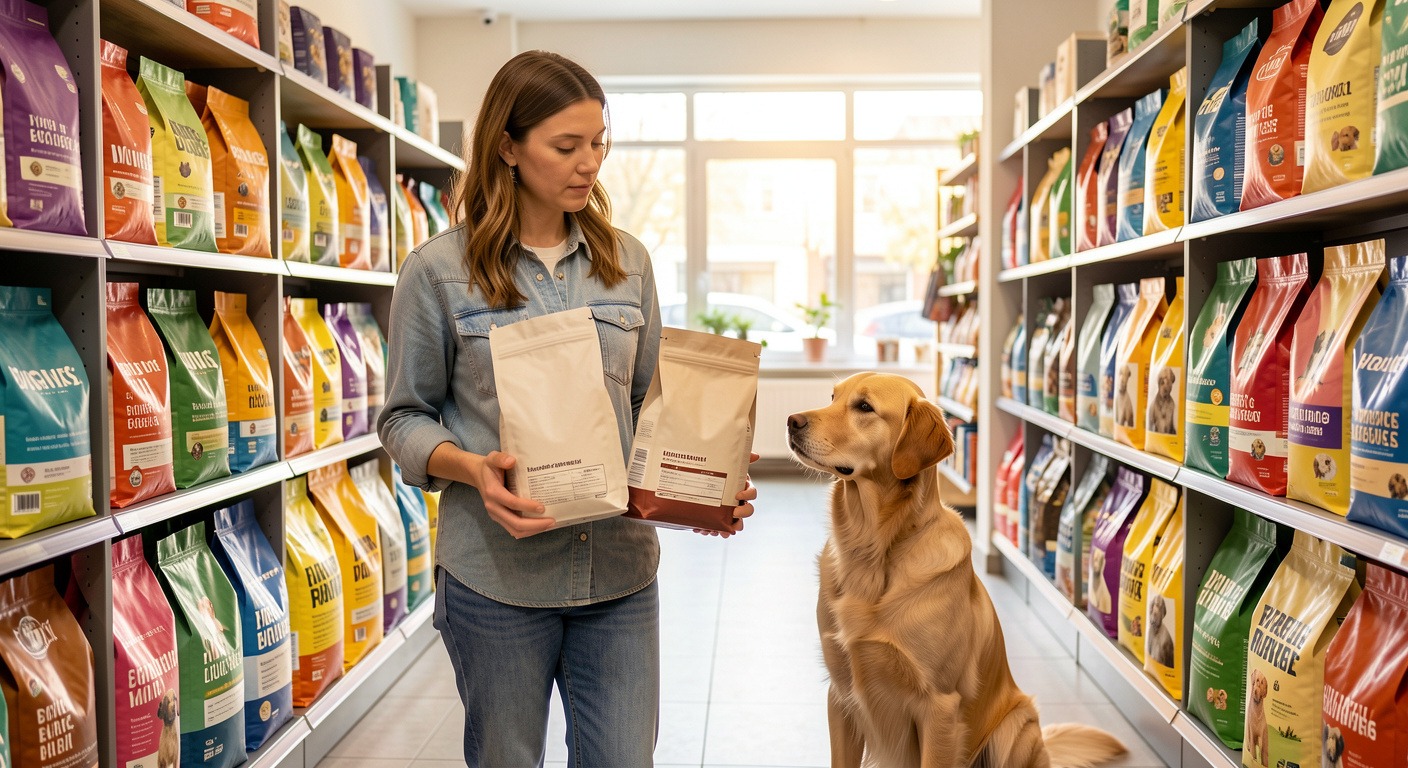
The 5-Question Dog Food Brand Test
Use these five questions on any dog food brand you’re considering. If a brand can’t answer them , or won’t , that tells you everything you need to know.
1. Does the Brand Follow WSAVA Nutrition Guidelines?
The World Small Animal Veterinary Association (WSAVA) doesn’t approve or endorse specific brands. Instead, it publishes a set of questions you should ask any pet food manufacturer. Think of it as a background check, not a seal of approval. The WSAVA Global Nutrition Guidelines and Pet Food Toolkit are free, publicly available resources.
Key WSAVA questions to ask any brand:
- Do you employ at least one full-time, board-certified veterinary nutritionist? Not a “pet nutritionist” , that title isn’t regulated. You want a Diplomate of the American College of Veterinary Nutrition (DACVN) or a PhD in animal nutrition.
- Who formulates your diets, and what are their specific credentials?
- Where are your foods manufactured, and what quality control measures are in place?
- Do you conduct AAFCO feeding trials, or do you formulate by nutrient profile alone? Feeding trials mean actual dogs ate the food for 6 months under controlled conditions. Formulation means someone did math on a spreadsheet.
- Can you provide a complete nutrient analysis for any product?
Most boutique brands won’t answer these questions directly. The brands that will , and do so transparently , are the ones that earned veterinary trust through decades of published research, not influencer campaigns. That doesn’t mean smaller brands are automatically bad. It means you need to ask and listen carefully.
2. Does the Food Match Your Dog’s Life Stage and Health Needs?
Brand quality sets the floor. Your dog’s individual needs set the target. A WSAVA-compliant brand can still be wrong for your dog if you’re not matching the food to the animal in front of you.
What to match:
- Life stage. Puppies need growth formulas , check the AAFCO statement for “growth” or “all life stages.” Adults need maintenance. Seniors may benefit from adjusted protein, phosphorus, and calorie levels. Our puppy feeding guide covers the first year in detail.
- Breed size. Large-breed puppies need controlled calcium and calorie density to avoid growing too fast , which increases hip dysplasia risk. Small breeds need smaller kibble and higher calorie density per cup.
- Activity level. A dog running 10 miles a week needs different fuel than a couch companion. High-performance foods pack more fat and protein. Sedentary dogs on performance formulas tend to gain weight fast.
- Health conditions. Kidney disease, food allergies, pancreatitis, IBD , these aren’t marketing niches. They’re medical reasons to choose a therapeutic diet under veterinary supervision. Don’t DIY a diet for a sick dog.
| Dog Type | What to Look For | What to Avoid | Vet Note |
|---|---|---|---|
| Puppy (0-12 months) | AAFCO “growth” or “all life stages” statement; DHA for brain development; 3-4 small meals daily | Adult maintenance formulas; calcium supplements without vet direction | Puppies need roughly twice the calories per pound as adult dogs; growth formulas are non-negotiable |
| Large-Breed Puppy | Large-breed puppy formula with controlled calcium (0.8-1.2% dry matter); moderate calorie density | Standard puppy or “all life stages” foods that allow too-rapid growth; extra calcium supplements | Excess calcium during growth is linked to developmental orthopedic disease including hip dysplasia |
| Adult (1-7 years) | AAFCO “adult maintenance” statement; measured portions based on ideal weight; 2 meals daily | Free-choice feeding; “all life stages” formulas that may be too calorie-dense for sedentary adults | 56% of U.S. dogs are overweight; portion control is the single most important adult feeding practice |
| Senior (7+ years) | Moderate to high protein to maintain muscle mass; omega-3 fatty acids; increased fiber; antioxidant support | Low-protein formulas unless medically indicated; calorie-dense foods for less active seniors | Healthy seniors do NOT need reduced protein , they may need more; monitor weight closely for muscle wasting |
| Overweight | Weight management formula with lower calorie density; high protein to preserve muscle during weight loss; L-carnitine | Guessing portions; high-fat formulas; weight-loss supplements without vet approval | Aim for 1-2% body weight loss per week; weigh food with a kitchen scale , cups can be off by 20% |
| Active / Working | Performance formula with higher fat (15-20%) and protein (25-30%); easily digestible carbohydrates for sustained energy | Low-fat maintenance formulas that don’t meet energy demands; feeding immediately before intense exercise | Working dogs may need 2-5x the calories of a sedentary dog of the same weight; adjust to body condition |
| Sensitive Stomach | Limited ingredient diet with a single novel protein; highly digestible carbohydrates; added prebiotics or probiotics | Foods with multiple protein sources; high-fat formulas; ingredients known to cause individual reactions | Persistent GI signs warrant a vet visit , food sensitivity and medical conditions can look identical |
| Medical Condition | Prescription therapeutic diet formulated for the specific condition; fed under direct veterinary supervision | Over-the-counter foods marketed for the condition but not clinically tested; DIY diet formulation | Conditions like kidney disease, pancreatitis, and food allergies require precise nutritional management , don’t guess |

3. Can You Verify the Brand’s Claims?
Dog food marketing is a masterclass in emotional manipulation. “Human-grade.” “Holistic.” “Ancestral.” “Natural.” “Premium.” None of these terms are defined or regulated by AAFCO for pet food. They’re marketing words, not nutritional standards.
Red flags to recognize:
- “No fillers!” , Corn, wheat, and by-products aren’t fillers. They’re nutrient-dense ingredients that have been safely used in pet food for decades. A brand that builds its identity around what it doesn’t contain is selling fear, not nutrition.
- Ingredient-shaming competitors. Does the brand spend more energy attacking other brands than explaining its own quality control? That’s a diversion tactic.
- Celebrity endorsements over credentials. A famous person feeding their dog a food tells you nothing about the food. Ask about the formulator, not the influencer.
- Vague sourcing language. “Sourced from trusted farms” means nothing legally. “Locally sourced” has no enforceable definition in pet food.
- Before-and-after photos. A glossy coat after switching foods proves nothing , confirmation bias is powerful, and any diet switch from poor to adequate nutrition will show improvement.
4. Does the Food Fit Your Budget Long Term?
This is the question nobody wants to admit matters. But it does. A $150-a-month fresh-food subscription that stresses your finances isn’t sustainable. Switching foods every three months because you can’t keep up is harder on your dog than sticking with a consistent, affordable kibble.
How to think about cost:
- Price per day, not price per bag. A $70 bag lasting 6 weeks costs $1.67 per day. A $35 bag lasting 2 weeks costs $2.50 per day. Do the math.
- Don’t confuse premium with prescription. Premium retail foods are marketing categories. Prescription therapeutic diets are medical tools. You might need the latter. You almost never need the former.
- Mid-range WSAVA-compliant brands consistently outperform premium boutique brands in controlled studies on digestibility, palatability, and long-term health outcomes , at half the price.
- There is no magic budget number. If $40 per month is your ceiling, find the best food within it. Your dog needs consistency and nutritional adequacy more than they need freeze-dried beef liver toppers.
5. Is the Food Actually Working for Your Dog?
You don’t need a degree in animal nutrition to evaluate whether a food is working. You just need to pay attention. After 4 to 6 weeks on a new food, run through this checklist:
| What to Monitor | Good Sign ✅ | Warning Sign 🚩 | When to Ask Your Vet |
|---|---|---|---|
| Stool quality | Firm, formed, easy to pick up; consistent brown color; 1-2 bowel movements daily | Loose, watery, or mucus-coated stools persisting beyond the transition period; diarrhea; severe constipation | Diarrhea lasting more than 48 hours; blood in stool; straining without production |
| Skin and coat | Shiny coat without flaking; minimal shedding for breed type; no redness or hot spots | Dull, dry, or brittle coat; excessive shedding; dandruff; red, inflamed, or itchy skin | Persistent itching; hair loss; hot spots; signs of allergic reaction including hives or facial swelling |
| Energy level | Alert, playful, recovers quickly after exercise; consistent energy throughout the day | Lethargy or listlessness, especially 1-2 hours after eating; reluctance to exercise | Sudden energy drop; collapse during or after exercise; persistent lethargy not explained by age |
| Weight stability | Ribs easily felt with a thin fat covering; visible waist from above; abdominal tuck from the side | Unexplained weight gain or loss despite consistent portions; ribs not palpable without pressing | Loss of more than 5% body weight in a month; gain of more than 5% when portions are controlled |
| Appetite | Eats meals enthusiastically; finishes within 10-15 minutes; maintains consistent interest in food | Refusing meals; picky eating that wasn’t present before; sudden ravenous appetite change | Refusing food for more than 24 hours; dramatic appetite increase with weight loss; signs of nausea |
| Gas and bloating | Minimal flatulence; no visible abdominal distention after meals | Excessive gas that’s new or worse since switching; visible bloating after eating | Distended, hard abdomen; unproductive retching; signs of pain , these can indicate GDV, a life-threatening emergency |
| Vomiting | No vomiting beyond occasional bile if stomach is empty too long | Regular vomiting after meals; regurgitation shortly after eating; vomit containing undigested food hours later | Vomiting more than once in 24 hours; blood in vomit; vomiting with lethargy; suspected foreign body ingestion |
| Itching and ears | No excessive scratching; clean, odor-free ears; no head shaking | New or worsening itching; red, smelly, or discharge-filled ears; frequent head shaking or ear scratching | Persistent ear infections; itching that disrupts sleep; signs of environmental or food allergy |
| Dental health | Clean teeth without excessive tartar buildup; fresh breath; healthy pink gums | Rapid tartar accumulation after food switch; persistently bad breath; red or bleeding gums | Loose or broken teeth; significant tartar despite dental care; signs of dental pain like dropping food |
| Bloodwork | Normal values on routine annual panels; stable organ function over time | Abnormal values on routine screening that weren’t present on prior food | Any abnormal bloodwork finding , your vet will determine if diet is a contributing factor |

How to Read a Dog Food Label
Dog food labels are regulated by AAFCO model regulations enforced at the state level. The label isn’t a nutrition textbook , it’s a legal document with specific required elements. Here’s what each section actually tells you:
- Product name. The name follows strict rules. “Chicken Dog Food” means chicken must be at least 95% of the product (excluding water). “Chicken Dinner” or “Chicken Formula” means only 25%. “With Chicken” means just 3%. These percentages are legally defined , not marketing choices.
- Life stage designation. Must appear on the label if the food is complete and balanced. Look for “growth,” “adult maintenance,” “all life stages,” or “senior.”
- AAFCO nutritional adequacy statement. The single most important sentence on the bag. Covered in detail in the next section.
- Guaranteed analysis. Shows minimum crude protein and fat percentages, and maximum fiber and moisture. This is a rough snapshot, not a complete nutritional profile. To compare wet vs. dry food fairly, convert to dry matter basis: Dry Matter % = Label % divided by (100% minus Moisture %) multiplied by 100.
- Calorie content. Listed as kcal per kilogram and kcal per cup or can. Use this , not the feeding guide , to calculate how much your specific dog needs based on ideal weight and activity level.
- Feeding guide. A starting point only. These tables often overestimate portions and are based on average activity levels. Start at the low end and adjust based on your dog’s body condition score.
- Ingredient list. Listed by weight before cooking. The first ingredient carries the most pre-cooking weight , but water weight evaporates. A food with “chicken” first may have less actual chicken protein after cooking than one with “chicken meal” second or third. Ingredient lists are useful context, not a quality scorecard. The company making the food matters more than the ingredients on the panel.
- Manufacturer contact information. Required by law. A brand that doesn’t list a physical address and phone number , or that ignores your questions , is telling you something important.
For a complete walkthrough of ingredient splitting, guaranteed analysis, and how to compare wet vs. dry food, see our dog food label reading guide.

AAFCO Complete and Balanced Statement: What It Means
The AAFCO nutritional adequacy statement is a small block of text, usually on the back or side panel in tiny print. It comes in two forms, and understanding the difference is critical:
“[Brand] is formulated to meet the nutritional levels established by the AAFCO Dog Food Nutrient Profiles for [life stage].” This means the recipe was designed on paper to meet minimum nutrient requirements. No dogs were fed this food to test whether they actually thrive on it. The company did math. This is the most common AAFCO statement , found on the majority of commercial dog foods. It’s acceptable but weaker than the alternative.
“Animal feeding tests using AAFCO procedures substantiate that [Brand] provides complete and balanced nutrition for [life stage].” This is the gold standard. Real dogs ate this food for 26 weeks under controlled conditions. Researchers tracked body weight, bloodwork, and overall health. Far fewer products carry this statement because feeding trials are expensive and time-consuming. When you see it, you’re looking at a food that was validated on living animals, not just on a spreadsheet.
“All life stages” caution: A food labeled for “all life stages” is nutrient-dense enough for growing puppies and pregnant dogs , which means it may be calorie-rich for a sedentary adult or senior dog. This isn’t a safety issue, but it’s a weight-management consideration. If your adult dog gains weight on an “all life stages” formula, switching to a maintenance-specific food is a reasonable adjustment.
“Intermittent or supplemental feeding only”: If you see this phrase, the food is NOT complete and balanced. It’s meant as a treat, topper, or occasional meal , not as a dog’s primary diet. Feeding a supplemental food as the main diet will cause nutritional deficiencies over time. These foods are not required to meet AAFCO nutrient profiles.
Source: AAFCO’s guide to understanding pet food labels and the FDA’s pet food label resource page.
Dog Food Marketing Claims to Be Careful With
Pet food marketing operates in a regulatory gray zone. AAFCO defines nutritional standards but doesn’t pre-approve marketing language. Here are the most common claims and what they actually mean , or don’t mean:
| Marketing Claim | What It Suggests | What It Actually Means |
|---|---|---|
| “Human-Grade” | The food is made from ingredients fit for human consumption | No legal definition in pet food. The term requires every ingredient AND the manufacturing facility to meet human food standards , which is nearly impossible to verify. AAFCO does not recognize “human-grade” as an official term. Most foods using this claim cannot legally substantiate it. |
| “Holistic” | A whole-body, natural approach to nutrition | No legal definition. Zero regulatory meaning in pet food. Any brand can use this word on any product with no substantiation required. |
| “Natural” | Minimally processed, no artificial ingredients | AAFCO defines “natural” as ingredients derived solely from plant, animal, or mined sources, not produced by chemical synthesis. However, synthetic vitamins and minerals are allowed in a “natural” food if declared. The term doesn’t address quality, sourcing, or nutritional adequacy. |
| “Grain-Free” | Better for dogs; more “ancestral” | Not inherently better. The FDA is investigating a potential link between grain-free diets high in legumes and dilated cardiomyopathy (DCM) in dogs. Many veterinary nutritionists now recommend against grain-free foods unless a dog has a diagnosed grain allergy , which is rare. |
| “Premium” / “Ultra-Premium” | Superior quality and nutrition | No legal definition. These are marketing categories with no nutritional standard attached. Budget brands that meet WSAVA guidelines routinely outperform “ultra-premium” boutique competitors on digestibility and feeding trial outcomes. |
Grain-Free Dog Food: Should You Avoid It?
The grain-free category exploded over the last decade , driven by marketing that equated grains with “fillers” and grain-free with “ancestral” canine diets. The science tells a different story. In 2018, the FDA launched an investigation into a potential link between grain-free diets and dilated cardiomyopathy (DCM), a serious heart condition. The investigation identified over 1,100 cases, with Golden Retrievers disproportionately affected.
What the FDA found: Dogs eating certain grain-free diets , particularly those high in peas, lentils, chickpeas, and potatoes , were developing DCM at higher-than-expected rates, including in breeds not genetically predisposed to the condition. Some dogs improved when switched to grain-inclusive diets and taurine supplementation, though the mechanism remains under investigation.
The current veterinary consensus, as reflected by Tufts Petfoodology and the AVMA:
- Grain-free food is not automatically dangerous , but it is not automatically better either.
- Dogs do not need grain-free diets. Grains are not “fillers” , they provide digestible carbohydrates, fiber, essential fatty acids, and vitamins.
- True grain allergies in dogs are rare. Most food allergies are to animal proteins , chicken, beef, dairy , not grains.
- If your dog is on a grain-free diet, discuss it with your veterinarian at the next checkup, especially if the food is high in legumes. Don’t panic-switch foods overnight, but do have the conversation.
- For breeds with known DCM predisposition including Golden Retrievers, Dobermans, Boxers, and Cocker Spaniels, many veterinary cardiologists recommend avoiding grain-free diets unless specifically prescribed.
Source: FDA DCM Investigation and Tufts Petfoodology DCM update.
Good Dog Food Brands vs Boutique Dog Food Brands
The term “boutique” in pet food refers to smaller brands that emphasize exotic ingredients, grain-free recipes, and premium branding , often without the nutritional research infrastructure of larger companies. Understanding the difference helps you evaluate, not dismiss.
Boutique branding is not automatically unsafe. A small company can still employ a qualified nutritionist, manufacture in transparent facilities, and formulate complete diets. The issue is that many don’t , and the boutique marketing playbook makes it hard to tell the difference. When a brand spends more on packaging design and Instagram aesthetics than on nutritional research, the bag looks great but the food hasn’t been validated.
Exotic proteins are not healthier. Kangaroo, bison, venison, and alligator sound premium, but these proteins are not nutritionally superior to chicken or beef. They exist primarily as marketing differentiators. A dog with a chicken allergy may benefit from a novel protein , but for a dog without allergies, there’s no advantage to exotic meat.
“Human-grade” and “holistic” are marketing terms , as covered in the marketing claims section above. Don’t let them substitute for the five-question brand test. Apply the same evaluation framework to every brand equally, regardless of packaging.
Dog Food Brand Evaluation Checklist
Use this table when evaluating any brand. Print it. Bring it to the pet store. If a brand representative can’t or won’t answer these questions, that’s your answer.
| Evaluation Factor | Green Flag ✅ | Red Flag 🚩 | Why It Matters |
|---|---|---|---|
| Qualified Nutrition Experts | Employs at least one full-time board-certified veterinary nutritionist (DACVN) or PhD animal nutritionist | No nutritionist on staff; uses a consultant who isn’t board-certified; lists a “pet nutritionist” without verifiable credentials | Anyone can call themselves a “pet nutritionist.” Board certification means 8+ years of post-graduate training specific to animal nutrition |
| AAFCO Statement | “Animal feeding tests using AAFCO procedures substantiate…” | “Formulated to meet…” with no feeding trials; missing statement entirely; “intermittent or supplemental use only” | Feeding trials test real dogs for 26 weeks. Formulation tests a spreadsheet. The difference is validation vs. educated guessing |
| Feeding Trials | Conducts AAFCO feeding trials on finished products; can provide data on request | No feeding trials; relies on competitor data; claims trials are unnecessary because “ingredients speak for themselves” | Feeding trials catch nutrient interactions that lab analysis misses , a food can be chemically “complete” but biologically unavailable |
| Quality Control | Published quality control protocols; in-house testing for pathogens, nutrient levels, and contaminants; third-party audits | No published QC information; refuses to disclose testing procedures; no third-party certification | Without rigorous QC, nutrient levels can vary significantly between batches , especially for critical nutrients like calcium and taurine |
| Manufacturing Transparency | Company-owned or identified manufacturing facilities; willing to share location and processes | Co-packed at unnamed third-party facilities; refuses to disclose where food is made; vague about country of origin | Co-packing isn’t automatically bad , but not knowing where your food is made means you can’t evaluate the facility’s safety record |
| Recall Transparency | Transparent about past issues; clear corrective actions documented; recall history publicly available | No recall information available; deletes or ignores customer questions about safety; history of repeated recalls for the same issue | Every large manufacturer has had recalls. The issue isn’t whether they happened , it’s how the company responded and what changed |
| Complete Nutrient Analysis | Provides full nutrient profile (not just guaranteed analysis) on request; publishes typical analysis for key nutrients | Refuses to share complete analysis; claims it’s “proprietary information”; only provides the minimum guaranteed analysis on the label | The guaranteed analysis shows 4 numbers. A complete analysis shows 40+. Veterinary nutritionists need this to evaluate diets for dogs with health conditions |
| Life-Stage Match | Clearly labeled for specific life stage with appropriate nutrient density; breed-size variants where relevant | “All life stages” as the only option with no guidance on which dogs it suits; no breed-size differentiation for puppies | Large-breed puppies need controlled calcium , an “all life stages” food may not restrict calcium enough for safe growth |
| Veterinary Support | Engages with veterinary community through research, continuing education, and peer-reviewed publication; responsive to professional inquiries | Marketing that positions the brand against veterinarians; “vets don’t know nutrition” messaging; dismissive of veterinary recommendations | Brands that attack the veterinary profession are asking you to trust their marketing department over your dog’s doctor , a massive red flag |
| Marketing Tone | Educates about nutrition; explains formulation rationale; provides evidence for claims; acknowledges limitations | Attacks competitors by name; uses fear-based messaging about “what’s really in other brands”; makes universal claims without evidence | A confident brand sells its own strengths. An insecure brand sells fear of everything else. The difference is visible within 30 seconds on the website |
In peer-reviewed research, veterinary nutrition textbooks, and WSAVA-linked discussions, five brands appear repeatedly due to their research infrastructure: Purina Pro Plan, Royal Canin, Hill’s Science Diet, Iams, and Eukanuba. These brands employ board-certified veterinary nutritionists, conduct AAFCO feeding trials, publish peer-reviewed studies, and own their manufacturing facilities. This is not an endorsement , no single brand is right for every dog , but it reflects the brands with the strongest nutrition research foundations.
Important: This list describes brands that are frequently referenced in veterinary nutrition literature due to their research infrastructure. It does not mean these are the only good brands, that other brands are unsafe, or that your dog needs these specific products. Apply the 5-question test to every brand equally. A smaller regional brand that passes the test is better for your dog than a research-heavy brand that doesn’t match your dog’s individual needs.
How to Switch Dog Food Safely
Transition gradually over 7 to 10 days to avoid digestive upset. Start with 25% new food mixed with 75% old food for days 1 to 3, then 50/50 for days 4 to 6, then 75% new / 25% old for days 7 to 9, and finally 100% new on day 10. If your dog has a sensitive stomach or a history of food transitions going poorly, extend each stage to 3 to 4 days for a 14-day total transition.
Loose stools during the first 1 to 2 days of transition are normal. If loose stools persist beyond day 3 or worsen at any stage, slow down , drop back to the previous ratio for an additional 2 to 3 days. If diarrhea continues despite a slow transition, the new food may not agree with your dog. Consult your veterinarian before continuing.
Never switch foods abruptly in dogs with medical conditions, food allergies, or a history of pancreatitis without explicit veterinary guidance.
When to Ask Your Vet About Dog Food
Your veterinarian should be your partner in nutrition decisions. Bring the food bag to every checkup. Ask your vet: “Based on my dog’s body condition, bloodwork, and health history , is this food appropriate?” Here are specific situations where veterinary input is essential:
- Any medical condition: Kidney disease, liver disease, pancreatitis, diabetes, food allergies, IBD, heart conditions, bladder stones , these require therapeutic diets, not over-the-counter experimentation.
- Chronic vomiting or diarrhea: If GI signs persist beyond 48 hours or recur regularly, don’t assume it’s the food. Rule out medical causes first.
- Rapid weight loss or gain: Unexplained weight changes can signal metabolic disease, not just calorie math.
- Puppies and seniors: These life stages have narrow nutritional tolerances. Deficiencies in puppies cause permanent developmental damage. Excess phosphorus in seniors with declining kidney function accelerates disease.
- Prescription diet decisions: Therapeutic diets exist because they were clinically tested for specific diseases. Don’t replace a prescription diet with an over-the-counter “premium” alternative without veterinary approval.
- Homemade or raw diets: These require a board-certified veterinary nutritionist. General-practice veterinarians can refer you. Find a DACVN through the ACVN directory.
This guide is designed to help you ask better questions , not to diagnose your dog or prescribe a specific diet. Every dog is an individual, and nutritional needs shift with age, activity, and health status. If your dog has a medical condition, work directly with your veterinarian , ideally one who consults with a board-certified veterinary nutritionist , before making any diet change. Therapeutic diets exist for a reason, and guessing wrong can cause real harm.
This guide references the following authoritative sources: WSAVA Global Nutrition Guidelines, WSAVA Pet Food Toolkit, AAFCO Label Reading Guide, FDA DCM Investigation, Tufts Petfoodology, AVMA Pet Nutrition, and the ACVN Directory.
Frequently Asked Questions
Q: What are the best dog food brands overall?
There is no single “best” brand. The right brand depends on your dog’s life stage, breed size, activity level, health status, and your budget. Use the 5-question brand test in this guide to evaluate any brand on its research infrastructure, not its marketing. Among veterinary nutrition professionals, brands like Purina Pro Plan, Royal Canin, Hill’s Science Diet, Iams, and Eukanuba are commonly referenced because they employ board-certified nutritionists, conduct feeding trials, and publish peer-reviewed research. But the best brand for your neighbor’s dog may not be the best for yours.
Q: How do I check if a dog food brand is reputable?
Call or email the manufacturer. Ask the WSAVA questions from this guide: Do you employ a board-certified veterinary nutritionist? Who formulates your diets? Where is the food manufactured? Do you conduct feeding trials? Can you provide a complete nutrient analysis? A reputable brand answers these questions directly. A brand that deflects, talks about “real ingredients” without addressing quality control, or won’t respond , is giving you an answer through their silence.
Q: Should I avoid by-products in dog food?
No. Named by-products like “chicken by-product meal” are organ meats , liver, kidney, heart , that are packed with nutrients dogs need. In the wild, a wolf eats the organs first. AAFCO defines by-products as clean, nutrient-dense animal parts that do not include hair, horns, hooves, or intestinal contents. A food with named by-products is often more nutrient-dense than one with only muscle meat. The concern is with unnamed by-products like “meat by-product meal” or “poultry by-product meal” , the source animal is unknown and quality control is less assured.
Q: Is wet food better than dry kibble?
Neither is inherently better. Wet food provides more moisture , helpful for dogs with urinary issues, kidney concerns, or those who don’t drink enough water. It’s also more palatable for picky eaters and seniors with dental problems. Dry kibble is more affordable, shelf-stable, and the crunch helps reduce tartar. Many dogs do well on a combination. Both can be nutritionally complete. The quality of the brand matters far more than the format.
Q: Is “all life stages” food okay for puppies?
Yes , “all life stages” means the food meets the higher nutritional requirements for growth and reproduction, which includes puppies. However, for large-breed puppies, a dedicated large-breed puppy formula is strongly preferred because it controls calcium and calorie density to prevent too-rapid growth, which is linked to developmental orthopedic disease. An “all life stages” food may not restrict calcium enough for large-breed puppies despite being nutritionally complete.
Q: Are boutique dog food brands bad?
Not automatically. “Boutique” describes branding approach, not nutritional quality. A small company can still employ a qualified nutritionist, manufacture in transparent facilities, and formulate complete diets. The issue is that many boutique brands prioritize marketing over research , exotic ingredients, emotional storytelling, and competitor-shaming without the nutritional infrastructure to back it up. Apply the same 5-question framework to every brand equally, regardless of whether it’s a multinational or a startup.
Q: Fresh food vs kibble , which is better?
Fresh commercial foods like The Farmer’s Dog, Ollie, and Nom Nom are formulated to AAFCO standards by veterinary nutritionists and gently cooked to preserve nutrients. They offer ingredient transparency and high palatability. The tradeoff is cost , typically $120 to $200 per month for a medium dog vs. $40 to $80 for quality kibble , and the need for refrigeration and freezer space. Both can be excellent choices. Budget and lifestyle are the deciding factors, not nutritional superiority.
Q: Raw vs commercial dog food , which is safer?
The AVMA, FDA, and CDC all discourage raw feeding due to pathogen risks. Raw meat can carry Salmonella, E. coli, and Listeria , dangerous both to dogs and to household members, especially children, elderly, pregnant, or immunocompromised individuals. Commercial foods are cooked to eliminate these pathogens. If you choose raw feeding, discuss it with your veterinarian, use human-grade meats from trusted sources, and practice strict food safety.
Q: Is prescription dog food better than premium retail brands?
They serve different purposes. Prescription therapeutic diets are medical tools formulated for specific diseases , kidney diets with restricted phosphorus, hydrolyzed protein diets for food allergies, low-fat diets for pancreatitis. They were clinically tested on dogs with those conditions. Premium retail brands are marketing categories with no medical testing. If your dog has a diagnosed condition requiring a therapeutic diet, don’t replace it with an over-the-counter alternative without veterinary approval. The premium brand may have a nicer ingredient list, but it wasn’t designed for your dog’s disease.
Q: How often should I change my dog’s food?
There’s no medical reason to rotate foods regularly for a healthy dog. If your dog is thriving on a consistent diet , good stools, shiny coat, stable weight, normal energy , there’s no benefit to switching. Some owners rotate for variety, and that’s fine if transitions are gradual and the dog tolerates it. But frequent switching increases the risk of GI upset and makes it harder to identify which food caused a reaction if one occurs. Consistency is undervalued in pet nutrition conversations.
Q: My dog has diarrhea after switching food , what should I do?
Loose stools during the first 1 to 2 days of a gradual transition are common and typically resolve. If diarrhea persists beyond day 3, slow the transition , return to the previous ratio for 2 to 3 more days before increasing. If diarrhea continues despite an extended slow transition, the new food may not agree with your dog. Stop the transition and consult your veterinarian. Diarrhea lasting more than 48 hours, containing blood, or accompanied by lethargy or vomiting requires a prompt vet visit , not a wait-and-see approach.
Q: Can I mix two different dog food brands?
Yes, many owners do this successfully. Mixing can balance cost , a premium kibble stretched with a budget-friendly option , or combine benefits like wet food for hydration with dry for dental health. The caution: if your dog develops GI issues or an allergic reaction, you now have two variables instead of one, making it harder to identify the cause. Introduce each brand individually first to confirm tolerance, then mix. And ensure both foods are complete and balanced for the same life stage.
Q: Should I ask my vet before changing dog food?
For a healthy adult dog switching between similar complete-and-balanced foods , probably not necessary beyond mentioning it at the next checkup. But you should definitely consult your vet before changing food if your dog has any medical condition, is a puppy or senior, is pregnant or nursing, has a history of pancreatitis or food allergies, or if you’re switching to a fundamentally different diet type like raw or homemade. When in doubt, a 5-minute phone call with your vet’s office is always the safer path.
Q: What dog food is best for allergies?
Most food allergies in dogs are to animal proteins , chicken, beef, and dairy are the most common triggers , not grains. If you suspect a food allergy, work with your veterinarian on an elimination diet trial using a novel protein or hydrolyzed protein diet. This is the gold standard for diagnosis. Don’t guess by cycling through grain-free, limited-ingredient, or exotic-protein retail foods , you’ll spend months and hundreds of dollars without confirming the actual allergen. For diagnosed allergies, a prescription hydrolyzed protein diet or a vet-formulated novel protein diet is the evidence-based approach.
Q: What is the best dog food for senior dogs?
There’s no universal “best senior food.” A healthy 8-year-old Labrador with good kidney function has different needs than a 12-year-old Shih Tzu with early kidney disease. In general, look for a senior-specific formula with moderate to high protein to preserve muscle mass, increased omega-3 fatty acids for joint and cognitive health, higher fiber for digestive regularity, and antioxidants. The most important factor is close weight monitoring , both unintended weight loss from muscle wasting and weight gain from reduced activity are common in seniors and require diet adjustments. See our dog health guide and nutrition hub for life-stage-specific guidance.
Q: How do I know if my dog’s food is causing health problems?
Use the 10-row tracking table in this guide. Monitor stool quality, skin and coat condition, energy levels, weight stability, appetite, gas, vomiting, itching and ear health, dental health, and annual bloodwork. Any persistent negative change in these areas after a food switch , lasting more than 2 weeks beyond the transition period , may be diet-related. But don’t assume every health issue is food-related. GI signs can be parasites, infections, or systemic disease. Skin issues can be environmental allergies. Weight loss can be metabolic disease. A vet visit to rule out non-dietary causes should always come before cycling through more foods.
Q: What’s the single biggest mistake people make when choosing dog food?
They choose based on the ingredient list rather than the company behind it. An impressive-looking ingredient panel assembled in a facility with no quality control, no nutritionist, and no feeding trials is a gamble. A “boring” ingredient list backed by decades of research, veterinary nutritionists on staff, and rigorous safety protocols is a guarantee. This guide exists because the pet food industry knows this mistake , and profits from it. Choose the guarantee. For more on ingredient label interpretation, read our dog food label guide.
Q: What dog food do veterinarians actually recommend?
Veterinarians recommend foods from brands that meet WSAVA guidelines: employ board-certified nutritionists, conduct feeding trials, own their manufacturing facilities, and publish peer-reviewed research. In practice, this most often includes Purina Pro Plan, Royal Canin, Hill’s Science Diet, Iams, and Eukanuba , not because of marketing deals, but because these brands have the research infrastructure other brands lack. However, your veterinarian’s specific recommendation for your dog will be based on your dog’s individual health profile, not a universal ranking. Bring the food bag to your next visit and ask directly: “Is this food appropriate for my dog?” For more on how to choose, see our sensitive stomach guide and homemade food guide.
Final Tip: Choose the Brand Behind the Food, Not the Prettiest Bag
Pet food is a $40+ billion industry built on emotional decisions. The packaging is designed to appeal to you , not to communicate nutritional quality. Wolf imagery, farm-fresh illustrations, and phrases like “crafted in small batches” trigger trust in human brains that has nothing to do with canine nutrition.
The brands that earn veterinary trust do it through things you can’t see: published research, feeding trial data, quality control protocols, and board-certified nutritionists on staff. These things don’t fit on a bag. But they’re what determines whether a food supports your dog’s long-term health or just looks good on a shelf.
Print the 5-question brand test. Bring it to the pet store. Ask the questions. If a brand can answer them, you’ve found something worth feeding. If they can’t or won’t, keep walking , no matter how beautiful the bag.
Keep Reading


Ready to Find the Right Food for YOUR Dog?
Print the 5-question checklist and the brand evaluation table. Bring them to the pet store. And if a brand can’t answer the questions , keep walking.
Explore the Nutrition Hub →