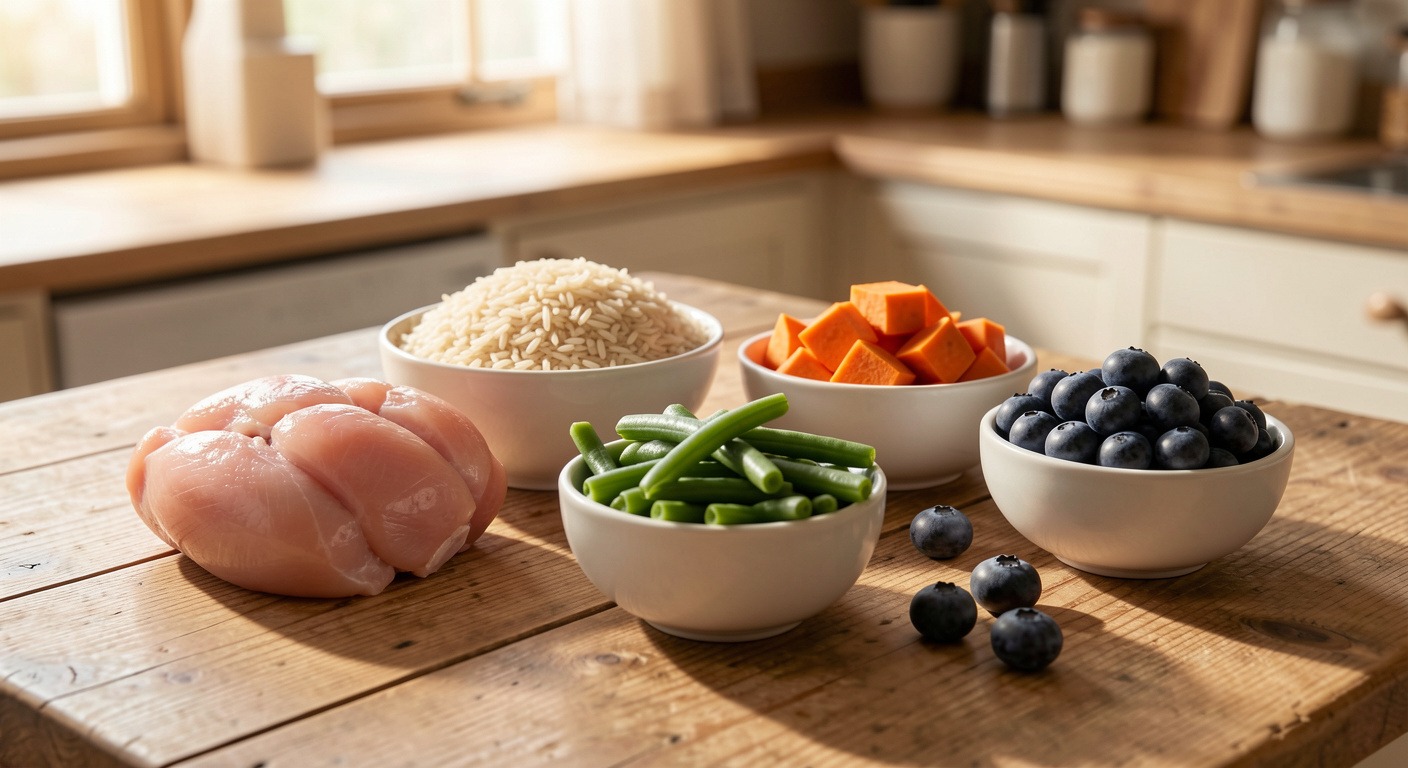
A healthy homemade diet is possible , but only with the right plan
Quick Answer: Is Homemade Dog Food Healthy?
Homemade dog food can be healthy when properly balanced by a board-certified veterinary nutritionist , but most DIY recipes found online are nutritionally incomplete. A landmark UC Davis study found only 1 in 200 homemade recipes met basic nutritional standards. The biggest risks are calcium deficiency, vitamin imbalances, and missing essential amino acids. Never switch without veterinary guidance.
Control over every ingredient. No preservatives, fillers, or mystery meals. Customizable for dogs with allergies or multiple food sensitivities.
Nutritional deficiencies are common and develop silently. A 2013 UC Davis study found that only 5 out of 200 online homemade recipes met minimum nutritional adequacy standards.
Work with a board-certified veterinary nutritionist (DACVN). They’ll formulate a complete, balanced recipe for YOUR specific dog , age, breed, weight, and health conditions included.
Why Dog Owners Choose Homemade Dog Food
The appeal is real. You know every ingredient going into the bowl. No mystery meat meals, no artificial preservatives, no recalls. For dogs with food allergies, multiple sensitivities, or medical conditions requiring specific diets, homemade food can be life-changing.
The American Kennel Club notes additional benefits: increased hydration (fresh food contains more moisture than kibble), better weight management through precise portion control, and the satisfaction of a deeper connection with your dog through preparing their meals. Owners of picky eaters often find homemade food is the only thing their dog will reliably eat.
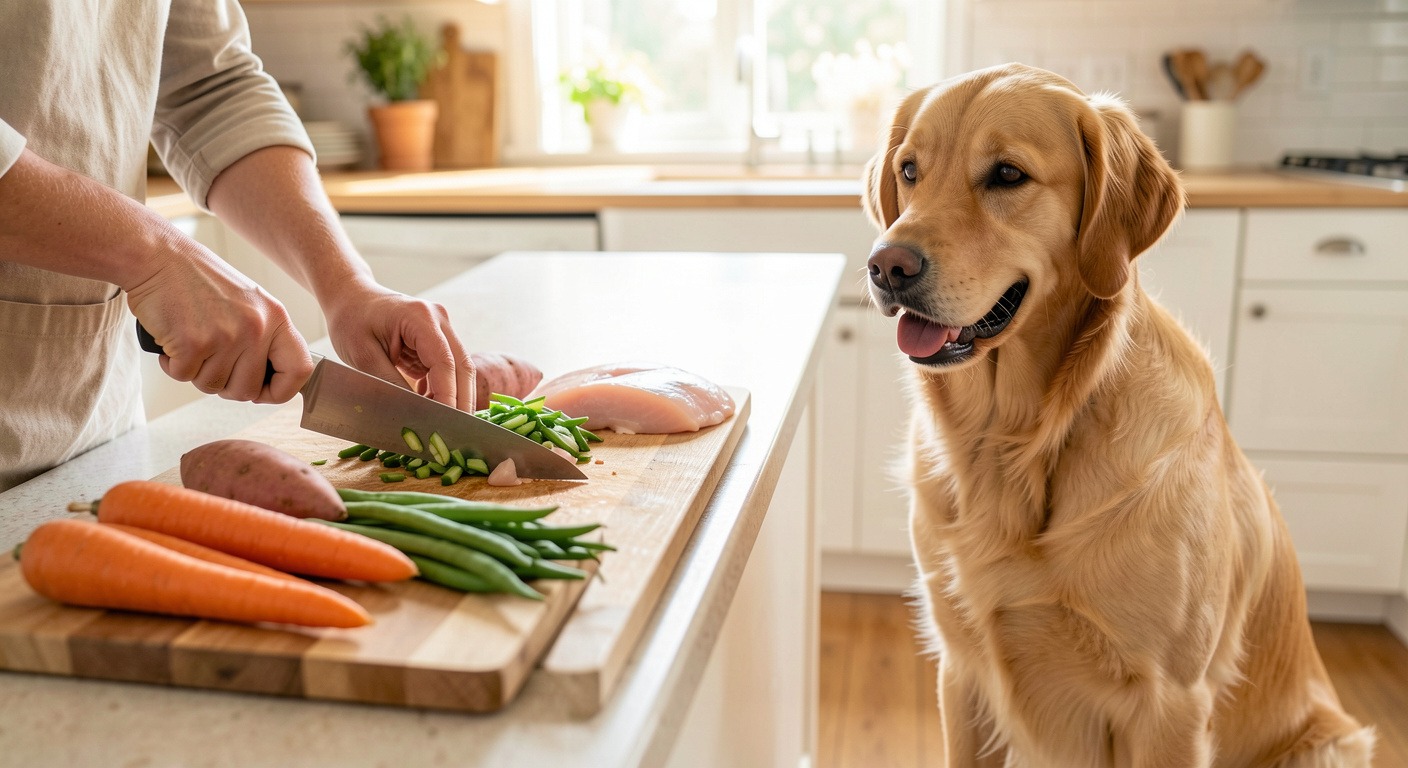
Benefits of Homemade Dog Food
- Ingredient transparency: You control every item that goes into the bowl , no recalls, no vague “animal by-products.”
- Customization: Recipes can be tailored for food allergies, sensitivities, or medical conditions like kidney disease or pancreatitis (under veterinary supervision).
- Higher moisture content: Fresh food is 70-80% water, helping dogs who don’t drink enough stay hydrated.
- Palatability: Most dogs prefer fresh, whole-food meals over dry kibble , especially picky eaters or seniors with reduced appetite.
- No synthetic preservatives: Homemade food uses real, whole ingredients without BHA, BHT, or ethoxyquin.
Risks of Homemade Dog Food
Here’s the uncomfortable truth: most homemade dog food recipes are not nutritionally complete. A landmark 2013 study from UC Davis evaluated 200 homemade dog food recipes from websites, books, and veterinarians. The result: only 5 recipes met minimum nutritional standards, and none met all essential nutrient requirements.
The most common deficiencies: calcium (dogs need a specific calcium-to-phosphorus ratio), vitamin D, vitamin E, zinc, choline, and essential fatty acids. These deficiencies don’t cause immediate symptoms , a dog can seem healthy for months or years while slowly developing metabolic bone disease, heart problems, or immune dysfunction.
The Dog Aging Project’s 2025 findings were even more stark: dogs fed unbalanced homemade diets showed higher rates of adverse health events compared to those on commercial diets formulated to AAFCO standards.
Watch for these warning signs in any recipe you find online:
- No specific supplement measurements , recipes with “a sprinkle of calcium” or “add a vitamin” are dangerously vague
- Only one protein source with a carb and no organs or calcium
- Recipes that claim to be “complete and balanced” without citing a veterinary nutritionist
- Raw meat recipes that don’t discuss pathogen risks for immunocompromised dogs or household members
- Recipes missing organ meats , liver, kidney, or heart provide essential vitamins found nowhere else
- Grain-free recipes with legumes as the main carb , linked to dilated cardiomyopathy (DCM) by FDA investigation
Why Most Online Homemade Dog Food Recipes Are Not Balanced
The problem isn’t bad ingredients , it’s missing nutrients. A recipe of chicken, rice, and carrots sounds healthy but is dangerously low in calcium, essential fatty acids, and trace minerals. Dogs need precise ratios: the calcium-to-phosphorus ratio must stay between 1.1:1 and 2:1. Get this wrong long-term, and your dog develops brittle bones.
Commercial pet food companies employ teams of veterinary nutritionists and run feeding trials. Home cooks rarely have access to nutrient analysis software. Even well-intentioned recipes from general veterinarians often lack complete nutrient profiles , this is why board-certified veterinary nutritionists (DACVN diplomats) exist as a specialty.
Find one through the American College of Veterinary Nutrition (ACVN) directory. A consultation typically costs $200-$500 and includes a custom-formulated recipe for your specific dog.

How to Make Homemade Dog Food Safely
Step 1: Talk to a Veterinary Nutritionist
Not your regular vet , a board-certified veterinary nutritionist (DACVN). They’ll evaluate your dog’s age, breed, weight, activity level, and health conditions, then formulate a complete recipe. This is the single most important step. Skip it, and you’re guessing with your dog’s long-term health.
Step 2: Build Around Your Dog’s Age, Weight, and Health
A properly balanced homemade diet typically follows this ratio: 40-50% lean protein (chicken, turkey, lean beef, fish), 25% complex carbohydrates (brown rice, sweet potato, oatmeal), and 25% vegetables (carrots, green beans, spinach, pumpkin). But ratios alone aren’t enough , your nutritionist will adjust these proportions based on your dog’s specific needs. Puppies need more calories and calcium. Seniors may need less phosphorus for kidney health.
Step 3: Use the Right Supplements
Your nutritionist will likely prescribe: calcium supplement (critical , never skip this; the calcium-to-phosphorus ratio must be precise), fish oil for omega-3 fatty acids (EPA and DHA for skin, coat, and joint health), a multivitamin formulated for homemade diets (not human vitamins , dosage and forms differ), and possibly additional zinc, vitamin E, iodine, or joint supplements depending on your dog’s needs. Never guess with supplements , overdosing fat-soluble vitamins (A, D, E, K) is toxic.
Step 4: Measure Portions Carefully
Use a digital gram scale , don’t eyeball portions. Homemade food is more calorie-dense than you think. Your nutritionist will give you exact daily grams based on your dog’s ideal weight and activity level. Weigh your dog monthly and adjust as needed. A 10% weight gain on an already-overweight dog is significant , homemade feeding gives you precise control, but only if you measure.
Safe Homemade Dog Food Ingredients
When cooking for your dog, stick to these vet-approved ingredients. All should be fully cooked and unseasoned (no salt, onion, garlic, or spices).
| Safe (Cooked, Unseasoned) | Toxic , Never Feed |
|---|---|
| Chicken, turkey, lean beef | Onions, garlic, chives, leeks |
| Salmon, whitefish (cooked , never raw) | Grapes, raisins, currants |
| Sweet potato, pumpkin | Chocolate, coffee, caffeine |
| Carrots, green beans, peas, zucchini | Xylitol (found in peanut butter, gum, toothpaste) |
| Brown rice, oatmeal, quinoa | Macadamia nuts |
| Blueberries, apples (no seeds/core) | Avocado (persin toxicity) |
| Eggs (fully cooked , no raw whites) | Raw yeast dough |
| Plain yogurt, cottage cheese (no xylitol) | Alcohol, coffee grounds, moldy foods |
| Liver, kidney (cooked, max 5% of diet) | Cooked bones (splinter hazard) |
For a complete list of safe and unsafe foods, see our What Can Dogs Eat safety guide.
Foods Dogs Should Never Eat
Some foods are so dangerous they deserve a focused warning. Grapes and raisins can cause sudden kidney failure even in tiny amounts , one grape can kill a small dog. Xylitol, a sugar substitute found in peanut butter, gum, and some “sugar-free” products, causes rapid insulin release and liver failure. Onions and garlic (raw, cooked, or powdered) damage red blood cells, causing anemia that can take days to appear.
If your dog eats any of these, call your veterinarian or the ASPCA Animal Poison Control Center (888-426-4435) immediately. Do not wait for symptoms.
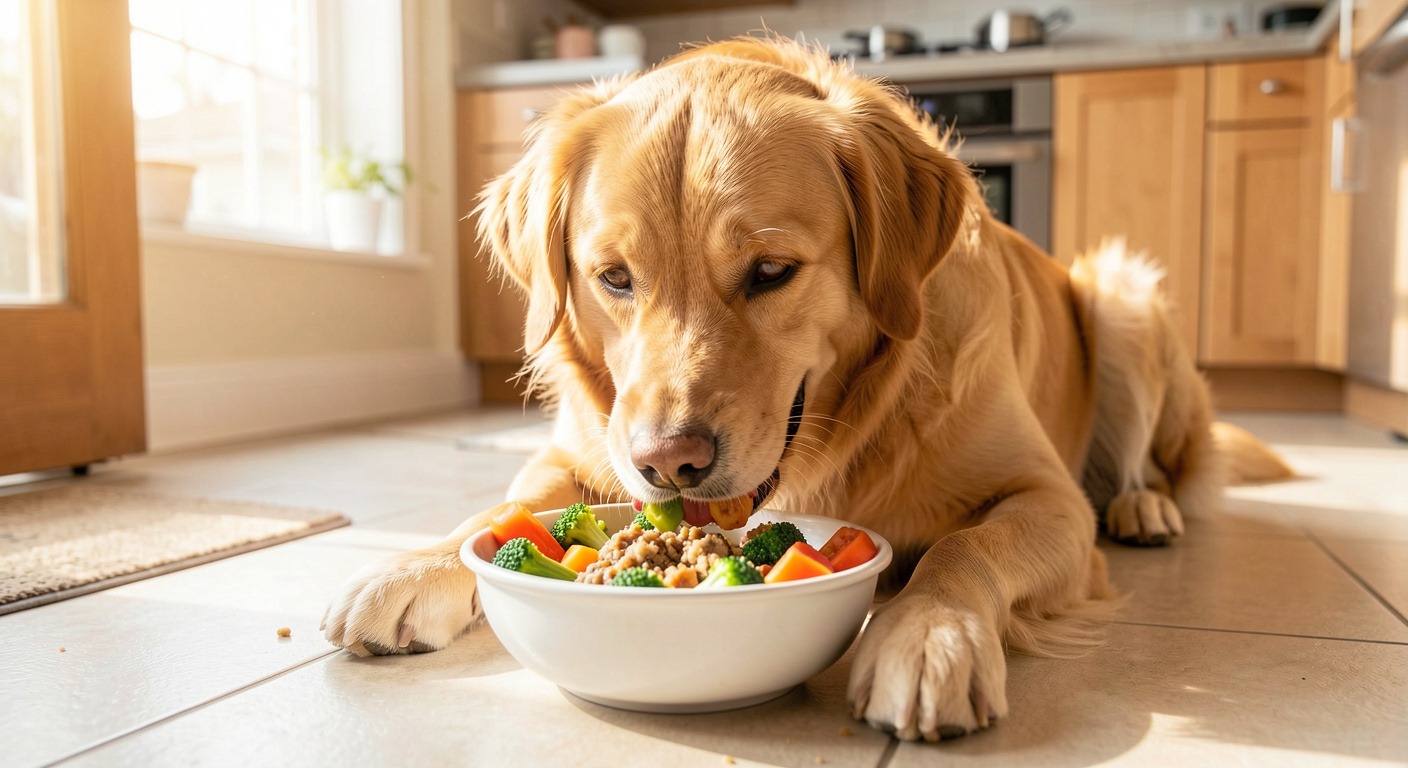
Raw vs Cooked Homemade Dog Food
The AVMA, FDA, and CDC all discourage raw feeding due to pathogen risks. Raw meat can carry Salmonella, E. coli, and Listeria , dangerous for dogs and especially risky for households with children, elderly, pregnant, or immunocompromised family members.
Dogs can shed these bacteria in their saliva and feces for weeks without showing symptoms, contaminating surfaces throughout your home. If you’re committed to raw feeding, discuss it with your veterinarian, use human-grade meats from trusted sources, and follow strict food-handling protocols: separate cutting boards, immediate cleanup with disinfectant, and no raw food in homes with at-risk family members.
Homemade Dog Food vs Kibble vs Fresh Commercial Food
| Type | Pros | Cons | Cost (Monthly, 30lb Dog) | Vet Consensus |
|---|---|---|---|---|
| Homemade (Vet-Formulated) | Full ingredient control, customizable, no preservatives, high palatability | Time-consuming (2-4 hrs/week), requires nutritionist consultation ($200-$500 upfront), risk of imbalance without professional guidance | $90-$180 | ✅ Healthy when formulated by DACVN nutritionist |
| High-Quality Kibble (WSAVA-Compliant) | Nutritionally complete, AAFCO-tested, convenient, shelf-stable, backed by feeding trials | Contains preservatives, less moisture, some dogs find it less palatable | $40-$80 | ✅ Gold standard , recommended by most vets |
| Fresh Commercial (The Farmer’s Dog, Ollie, etc.) | Human-grade ingredients, pre-portioned, AAFCO-complete, convenient | Expensive, requires refrigeration/freezer space, subscription model | $120-$200 | ✅ Good option if budget allows , check for DACVN formulation |
| Raw (Commercial or DIY) | Minimally processed, supporters claim shinier coats | Pathogen risk (Salmonella, E. coli, Listeria), not recommended by AVMA/FDA/CDC, nutritionally risky if DIY | $100-$250 | ❌ AVMA discourages raw feeding due to pathogen risk |
How to Transition Your Dog to Homemade Food
Transition over 7-10 days to avoid digestive upset. Start with 25% new food mixed with 75% old food for days 1-3. Increase to 50/50 for days 4-6, then 75% new / 25% old for days 7-9. By day 10, serve 100% new food. Watch for vomiting, diarrhea, or appetite changes at each stage , if digestive upset occurs, slow the transition by 2-3 days per stage.
Storage and Food Safety
- Refrigerate immediately: Cooked homemade food goes in the fridge within 2 hours of cooking. Store in airtight containers for up to 3 days.
- Freeze for longer storage: Portion into daily servings and freeze for up to 3 months. Thaw overnight in the refrigerator , never on the counter.
- Prevent cross-contamination: Use separate cutting boards for raw meat and vegetables. Wash hands, utensils, and surfaces with hot soapy water after handling raw meat.
- Warm gently: Dogs prefer food at room temperature. Microwave only briefly (20-30 seconds) and stir thoroughly to eliminate hot spots. Always test temperature with your finger before serving.
- Discard uneaten food: Remove uneaten food after 30 minutes. Wet food left at room temperature breeds bacteria quickly.
When Homemade Dog Food Is Not Recommended
Homemade diets can be risky for certain dogs even with professional formulation. Avoid homemade food for:
- Growing puppies: Nutritional needs change weekly during growth. Even small imbalances can cause permanent skeletal deformities. Stick with AAFCO-complete commercial puppy food unless a DACVN nutritionist is actively managing the diet.
- Pregnant or nursing dogs: Calorie and nutrient demands spike dramatically , deficiencies harm both mother and puppies.
- Dogs with kidney disease: Phosphorus restriction is critical and extremely precise , commercial renal diets are extensively tested for this.
- Dogs with pancreatitis: Fat content must be rigidly controlled; commercial low-fat therapeutic diets are safer.
- Dogs with heart disease or DCM risk: Taurine and carnitine levels require careful balancing. Grain-free homemade diets with legumes are especially concerning per the FDA’s ongoing DCM investigation.
- Dogs with complex food allergies: Identifying allergens through homemade elimination diets requires strict protocols , work with a veterinary dermatologist and nutritionist together.
For most of these conditions, a commercial therapeutic diet formulated specifically for the condition is the safer choice.
Frequently Asked Questions
Is homemade dog food cheaper than kibble?
Usually not. Quality ingredients plus supplements typically cost $3-$6 per day for a medium dog, comparable to premium commercial food. The real cost is time , plan on 2-4 hours of batch cooking per week.
Can I feed my dog chicken and rice every day?
No. Plain chicken and rice is nutritionally incomplete , it lacks calcium, essential fatty acids, vitamins, and minerals. This is appropriate only as a temporary bland diet for 2-3 days during digestive upset, under vet guidance. Long-term, it causes severe deficiencies.
What supplements does homemade dog food need?
At minimum: a calcium source (essential for bone health and the calcium-phosphorus balance), omega-3 fatty acids (fish oil for EPA/DHA), and a multivitamin designed for homemade canine diets , not human vitamins. Your veterinary nutritionist will specify exact products and dosages based on your dog’s recipe. Never guess.
What is the best homemade food for dogs?
There is no single “best” recipe , the right homemade diet depends entirely on your dog’s age, breed, weight, activity level, and any health conditions. What works for a healthy adult Labrador may harm a senior Yorkie with kidney issues. This is why a board-certified veterinary nutritionist creates individualized recipes.
Do vets recommend homemade dog food?
Most general-practice veterinarians are cautious about homemade diets because poorly balanced recipes are so common. However, many support homemade feeding when the recipe is formulated by a DACVN nutritionist. They rarely recommend online recipes without professional review.
How much homemade food should I feed my dog?
Your veterinary nutritionist will calculate exact daily grams based on your dog’s ideal body weight and activity level. A rough starting point is 2-3% of ideal body weight in food per day, but this varies significantly. Always use a digital gram scale , never measure by the cup for homemade food.
Can homemade dog food cause deficiencies?
Yes , and they develop silently. The most common deficiencies from unbalanced homemade diets are calcium (leading to bone deformities and fractures), vitamin D, zinc, choline, and essential fatty acids. A dog can appear healthy for months while deficiencies progress. Blood work every 6 months can help catch issues early.
Is homemade dog food good for dogs with allergies?
It can be , but requires veterinary oversight. A homemade elimination diet using a single novel protein and carbohydrate source (prescribed by a veterinary dermatologist and nutritionist) is the gold standard for diagnosing food allergies. Once allergens are identified, a nutritionist can create a balanced diet avoiding triggers.
Is raw homemade dog food safe?
The AVMA, FDA, and CDC advise against raw feeding due to pathogen risks. Raw meat can carry Salmonella, E. coli, and Listeria , dangerous both to dogs and to the humans in your household, especially children, elderly, pregnant, or immunocompromised individuals. Cooked homemade diets eliminate these risks while preserving nutritional benefits.
Final Vet Safety Note
Puptify provides science-backed dog care education, not veterinary dietary advice. Homemade diets can cause serious health problems , including bone deformities, heart disease, and organ damage , if not properly balanced by a qualified professional. Always consult a board-certified veterinary nutritionist (DACVN) before switching from commercial food. Find one through the ACVN directory.
Never feed a homemade diet to growing puppies, pregnant dogs, or dogs with kidney disease, pancreatitis, or heart conditions without professional formulation. If your dog shows signs of nutritional deficiency (lethargy, poor coat, weight loss, bone pain, or deformities), contact your veterinarian immediately.
This article references research from UC Davis School of Veterinary Medicine, AKC, AVMA, FDA, CDC, and the Dog Aging Project.

Want a Personalized Recipe?
Find a board-certified veterinary nutritionist through the ACVN directory. A consultation and custom-formulated recipe are the safest way to start cooking for your dog.
Explore the Nutrition Hub →About Puptify: Puptify provides science-backed dog care education for loving dog parents. Our articles draw on veterinary research and expert guidance, but we do not provide veterinary diagnosis or treatment advice. Always consult your dog’s veterinarian for personalized recommendations. Learn more about Puptify →